

There’s something uniquely satisfying about diving into a historical fiction series. Unlike standalone novels, series allow you to spend years, sometimes decades, with beloved characters as they navigate the sweeping events of history. You watch them grow, struggle, triumph, and evolve across multiple books, creating a reading experience that feels more like living through history than simply reading about it.
The best historical fiction series combine meticulous research with compelling storytelling, transporting readers to different eras while delivering the page-turning momentum that keeps you reaching for the next book. Whether you’re drawn to Viking warriors, Roman generals, Tudor intrigue, or World War II resistance fighters, there’s a series waiting to become your next obsession.
We’ve curated this list of the greatest historical fiction series ever written, spanning time periods from ancient Rome to the 20th century. Each series offers something special, whether it’s epic battle scenes, complex political maneuvering, rich character development, or simply the joy of getting lost in another time and place.
Disclosure: This article contains affiliate links. We earn from qualifying purchases at no extra cost to you.What Makes a Great Historical Fiction Series?
Before we dive into our recommendations, let’s consider what elevates a good historical fiction series to greatness.
Consistent Quality Across Books: The best series maintain their storytelling excellence from the first book to the last, with some even improving as the author reaches their stride. You shouldn’t feel like the author is just milking a successful formula; you should feel the story naturally expanding and deepening.
Character Growth and Development: We aim to see characters evolve throughout the series, shaped by their experiences and the historical events that surround them. The protagonist you meet in book one should be recognizably different by the final installment.
Historical Authenticity: The series strikes a fine balance between accuracy and entertainment, bringing historical periods to life through meticulous research while maintaining a clear focus on the story. The history should enhance the narrative, not overwhelm it.
Satisfying Narrative Arc: Whether spanning three books or twenty, the series should feel purposeful, with each installment advancing the overall story while standing on its own merits. You should be able to enjoy a single book, but feel compelled to continue.
Immersive World-Building: The best authors create such vivid historical worlds that you can smell the Viking longships, hear the clash of Roman swords, or feel the tension of a Tudor court. These worlds become as real as the modern one you temporarily leave behind.
Now, let’s explore the series that exemplify these qualities.
The Best Historical Fiction Series
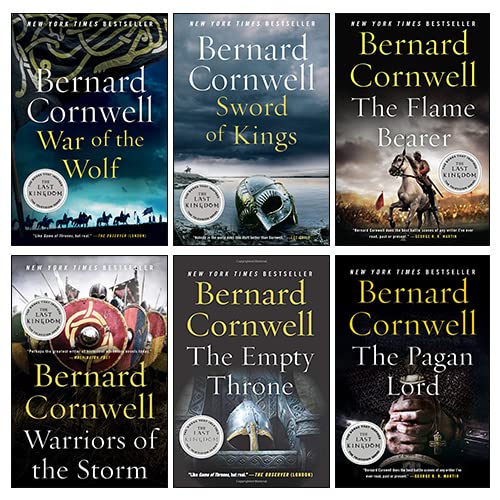
The Last Kingdom (Saxon Stories) by Bernard Cornwell
Time Period: 9th-10th Century England (Viking Age)
Number of Books: 13 (Complete)
First Book: The Last Kingdom (2004)
Bernard Cornwell’s Saxon Stories follows Uhtred of Bebbanburg, a Saxon nobleman captured and raised by Vikings, as he navigates the birth of England during the Danish invasions. This is historical fiction at its most visceral and compelling, combining military precision with deep character work.
Uhtred is torn between two worlds: the Saxon Christianity of his birth and the pagan Danish culture of his upbringing. His struggle to reclaim his ancestral fortress of Bebbanburg drives the series, but it’s his relationship with Alfred the Great and his role in unifying England that gives the books their historical weight. Cornwell’s battle scenes are legendary among historical fiction readers, meticulously researched and brutally realistic without glorifying violence.
What makes this series exceptional is Cornwell’s ability to bring the Dark Ages to life. You feel the mud, smell the blood, and understand the complex political landscape of a fractured Britain. The supporting cast is equally compelling, from the cunning Alfred to the various Danish warlords, priests, and warriors who populate Uhtred’s world. Each book covers a significant period, with Uhtred aging from a young warrior to an old man reflecting on a life spent in service to a dream of England.
The series was adapted into the hit Netflix show “The Last Kingdom,” introducing Uhtred to an even wider audience. Whether you’ve seen the show or not, the books offer a richer, more nuanced experience, thanks to Cornwell’s masterful prose and the deeper historical context it provides.
Why Read It: Epic battles, complex hero, foundational moment in English history, page-turning momentum across 13 books.
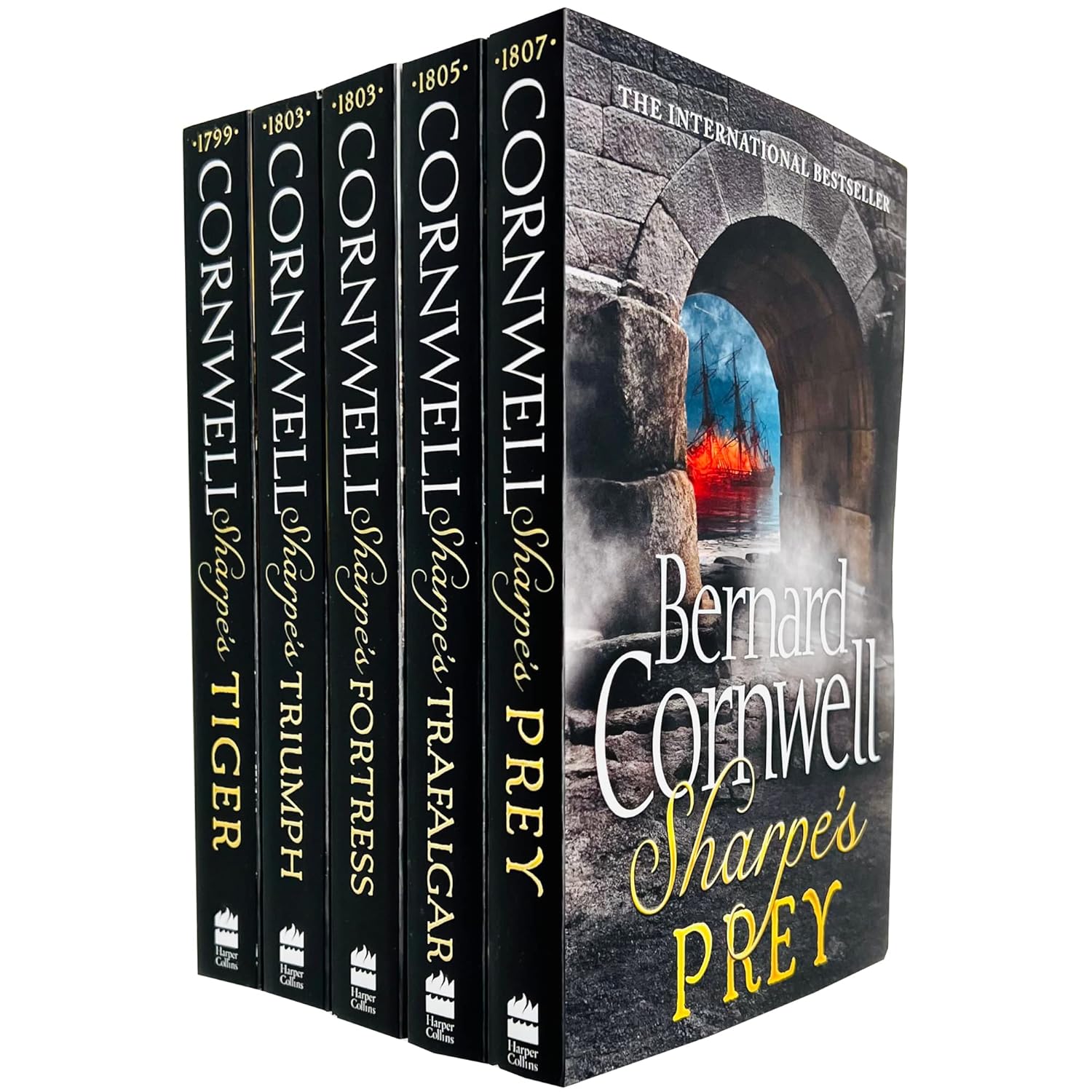
Sharpe Series by Bernard Cornwell
Time Period: Napoleonic Wars (1799-1815)
Number of Books: 24 novels (plus short stories)
First Book: Sharpe’s Eagle (1981)
Yes, Bernard Cornwell appears twice on this list because the man is simply a master of historical military fiction. The Sharpe series follows Richard Sharpe, a British soldier who rises from the ranks to become an officer during the Napoleonic Wars, serving under Wellington across India, Spain, Portugal, and France.
Sharpe is the quintessential action hero in a historical setting, a rough-edged, lower-class soldier in an officer corps dominated by aristocrats. He earns his promotions through merit and battlefield prowess, making him an underdog readers can’t help but root for. Each book is essentially a standalone adventure set during a real Napoleonic battle or campaign, meaning you can dip in anywhere, though reading in chronological order enhances the experience.
What distinguishes this series is Cornwell’s encyclopedic knowledge of Napoleonic warfare. The tactics, weapons, uniforms, and military culture are rendered with perfect authenticity. Yet the books never feel like history lessons. They’re rollicking adventures with memorable villains, tense action sequences, and just enough romance to add depth without overwhelming the military focus.
The series was adapted for British television in the 1990s, with Sean Bean playing Sharpe to perfection. The books continue to attract new readers decades after publication, a testament to their enduring appeal. With 24 novels (plus short stories), this series offers years of reading pleasure for those who love military historical fiction.
Why Read It: Classic adventure storytelling, meticulously researched Napoleonic warfare, charismatic protagonist, perfect for fans of military history.
Kingsbridge Series by Ken Follett

Time Period: Medieval England (12th-16th centuries)
Number of Books: 4 (Ongoing)
First Book: The Pillars of the Earth (1989)
Ken Follett‘s Kingsbridge series is epic historical fiction in the truest sense. These are massive, sprawling novels set in the fictional town of Kingsbridge, spanning centuries of English history from the Anarchy to the Tudor period. Each book can be read as a standalone, but together they create a rich tapestry of medieval life.
The series begins with “The Pillars of the Earth,” often considered one of the greatest historical novels ever written. Set during the 12th-century civil war known as the Anarchy, it follows the construction of a cathedral and the lives of the prior, master builder, and noblewomen whose fates are intertwined with the building’s rise. Follett makes cathedral architecture fascinating, weaving technical details about Gothic construction into a narrative that is packed with political intrigue, romance, and the struggle between the church and the state.
What sets this series apart is Follett’s ability to make history accessible without oversimplifying it. The books are meticulously researched, yet they read like page-turners, with multiple plot threads, memorable characters, and enough twists to keep you reading late into the night. The scope is ambitious, covering not only the lives of nobles and clergy but also those of ordinary people, including builders, merchants, and peasants, whose lives were shaped by the great events of their time.
Each subsequent book jumps forward in time, exploring different periods in the history of Kingsbridge. “World Without End” continues 150 years later during the Black Death. “A Column of Fire” takes place during the religious turmoil of Elizabeth I’s reign. “The Evening and the Morning” is actually a prequel, set in the Dark Ages. Together, they offer a comprehensive perspective on medieval England through the lens of a single community.
Why Read It: Epic scope, accessible prose, cathedral building as drama, rich historical detail, perfect gateway to medieval historical fiction.
Wolf Hall Trilogy by Hilary Mantel

Time Period: Tudor England (1500s)
Number of Books: 3 (Complete)
First Book: Wolf Hall (2009)
Hilary Mantel’s Wolf Hall trilogy is a masterclass in literary historical fiction. Following Thomas Cromwell, the blacksmith’s son who becomes Henry VIII’s chief minister, these novels revolutionized how we think about one of history’s most vilified figures. Mantel’s Cromwell is brilliant, pragmatic, and deeply human, far removed from the moustache-twirling villain of popular imagination.
Written in an unusual present tense with an intimate third-person perspective, the books put you inside Cromwell’s head as he navigates the treacherous Tudor court. You experience his thoughts, his strategies, his memories of a brutal childhood, and his genuine grief when people he cares about are destroyed by the political machinations he himself sometimes orchestrates. It’s morally complex storytelling at its finest.
The trilogy is dense and demands attention, but rewards patient readers with prose that approaches the level of poetry. Mantel has an extraordinary ability to bring the past alive through sensory detail: the smell of the Thames, the texture of velvet, the taste of Tudor food. Her dialogue crackles with wit and menace, and her portrayals of Anne Boleyn, Thomas More, and Henry VIII feel startlingly fresh, despite being based on figures we’ve encountered countless times.
“Wolf Hall” and its sequel “Bring Up the Bodies” both won the Booker Prize, a rare achievement. The final volume, “The Mirror and the Light,” completes Cromwell’s story with devastating power. This is historical fiction as literature, challenging readers to reconsider not just Tudor history, but the nature of power, loyalty, and survival.
Why Read It: Literary excellence, complex protagonist, fresh take on familiar history, gorgeous prose, Booker Prize winners.
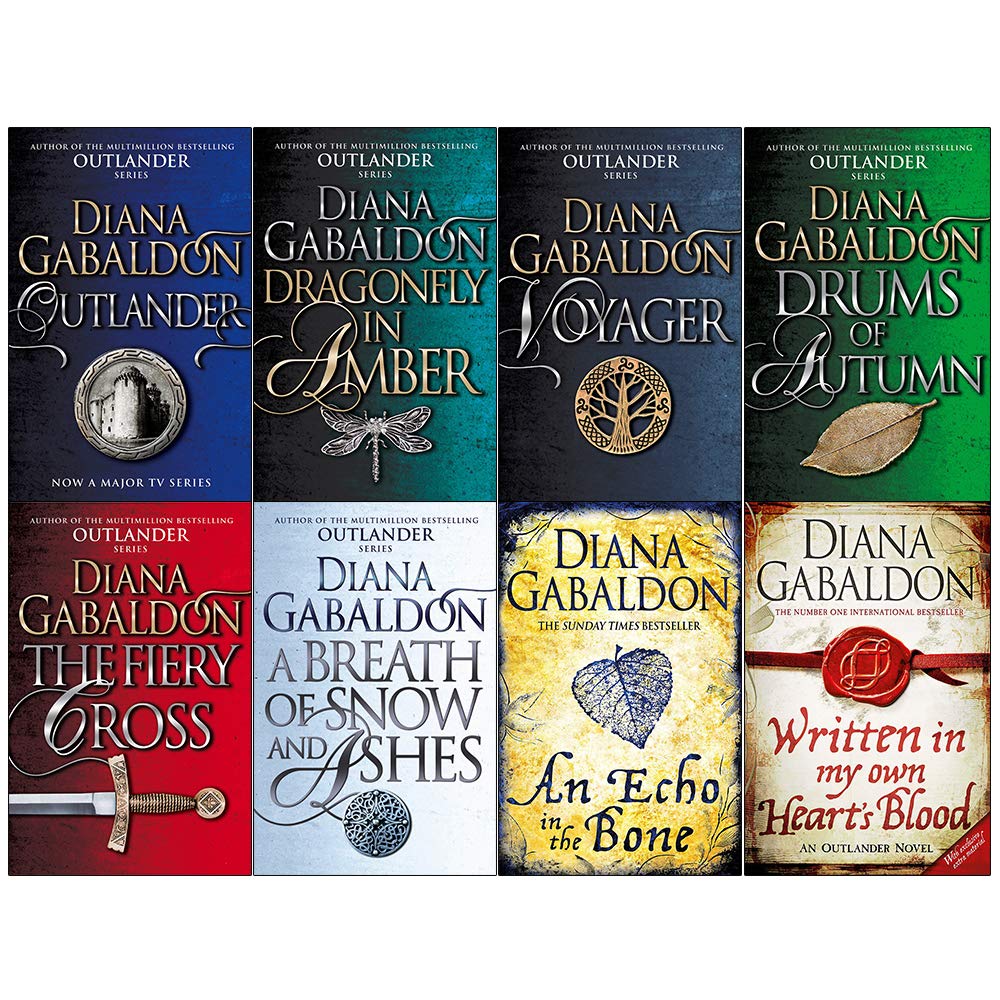
Outlander Series by Diana Gabaldon
Time Period: 18th Century Scotland and America (with time travel from the 1940s)
Number of Books: 9+ (Ongoing)
First Book: Outlander (1991)
The Outlander series defies easy categorization. It’s historical fiction, romance, adventure, time travel, and family saga all rolled into one addictive package. The series follows Claire Randall, a World War II nurse who accidentally travels back in time to 1743 Scotland, where she meets and falls in love with Jamie Fraser, a Highland warrior.
What begins as a fish-out-of-water story quickly becomes something richer and more complex. Claire must navigate 18th-century Scotland, utilizing her modern medical knowledge while concealing her true origins. Her relationship with Jamie forms the emotional core of the series, but Gabaldon surrounds them with meticulously researched historical events: the Jacobite Rising, the Battle of Culloden, the colonization of America, and the American Revolution.
These are massive books, some exceeding 1,000 pages, but Gabaldon’s storytelling never flags. She balances intimate character moments with sweeping historical drama, romance with adventure, and humor with heartbreak. The series follows Claire and Jamie across decades, watching them age, face loss, find joy, and adapt to constantly changing circumstances. The supporting cast is equally well-developed, with characters like Roger, Brianna, and Lord John Grey becoming as beloved as the main couple.
The books explore themes of belonging, cultural clash, and what it means to live outside your own time. Claire never fully fits in the 18th century, yet she can’t return to her original life. This tension drives much of the series’ emotional power. The sexual content is frank and detailed, making this series perfect for readers who want their historical fiction with passionate romance, but potentially off-putting for those who prefer more restrained storytelling.
The series inspired the hit Starz television adaptation, which has introduced millions of new readers to Gabaldon’s work.
Why Read It: Epic romance, time travel adventure, strong female protagonist, rich historical detail, massive scope across multiple books and decades.
Masters of Rome Series by Colleen McCullough
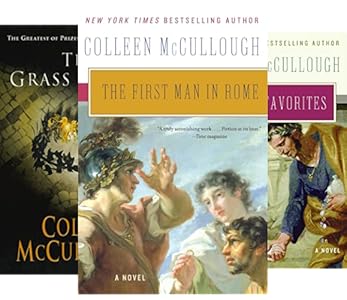
Time Period: Roman Republic (110-27 BC)
Number of Books: 7 (Complete)
First Book: The First Man in Rome (1990)
Colleen McCullough’s Masters of Rome series is widely regarded as one of the most ambitious and thoroughly researched Roman historical fiction series ever written. Spanning seven massive novels, the series covers the final century of the Roman Republic, from Marius and Sulla through Julius Caesar and ending with the rise of Augustus.
These are not light reads. Each book exceeds 700 pages and includes detailed maps, character lists, and a glossary of Latin terms. McCullough expects her readers to engage deeply with Roman politics, military structure, and social customs. The payoff is an unparalleled immersion in ancient Rome. You’ll understand the intricate mechanics of the Roman government, the importance of family alliances, the role of augury and religion, and the military strategies that built the Roman Empire.
The series’s greatest strength is its character work. McCullough brings to life some of history’s most legendary figures: Marius, Sulla, Pompey, Crassus, Cicero, Cato, and above all, Julius Caesar. Her Caesar is brilliant, charming, ruthless, and utterly compelling. You watch these men maneuver for power over decades, forming and breaking alliances, winning and losing battles, ascending and falling in the cursus honorum.
McCullough doesn’t shy away from the brutality of Roman life. Slavery, warfare, crucifixions, and political violence are depicted frankly but never gratuitously. Women play significant roles, though the series acknowledges the limitations they faced in Roman society. Characters like Aurelia (Caesar’s mother) and Servilia (his mistress) are portrayed as intelligent political operators working within severe constraints.
This series is essential reading for anyone serious about Roman historical fiction. It’s challenging, rewarding, and utterly immersive.
Why Read It: Unparalleled depth and research, covers a crucial period in Roman history, complex political drama, massive scope, and legendary characters brought to life.
Emperor Series by Conn Iggulden
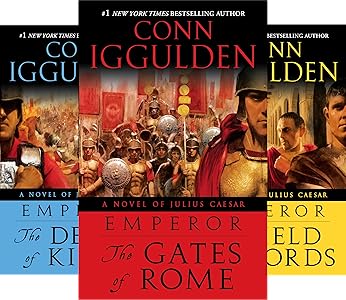
Time Period: Roman Republic (100-44 BC)
Number of Books: 5 (Complete)
First Book: The Gates of Rome (1999)
Conn Iggulden’s Emperor series offers a more accessible take on Julius Caesar than McCullough’s doorstoppers. Following Caesar from childhood through his assassination, these novels strike a balance between historical accuracy and page-turning adventure. Iggulden takes some liberties with chronology and creates fictional characters like Marcus Brutus, being Caesar’s childhood friend, but the emotional truth of Caesar’s life comes through powerfully.
The series excels at action sequences. Whether it’s gladiatorial combat, naval battles, or the conquest of Gaul, Iggulden writes warfare with cinematic vividness. But he doesn’t neglect the political side of Caesar’s story. The machinations in Rome, the formation of the First Triumvirate, and Caesar’s dangerous dance with the Senate all receive careful attention.
What makes this series special is its accessibility. Iggulden writes clean, fast-paced prose that pulls you through the story. The books are shorter than McCullough’s, making them perfect for readers who want Roman historical fiction without committing to 5,000 pages of dense text. Yet Iggulden doesn’t talk down to his audience. The Roman world feels authentic, the stakes are real, and Caesar emerges as a genuinely great man whose ambition ultimately proves his downfall.
The supporting cast is memorable, particularly Iggulden’s version of Marcus Brutus, whose relationship with Caesar forms the emotional heart of the series. Watching their friendship evolve from boyhood to manhood, knowing how it must end, lends the story a tragic inevitability that classical drama would appreciate.
Why Read It: Accessible Roman fiction, fast-paced action, young Caesar to assassination, emotionally engaging, perfect entry point to Roman historical fiction.
Conqueror Series by Conn Iggulden

Time Period: Mongol Empire (1190s-1280s)
Number of Books: 5 (Complete)
First Book: Wolf of the Plains (2007)
From Rome, Iggulden takes us to the steppes of Central Asia for his Conqueror series, following Genghis Khan and his descendants as they build the largest contiguous land empire in history. This is brutal, epic storytelling that brings to life a historical figure often reduced to a caricature.
Iggulden’s Genghis Khan (born Temujin) is a complex and compelling figure. We see his harsh childhood, his rise from nothing to unite the Mongol tribes, and his transformation into one of history’s great conquerors. The books don’t flinch from the violence of Mongol warfare, but they also show the sophisticated military tactics, the meritocratic structure of Mongol society, and the genuine bonds between Genghis and his brothers and generals.
The series continues beyond Genghis’s death, following his sons and grandsons as they conquer China, invade Europe, and rule the largest empire the world has ever seen. This gives the series an elegiac quality, as the unity and purpose of Genghis’s rule gradually fragments into competing khanates. The depiction of Kublai Khan and his conquest of China is particularly strong, showing both the glory and the cost of conquest.
These books transport you to a very different world from the European settings of most historical fiction. The Mongol culture, with its emphasis on horsemanship, archery, and mobile warfare, feels genuinely foreign. Yet Iggulden makes it comprehensible and compelling, finding the human drama in this epic story of conquest.
Why Read It: Underrepresented historical period, epic scope, brutal warfare, complex protagonist, and shows non-European history.
Warlord Chronicles by Bernard Cornwell
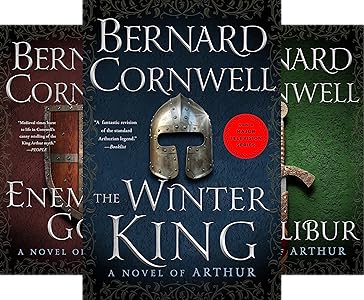
Time Period: 5th-6th Century Britain (Arthurian Legend)
Number of Books: 3 (Complete)
First Book: The Winter King (1995)
Indeed, Bernard Cornwell appears on this list for a third time, as his Warlord Chronicles may be his finest achievement. This trilogy reimagines the Arthurian legend as hard-edged historical fiction set in post-Roman Britain, stripping away the medieval chivalry and magic to reveal a darker, more plausible story.
Arthur isn’t a king in shining armor; he’s a warlord trying to hold together a fractured Britain against Saxon invaders. Guinevere isn’t a passive queen; she’s a pagan priestess with her own ambitions. Lancelot isn’t a noble knight; he’s a vain, cowardly fraud propped up by propaganda. Merlin exists, but as a Druid trying to restore the old gods, not a wizard with mystical powers. The story is narrated by Derfel, one of Arthur’s warriors, writing in his old age as a monk.
What makes this trilogy brilliant is how Cornwell explains the Arthurian legends. Every fantastic element has a rational explanation. The “magic” sword Excalibur is just an exceptional weapon, but its legend grows in the telling. The Round Table is a political arrangement, not a literal table. The quest for the Holy Grail becomes a search for pagan treasures. Cornwell shows how historical events become legends, how great men become myths.
The battles are visceral and brutal, the politics are complex, and the characters are deeply human. Arthur is heroic but flawed, struggling to maintain order against overwhelming odds. The trilogy builds to a devastating conclusion that honors the tragedy at the heart of Arthurian legend while remaining grounded in historical possibility.
This is essential reading for anyone who loves Arthurian stories but wants them reimagined with historical grit.
Why Read It: Arthurian legend as history, gritty and realistic, brilliant deconstruction of familiar myths, Cornwell at his best.
Cicero Trilogy by Robert Harris
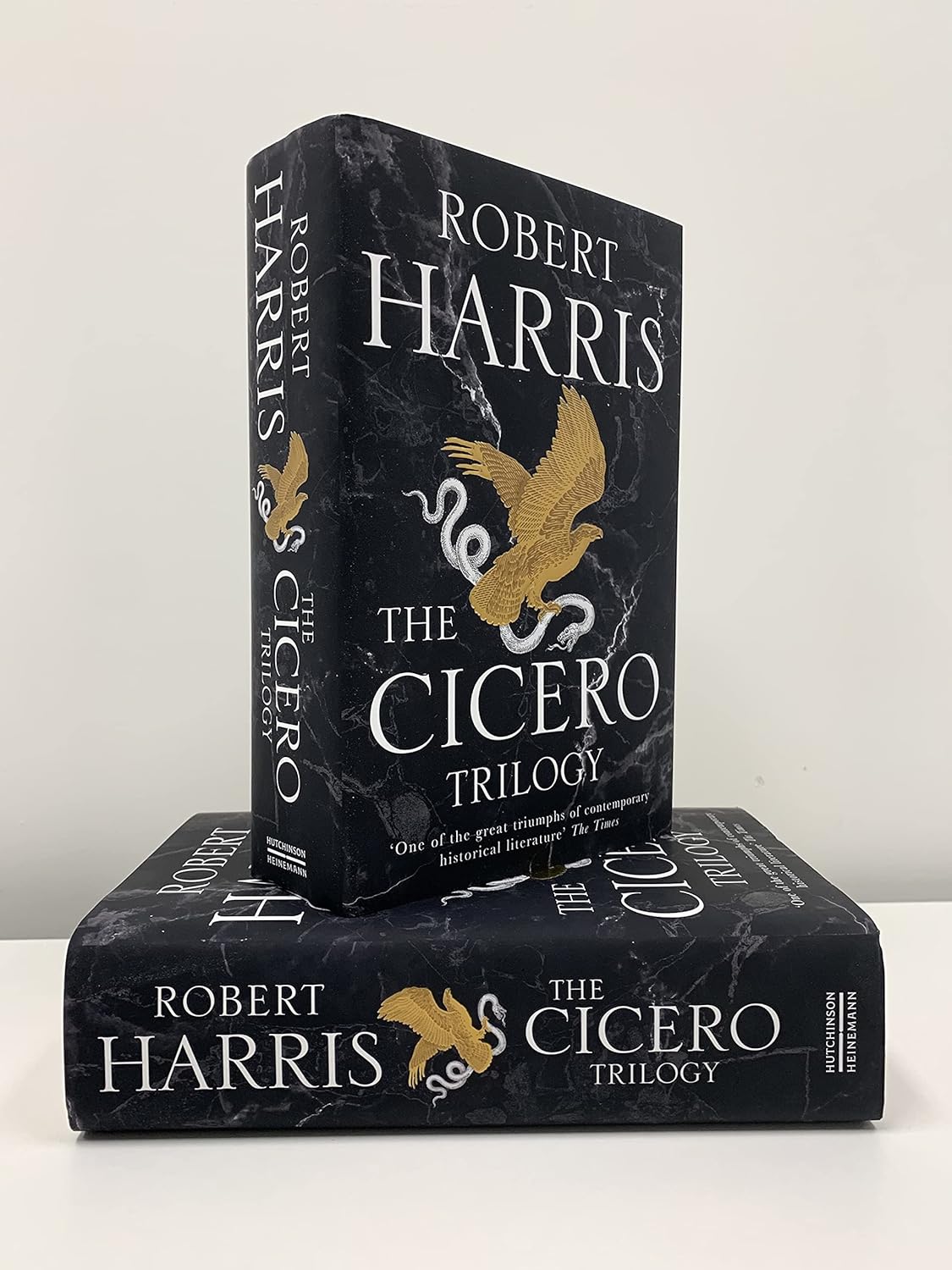
Time Period: Roman Republic (79-43 BC)
Number of Books: 3 (Complete)
First Book: Imperium (2006)
Robert Harris’s Cicero trilogy offers a masterclass in political historical fiction. Narrated by Tiro, Cicero’s slave and secretary, these novels follow the great orator’s rise and fall in the cutthroat world of Roman politics. This is Rome seen through the eyes of a politician, not a general, with a focus on the Forum and the Senate rather than the battlefield.
Harris makes Roman politics comprehensible and gripping. You understand how elections work, how patronage operates, how rhetoric can make or break a political career. Cicero emerges as a brilliantly intelligent yet fundamentally flawed figure, a man of principle who nevertheless compromises when necessary, a defender of the Republic who inadvertently helps enable the dictatorship he fears.
The trilogy spans the most dramatic period in Roman history: Cicero’s fight against Catilina’s conspiracy, the rise of the First Triumvirate, Caesar’s conquest of Gaul and crossing of the Rubicon, the civil war between Caesar and Pompey, Caesar’s assassination, and the subsequent power struggle that destroys the Republic. Through it all, Cicero navigates between principle and pragmatism, trying to save a Republic that may already be beyond saving.
What distinguishes this series is Harris’s prose, intelligent and elegant without being showy. The political maneuvering is complex but never confusing. The parallel to modern politics is clear without being heavy-handed. And Cicero himself is portrayed with nuance, neither a hero nor a villain, but a complicated man trying to do what is right in impossible circumstances.
Why Read It: Intelligent political drama, Roman politics made accessible, brilliant narration through Tiro, a crucial period in Roman history, and relevant to modern readers.
Century Trilogy by Ken Follett

Time Period: 20th Century (1911-1989)
Number of Books: 3 (Complete)
First Book: Fall of Giants (2010)
Ken Follett’s Century Trilogy is historical fiction on a massive scale, following five interconnected families through the major events of the 20th century. “Fall of Giants” covers the period of World War I and the Russian Revolution. “Winter of the World” tackles the rise of fascism, the Spanish Civil War, and World War II. “Edge of Eternity” brings the saga to a close with the Cold War, the civil rights movement, and the fall of the Berlin Wall.
The genius of this series is its structure. By following families from various countries (British, American, German, Russian, and Welsh), Follett demonstrates how global events impacted ordinary people worldwide. A coal miner in Wales, a Russian revolutionary, a German diplomat, and an American activist, their lives intersect across borders and decades, creating a tapestry of 20th-century life.
These are not intimate character studies. The books move quickly, covering vast amounts of historical ground with multiple plot threads and dozens of characters. Follett’s strength is making complex historical events accessible and personal. You understand World War I through the eyes of soldiers in the trenches, the Russian Revolution through a peasant who becomes a Bolshevik, and the rise of Nazism through a German family torn apart by ideology.
The series works as both entertainment and education. You’ll finish these books with a comprehensive understanding of 20th-century history, but you’ll have been so engrossed in the stories that you won’t feel like you’ve been in a classroom. It’s historical fiction that serves its original purpose: bringing history to life.
Why Read It: Sweeping 20th-century scope, multiple perspectives, accessible history, interconnected families, perfect introduction to modern historical fiction.
Poldark Series by Winston Graham
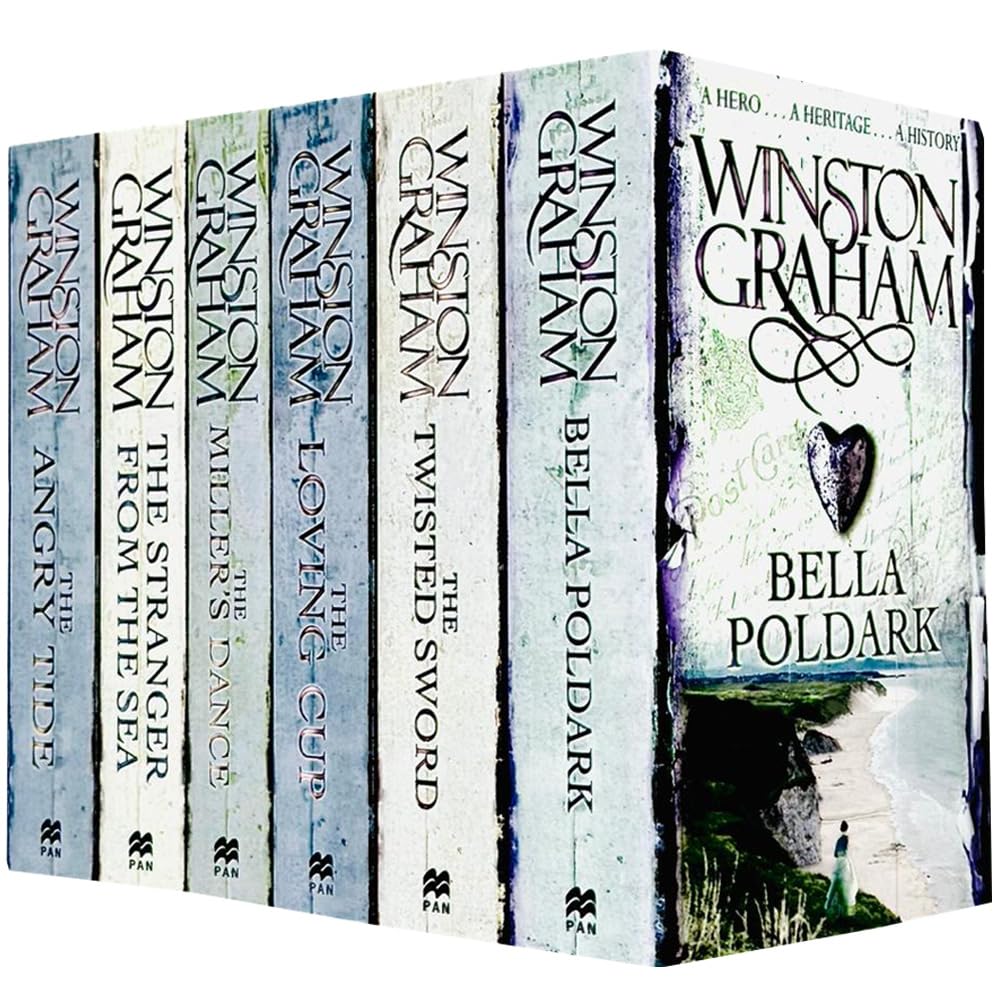
Time Period: Georgian England (1780s-1810s)
Number of Books: 12 (Complete)
First Book: Ross Poldark (1945)
Winston Graham’s Poldark series is a cornerstone of British historical fiction. Following Ross Poldark, a British Army officer who returns from the American Revolutionary War to find his estate in ruins, his father dead, and the woman he loved engaged to another, these novels blend romance, social commentary, and mining industry drama in 18th-century Cornwall.
The series is notable for its length and its evolution. The first seven books were written between 1945 and 1953, followed by a twenty-year gap before Graham continued the series with five more novels. This extended timeline allows the characters to age realistically, with the later books showing Ross and Demelza as older, wiser, and facing challenges of middle age rather than youth.
Graham excels at social observation. The series explores class differences, the plight of Cornwall’s poor, the struggles of mining communities, and the position of women in Georgian society. Demelza, Ross’s wife, begins as an uneducated servant but evolves into one of historical fiction’s most beloved heroines, a strong, compassionate, and complex character.
The recent BBC adaptation brought the series to a new generation, but the books offer far more depth and nuance than any adaptation could provide. Graham’s prose is elegant without being flowery, and his plotting is sophisticated, with characters making realistic choices that have far-reaching consequences.
Why Read It: Classic British historical fiction, strong character development across decades, social conscience, beloved romance, and Cornwall beautifully rendered.
Shardlake Series by C.J. Sansom
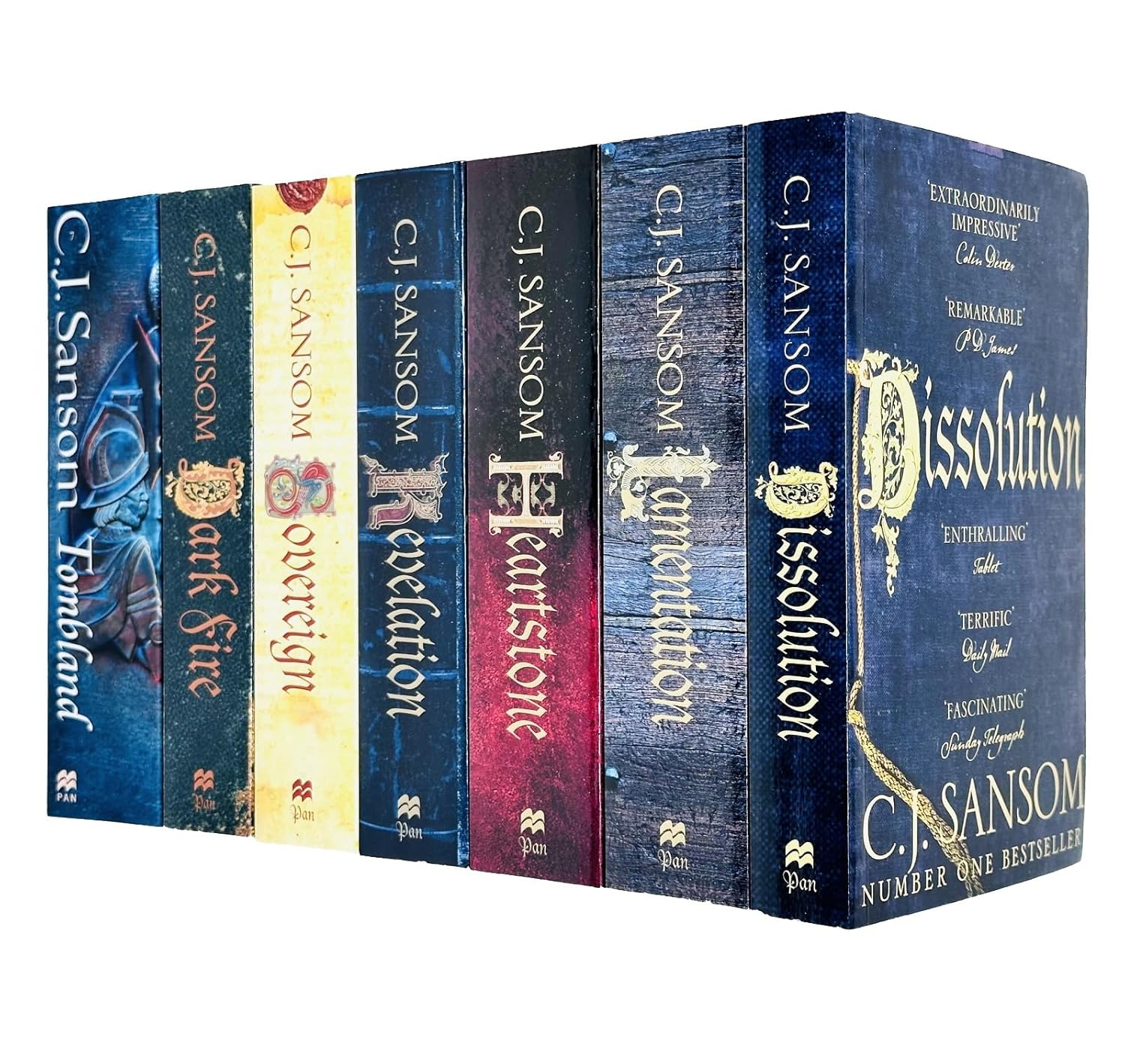
Time Period: Tudor England (1530s-1550s)
Number of Books: 7 published
First Book: Dissolution (2003)
C.J. Sansom’s Shardlake series combines historical mystery with richly detailed Tudor history. Matthew Shardlake is a hunchbacked lawyer working in 16th-century England, solving murders and conspiracies while navigating the dangerous religious and political upheavals of the era.
Each book is set against a major historical event: the dissolution of the monasteries, Henry VIII’s marriage to Anne of Cleves, the siege of Boulogne, and the 1549 rebellion. Sansom uses these settings brilliantly, weaving fictional mysteries into real historical circumstances. The murder investigation becomes a way to explore the period’s social issues, religious tensions, and political conflicts.
What makes Shardlake memorable as a protagonist is his position as an outsider. His physical disability excludes him from many social opportunities, giving him empathy for others on society’s margins. He’s intelligent, principled, and frequently frustrated by the injustice and cruelty he witnesses. As a lawyer, he believes in truth and justice, values increasingly difficult to uphold in Tudor England.
Sansom’s research is impeccable. The legal procedures, religious debates, medical knowledge, and daily life of Tudor England all feel authentic. The books are atmospheric, often quite dark, reflecting the violence and religious persecution of the period. If you love Tudor history but want something different from the usual court intrigue, Shardlake offers a fascinating ground-level view of the era.
Sansom passed away in April 2024. “Tombland” (2018) is the most recently published book in the series.
Why Read It: Tudor mysteries, protagonist with disability, excellent research, a darker take on a familiar period, and legal and religious intrigue.
Eagle Series by Simon Scarrow
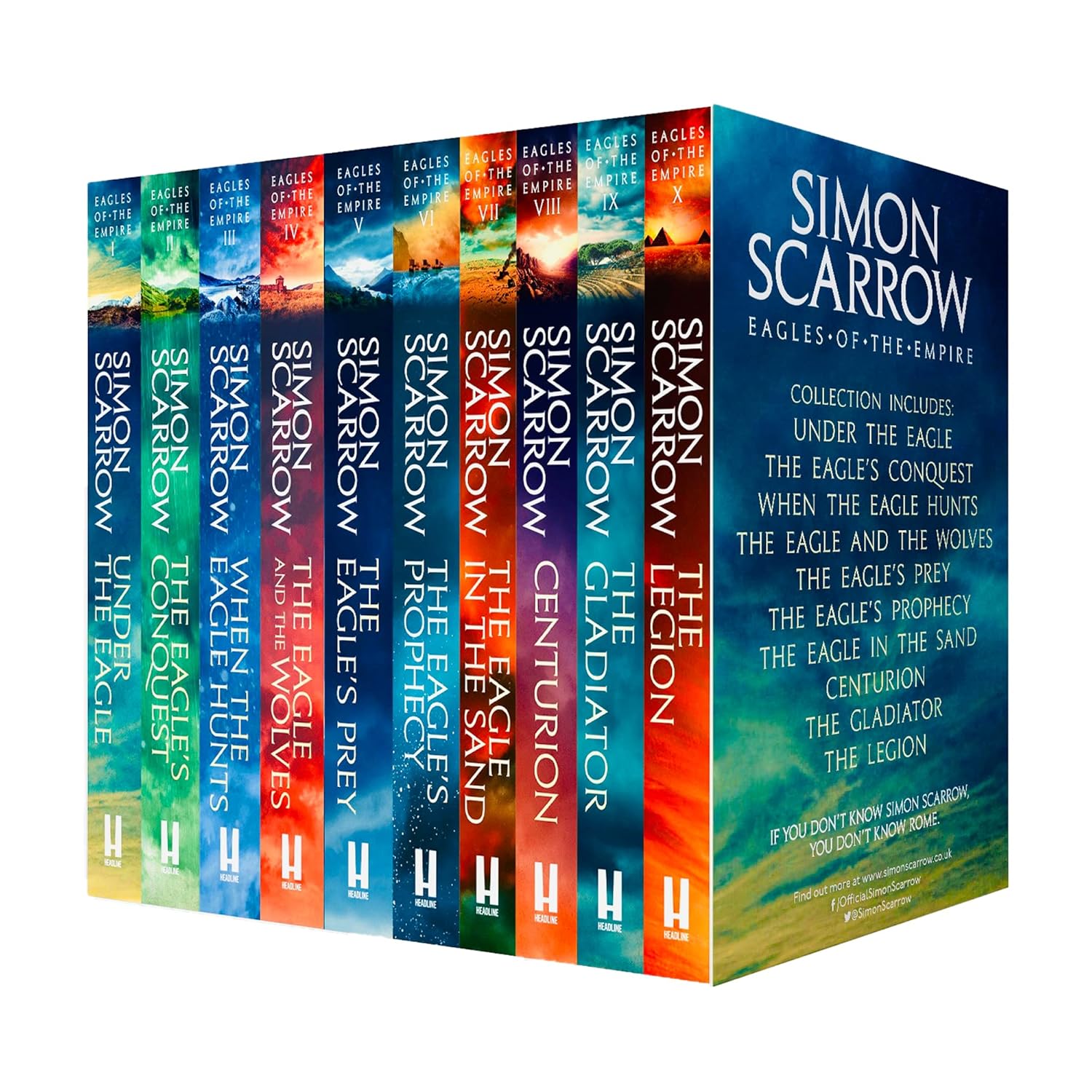
Time Period: Roman Empire (1st-2nd Century AD)
Number of Books: 20+ (Ongoing)
First Book: Under the Eagle (2000)
Simon Scarrow’s Eagle series follows two Roman soldiers, Macro and Cato, through military campaigns across the Roman Empire. Beginning with the conquest of Britain, the series takes the characters to Germania, Judaea, Egypt, and beyond, offering a ground-level view of the Roman military machine at its height.
These are fast-paced military adventures perfect for readers who want exciting historical fiction without excessive complexity. Scarrow writes crisp, clear prose with an emphasis on action sequences, military tactics, and the camaraderie between soldiers. Macro is a tough veteran centurion, while Cato begins as an inexperienced optio but grows into an excellent officer. Their friendship forms the heart of the series.
What Scarrow does well is make Roman military life tangible. You understand the organization of a legion, the duties of different ranks, the training that made Roman soldiers so effective, and the logistics of moving an army across hostile territory. The battle scenes are both exciting and educational, illustrating how Roman tactics were put into practice.
The series is particularly strong in its portrayal of the conquest of Britain, bringing to life the clashes between Roman legions and British tribes. Historical figures like Claudius and Vespasian appear, but the focus remains on the fictional characters, allowing Scarrow freedom to create dramatic scenarios without being bound by historical record.
With over 20 books and counting, this series provides an abundance of reading material for military historical fiction fans.
Why Read It: Exciting military adventures, Roman army life, excellent battle scenes, strong friendship at the center, prolific series.
Grail Quest Series by Bernard Cornwell
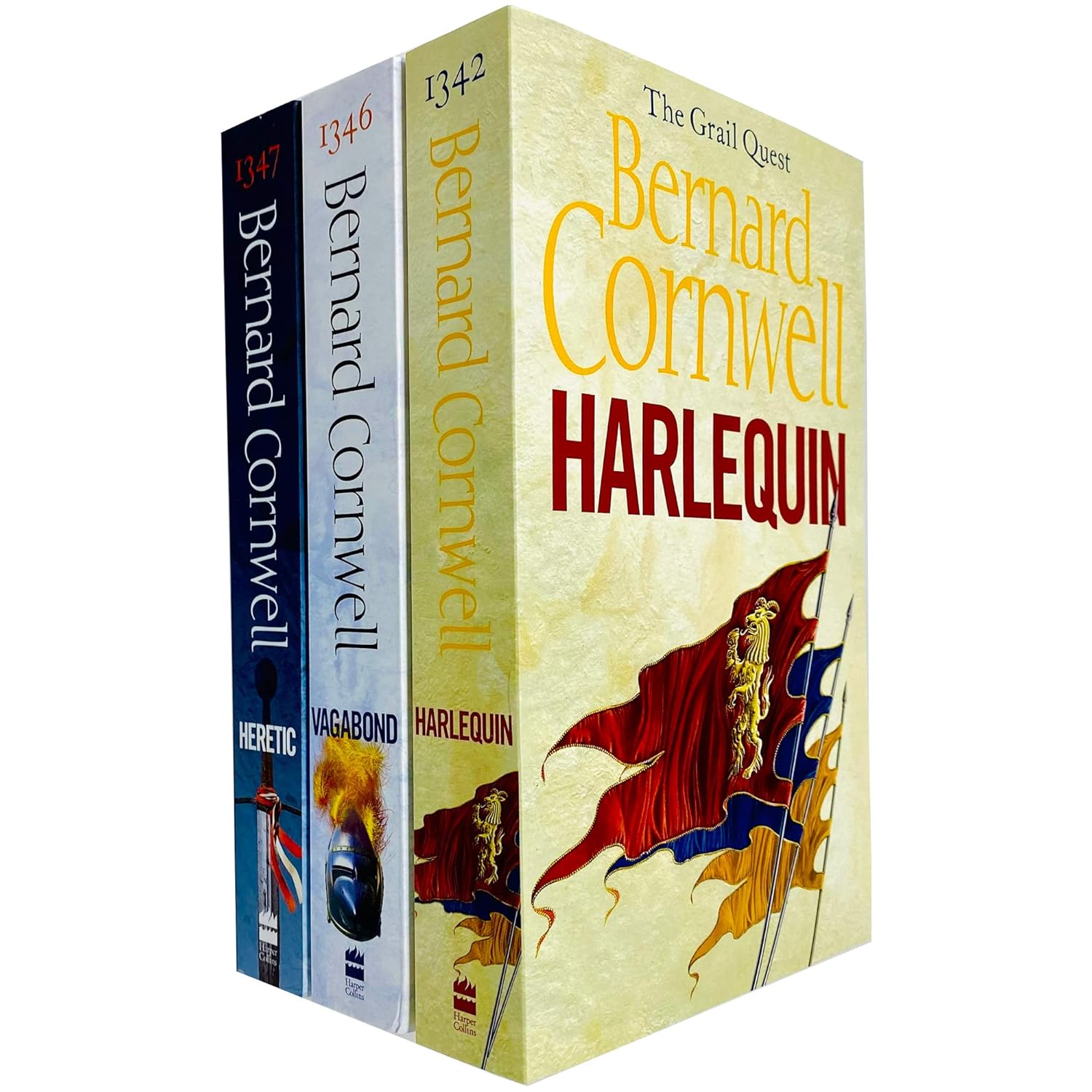
Time Period: Hundred Years’ War (1340s-1350s)
Number of Books: 4 (Complete)
First Book: Harlequin (2000)
Bernard Cornwell (fourth appearance on this list) takes on the Hundred Years’ War in his Grail Quest series, following Thomas of Hookton, an English archer whose village is destroyed by French raiders. Thomas becomes one of the feared English longbowmen, fighting at Crécy and other major battles while pursuing a personal quest for revenge and the Holy Grail.
The series’s greatest strength is its depiction of medieval warfare, particularly archery. Cornwell explains how longbows were made, the training required to use them effectively, and the devastating impact they had on medieval battlefields. The Battle of Crécy, where English archers slaughtered French knights, is rendered with brutal authenticity.
Thomas is a compelling protagonist, driven by both a desire for revenge and a strong faith. The quest for the Grail adds a mystical element without overwhelming the historical realism. Cornwell is too smart to resolve whether the Grail is real or symbolic, leaving it ambiguous while using the quest to explore medieval faith and superstition.
At four books, this is one of Cornwell’s shorter series, making it perfect for readers who want a taste of his work without committing to a 13 or 21-book saga. The books are tightly plotted, with each installment advancing both the historical narrative and Thomas’s personal story.
Why Read It: Medieval warfare expertise, English longbow mastery, Hundred Years’ War, Grail quest, shorter Cornwell series.
Roma Sub Rosa Series by Steven Saylor
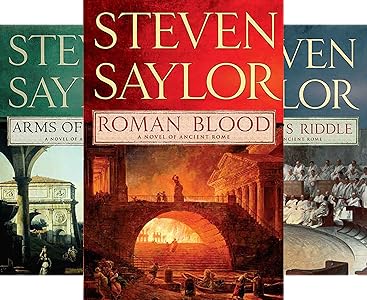
Time Period: Roman Republic (90s-40s BC)
Number of Books: 13 (Complete)
First Book: Roman Blood (1991)
Steven Saylor’s Roma Sub Rosa series is a masterful historical mystery. Gordianus the Finder is a Roman private investigator (a “finder” in Roman terms) working in the late Republic, solving crimes and mysteries while historical giants like Cicero, Caesar, and Pompey move in the background.
What makes this series special is its focus on the ordinary people of Rome. While other Roman historical fiction follows generals and politicians, Saylor shows us shopkeepers, slaves, actors, and criminals. Gordianus navigates all levels of Roman society, from senatorial mansions to the slums of the Subura, giving us a comprehensive view of daily life in ancient Rome.
The mysteries are well-crafted, but the real joy is Saylor’s Rome. The sensory details are superb: the smells of the city, the sounds of the street vendors, the feel of a summer day in the Forum. Saylor has a PhD in history, and it shows in his meticulous research; however, he wears his learning lightly, integrating historical details into compelling narratives.
The series spans several decades, allowing both Gordianus and Rome itself to change. We watch the Republic’s slow collapse through the eyes of a man trying to maintain personal integrity while the world around him descends into civil war. Historical figures are portrayed with nuance, neither heroes nor villains, but complex individuals caught in enormous historical forces.
Why Read It: Roman mysteries, ground-level view of Rome, excellent research, spans crucial decades, different perspective on familiar history.
Plantagenet and Tudor Court Series by Philippa Gregory
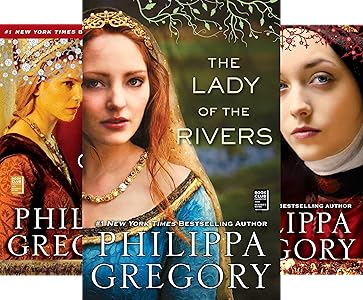
Time Period: 15th-16th Century England (Wars of the Roses through the Tudor dynasty)
Number of Books: 15+ (Multiple interconnected series)
First Book: The Constant Princess (2005) or The White Queen (2009)
Philippa Gregory has created an interconnected universe of novels covering the Wars of the Roses and the Tudor period, all told from the perspectives of women. While each series can be read independently, together they form a comprehensive fictional history of this tumultuous period.
Gregory’s approach is distinctive. She focuses on queens, princesses, and noblewomen, imagining their interior lives and motivations. Her women aren’t passive victims of history but active participants, scheming, surviving, and shaping events to the extent their limited power allows. This feminist perspective has made Gregory one of the most popular historical fiction authors writing today.
The most famous sequence is the Cousins’ War series, beginning with “The White Queen,” which follows Elizabeth Woodville, the commoner who became Edward IV’s queen. The series inspired the hit BBC/Starz television show “The White Queen” and its sequel “The White Princess.” Gregory’s characterization of these women, particularly her sympathetic portrayal of Richard III, sparked renewed interest in the history of the Wars of the Roses.
Gregory’s Tudor novels continue the story, following the women around Henry VIII (Catherine of Aragon, Anne Boleyn, Jane Seymour, etc.) and Elizabeth I. While some historians criticize Gregory for speculation and romantic embellishment, there’s no denying her skill at bringing these women to life and making medieval/Tudor England accessible to modern readers.
Why Read It: Female perspectives on familiar history, interconnected series, accessible prose, Wars of the Roses to Tudors, perfect for fans of royal history.
Wars of the Roses Series by Conn Iggulden
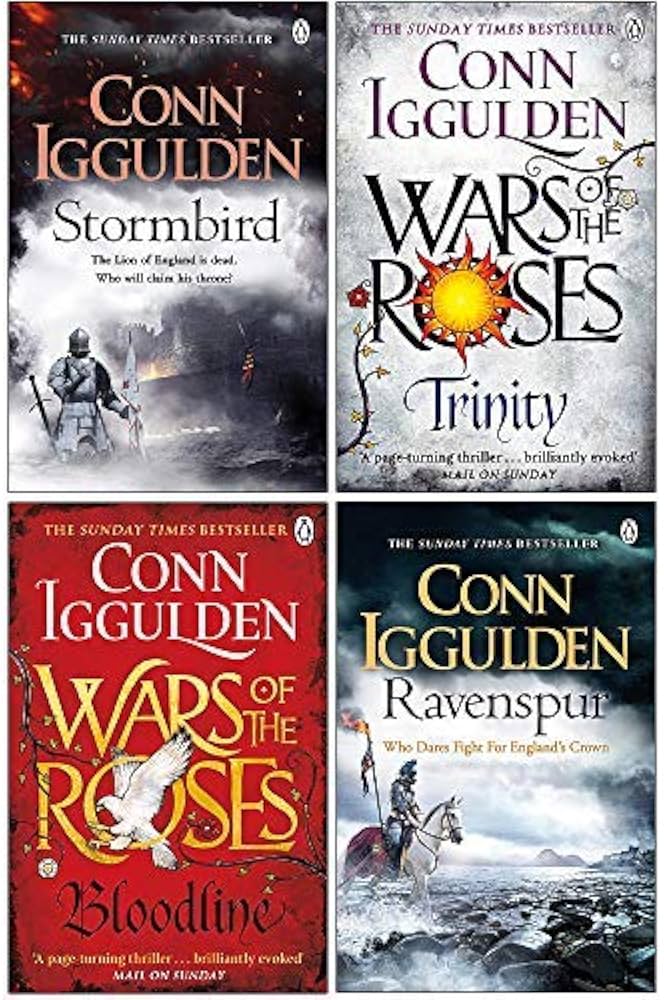
Time Period: Wars of the Roses (1437-1471)
Number of Books: 4 (Complete)
First Book: Stormbird (2013)
Conn Iggulden’s Wars of the Roses series offers a more action-oriented take on the 15th-century conflict than Philippa Gregory’s female-focused novels. Following the dynastic struggle between the Houses of Lancaster and York, these books emphasize the battlefield drama, political maneuvering, and the larger-than-life personalities of figures such as Margaret of Anjou, Richard Neville (the Kingmaker), and Edward IV.
Iggulden brings his characteristic energy to this complex period. The Wars of the Roses can be confusing with its shifting alliances and multiple claimants, but Iggulden makes the political landscape comprehensible while never losing narrative momentum. The battle scenes are vivid and brutal, portraying the harsh reality of medieval warfare, where knights in armor fought hand-to-hand in muddy fields.
What distinguishes this series is its even-handed approach. Both Lancastrians and Yorkists are portrayed sympathetically, with Henry VI’s piety and weakness contrasted against Edward IV’s vigor and pragmatism. Margaret of Anjou emerges as a fierce protector of her son’s inheritance, while Warwick the Kingmaker is shown as brilliant but ultimately too ambitious for his own good.
The series culminates with the rise of Edward IV and the temporary triumph of York, ending before Richard III’s controversial reign. For readers who want Wars of the Roses drama with page-turning pacing, this series delivers.
Why Read It: Wars of the Roses made accessible, exciting battle scenes, even-handed treatment of both sides, charismatic historical figures, and fast-paced.
Aubrey-Maturin Series by Patrick O’Brian
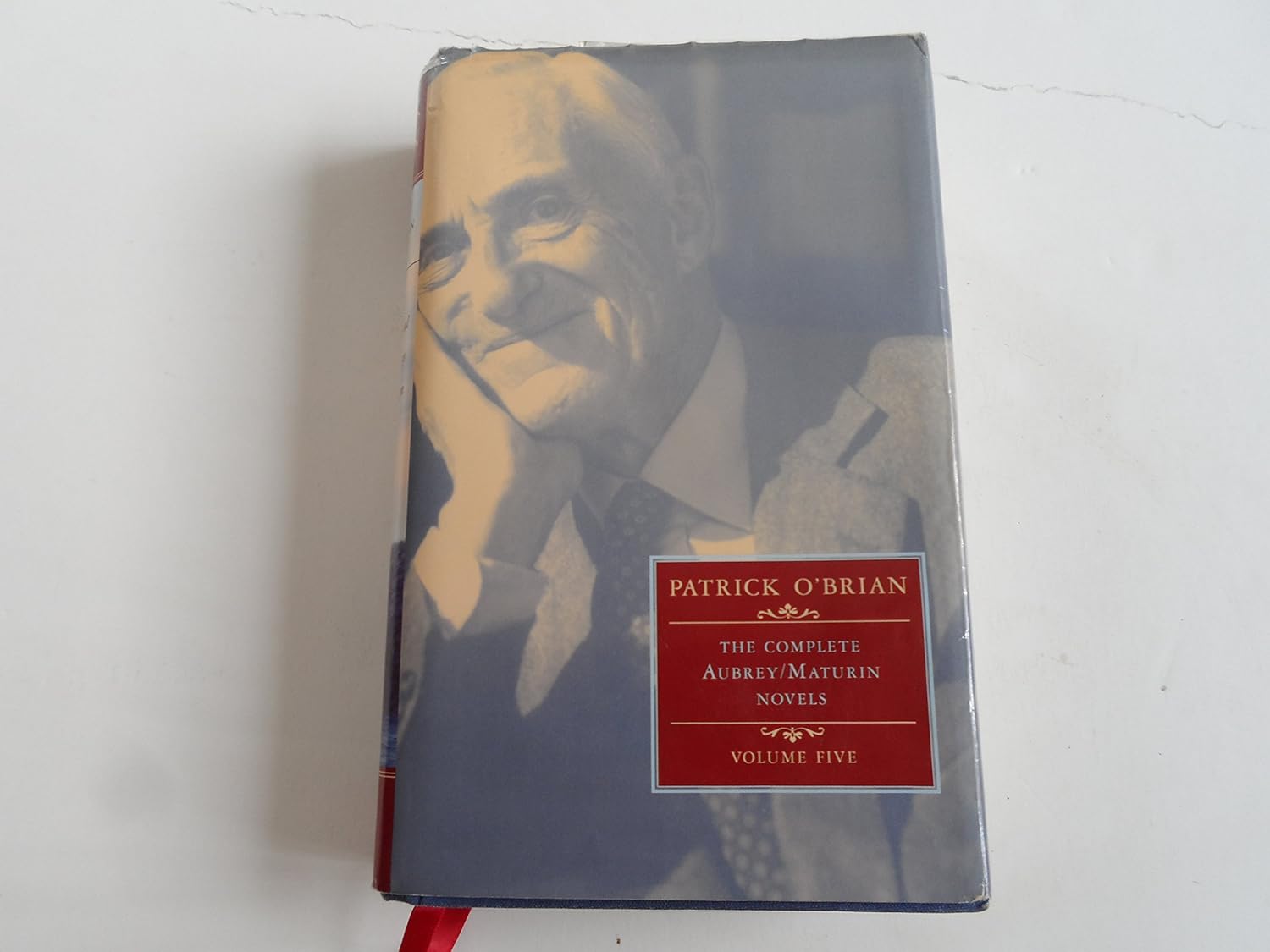
Time Period: Napoleonic Wars (1800-1815)
Number of Books: 20 (plus one unfinished)
First Book: Master and Commander (1969)
Patrick O’Brian’s Aubrey-Maturin series is widely considered the greatest naval historical fiction ever written. Following Captain Jack Aubrey of the Royal Navy and his friend Stephen Maturin, a ship’s surgeon and intelligence agent, these novels combine sea battles, espionage, natural history, music, and one of literature’s greatest friendships.
O’Brian’s prose is extraordinary, dense and allusive, requiring patient reading but offering immense rewards. He writes in a style that evokes 19th-century literature without being pastiche, and his knowledge of sailing, naval warfare, and Georgian life is encyclopedic. The sea battles are thrilling, but equally compelling are the quieter moments: Aubrey and Maturin playing music together, discussing philosophy, or simply navigating their differences.
The friendship between Aubrey and Maturin is the heart of the series. They’re opposites in many ways: Aubrey is hearty, optimistic, and conventional; Maturin is reserved, cynical, and intellectual. Yet they complement each other perfectly, and their bond deepens across twenty books. O’Brian never sentimentalizes their friendship, but its authenticity makes it moving.
What sets this series apart from other naval fiction is its intellectual depth. Maturin’s interests in natural history, intelligence work, and political philosophy add layers beyond sea battles. O’Brian explores British imperialism, the nature of honor, the tension between duty and desire, and the psychological cost of command.
The series inspired the excellent film “Master and Commander: The Far Side of the World” starring Russell Crowe, but the books offer far more complexity and depth.
Why Read It: Greatest naval historical fiction, extraordinary prose, legendary friendship, intellectual depth, Napoleonic Wars at sea.
The Saxon Tales by James Aitcheson
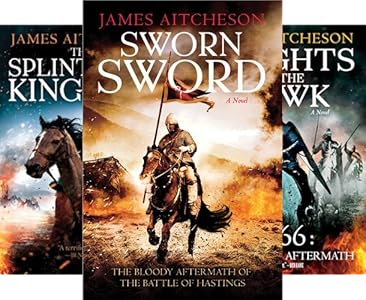
Time Period: Norman Conquest (1066-1086)
Number of Books: 4 (Complete)
First Book: Sworn Sword (2011)
James Aitcheson’s Conquest series (also known as the Saxon Tales, distinct from Cornwell’s series) explores the aftermath of the Norman Conquest from the Norman perspective. Tancred, a Norman knight, fights for William the Conqueror and his successors, participating in the brutal subjugation of England while grappling with his own conscience and the moral complexities of conquest.
This period is underrepresented in historical fiction, with most authors focusing either on 1066 itself or later medieval periods. Aitcheson fills this gap admirably, showing the grinding guerrilla warfare that followed Hastings, the devastating “Harrying of the North,” and the gradual transformation of England under Norman rule.
What makes Tancred compelling is his position as an outsider to power. He’s a skilled knight, but not a great lord, which gives him enough involvement in major events to witness history while maintaining the freedom to question what he sees. His evolving understanding of English resistance and Norman brutality adds moral complexity to what could have been simple conquest narratives.
Aitcheson’s battle scenes are gritty and realistic, his medieval world is convincingly rendered, and his prose is clear and engaging. For readers interested in the Norman Conquest beyond just the Battle of Hastings, this series is essential.
Why Read It: Underrepresented period, Norman perspective, moral complexity, post-conquest guerrilla warfare, well-researched.
How to Choose Your Next Series
With so many excellent options, how do you decide which series to start? Consider these factors:
Your Favorite Time Period: Start with the era that most interests you. Love ancient Rome? Try McCullough or Iggulden’s Emperor series. Fascinated by Vikings? Cornwell’s Saxon Stories are perfect. Tudor enthusiast? Mantel’s Wolf Hall trilogy or Gregory’s novels await.
Length Commitment: Some readers love diving into 20-book series, while others prefer trilogies. Shorter series, such as the Wolf Hall trilogy or the Warlord Chronicles, offer complete stories without requiring years of reading. Longer series, such as Sharpe or the Eagle books, provide endless entertainment for dedicated fans.
Writing Style: Consider whether you prefer literary prose (Mantel), fast-paced adventure (Iggulden), or dense historical detail (McCullough). Read a sample chapter before committing to a long series.
Character Focus: Do you prefer military adventures (Cornwell, Scarrow), political intrigue (Harris, McCullough), or character-driven drama (Gregory, Gabaldon)? Match the series to your preferences.
Accuracy vs. Entertainment: Some series prioritize historical accuracy almost religiously (McCullough), while others take creative liberties for the sake of storytelling (Gregory). Neither approach is wrong; they serve different reader needs.
Tips for Reading Long Historical Fiction Series
Pace Yourself: Don’t feel obligated to binge an entire 20-book series. Take breaks between books to avoid burnout, especially with series that cover similar ground (like multiple battles in military fiction).
Keep Notes: For series with large casts and complex politics, consider keeping a character list or timeline. Many readers maintain a simple note file on their phone with character names and relationships.
Start from the Beginning: While some series allow you to jump in midway, most reward reading from the beginning. You’ll catch references, understand character development, and appreciate the full narrative arc.
Use Reading Order Guides: Many long series were published out of chronological order. Check the author’s website or fan resources for recommended reading sequences.
Join Reader Communities: Subreddits, Goodreads groups, and Facebook communities dedicated to specific series enhance the experience. Discussing books with other fans adds another layer of enjoyment.
Don’t Force It: If you’re not enjoying a series by the second book, it’s okay to stop. Life’s too short for reading books you don’t love.
Frequently Asked Questions
What is the best historical fiction series of all time?
There’s no single “best” series as it depends on personal taste, but Bernard Cornwell’s Saxon Stories (The Last Kingdom), Ken Follett’s Kingsbridge series, and Hilary Mantel’s Wolf Hall trilogy are consistently cited as masterpieces. For fans of ancient Rome, Colleen McCullough’s Masters of Rome series is unmatched in its depth and research.
Should I read historical fiction series in publication order or chronological order?
Publication order is almost always recommended. Authors write series with a specific reading sequence in mind, building on previous books even when the chronology is non-linear. The only exceptions are series explicitly designed to be read in any order (rare in historical fiction).
How long does it take to read a complete historical fiction series?
This varies dramatically by series length and individual reading speed. A trilogy like Wolf Hall might take 2-4 weeks, while a 20-book series like Sharpe or Aubrey-Maturin could take a year or more. Most readers average one series book every 1-2 weeks.
Are historical fiction series historically accurate?
Accuracy varies by author and series. Authors like Colleen McCullough and Bernard Cornwell are meticulous about historical details, whereas others, such as Philippa Gregory, prioritize emotional truth over documented fact. Most series fall somewhere in between, being accurate about major events while inventing details and dialogue.
Can I watch the TV adaptation instead of reading the series?
TV adaptations can be excellent (The Last Kingdom, Outlander, Poldark), but they necessarily condense and modify the source material. Books offer far more depth, character development, and historical detail. The best approach is to enjoy both as complementary experiences.
What’s the difference between a series and a saga?
The terms are often used interchangeably, but “saga” typically implies a multi-generational epic covering a longer time span (like Follett’s Century Trilogy), while “series” can describe any sequence of connected books. In practice, the distinction is minor.
Should I read historical fiction series or standalone novels?
Both have merits. Series allow for deeper character development and exploration of historical periods across multiple books. Standalone novels offer complete, self-contained stories that do not require long-term commitments. Many readers enjoy both depending on their mood and available time.
Which historical fiction series is best for beginners?
Ken Follett’s Kingsbridge series, Bernard Cornwell’s Saxon Stories, or Conn Iggulden’s Emperor series are excellent starting points. They strike a balance between accessibility and quality, offering engaging stories that are neither too simple nor too complex.
Are there good historical fiction series with female protagonists?
Yes! Philippa Gregory’s novels, Diana Gabaldon’s Outlander series, and many of Ken Follett’s books feature strong female leads. While military historical fiction tends toward male protagonists (reflecting historical reality), many excellent series center on women’s experiences.
How do I avoid getting confused by large casts in series?
Keep simple notes on your phone listing main characters and their relationships. Many series include character lists at the beginning or maps and glossaries at the end. Taking brief breaks between books also helps consolidate what you’ve learned.
Conclusion
The best historical fiction series transport us across time and space, allowing us to live through the great events of history alongside characters who become as real as people we know. Whether you’re drawn to the clash of swords on a Saxon battlefield, the political machinations of ancient Rome, the elegance of Tudor courts, or the adventures of Napoleonic naval warfare, there’s a series waiting to captivate you.
These twenty series represent the pinnacle of historical fiction, combining rigorous research with compelling storytelling. They vary in style, scope, and subject matter, but they all share one common quality: the ability to bring history to life. You’ll finish these books with not just entertainment, but genuine insight into the past and the people who shaped it.
The beauty of a series is its sustained engagement. You don’t just read about a time period, you inhabit it across multiple books, watching characters grow and change, seeing historical events unfold from intimate perspectives, and developing a deep understanding of different eras. It’s immersive reading at its finest.
So choose your era, select your series, and prepare for a journey through time. Whether you start with Uhtred in 9th-century Britain, Gordianus in ancient Rome, or Claire and Jamie in 18th-century Scotland, you’re beginning a reading adventure that will reward you for months or even years to come.
Ready to start your next historical fiction series? Pick any of the twenty series above, find the first book, and begin your journey through history.

