


Bernard Cornwell is one of the most prolific and beloved historical fiction authors writing today, with over 60 novels spanning more than four decades. Best known for “The Last Kingdom” series (adapted by Netflix) and the Sharpe novels (adapted by ITV), Cornwell has built a reputation for meticulously researched military historical fiction that brings the past to life with brutal authenticity and compelling characters.
If you’re wondering where to start with Bernard Cornwell, how many books he’s written, or what order to read his series, this complete guide has everything you need. We’ll cover all his major series, standalone novels, recommended reading orders, and help you find the perfect Cornwell book for your interests.
Whether you’re fascinated by Saxon England, the Napoleonic Wars, Arthurian legend, or medieval warfare, Cornwell has written something that will keep you turning pages late into the night.
Disclosure: This article contains affiliate links. We earn from qualifying purchases at no extra cost to you.About Bernard Cornwell
Early Life and Background
Bernard Cornwell was born on February 23, 1944, in London, England. He was adopted as an infant by the Wiggins family, members of the Peculiar People, a strict evangelical Christian sect. This unusual upbringing, which forbade television, movies, and many aspects of popular culture, ironically gave him a love of reading that would shape his future career.
Cornwell studied history at University College London (1963-1966) and worked as a teacher before joining the BBC. He worked as a researcher on the Nationwide programme and later became the head of current affairs at BBC Northern Ireland, developing storytelling skills that would later serve him well in his fiction writing.
How He Became a Writer
Cornwell’s path to becoming a novelist was unconventional. In 1979, he fell in love with Judy, an American woman he met while she was visiting England. However, he was denied a work permit, which prevented him from moving to the United States. Unable to work in America legally, he decided to write a novel, something he could do without a work permit.
His first book, “Sharpe’s Eagle,” was published in 1981 and introduced Richard Sharpe, a British soldier fighting in the Napoleonic Wars. The book was successful enough that Cornwell could continue writing, and he’s been a full-time novelist ever since. He eventually married Judy and settled in Cape Cod, Massachusetts, where he still lives and writes today.
Writing Career Highlights
Over the course of four decades, Cornwell has published more than 60 novels, making him one of the most prolific authors of historical fiction. His books have sold millions of copies worldwide and been translated into dozens of languages. Two of his series have been adapted for television: the Sharpe novels (starring Sean Bean) and The Last Kingdom/Saxon Stories (starring Alexander Dreymon).
Cornwell is known for his meticulous research, often visiting battle sites and studying military tactics in detail. He’s particularly gifted at writing battle scenes, which are both historically accurate and gripping to read. Despite his success, he maintains a humble approach to his craft, referring to himself as an entertainer rather than a literary author.
Awards and Recognition
While Cornwell has never won major literary prizes (his genre fiction is often overlooked by literary award committees), he’s received recognition from historical and military communities:
- Officer of the Order of the British Empire (OBE) in 2006 for services to literature
- Elected a Fellow of the Royal Society of Arts
- Honorary doctorate from the University of Essex
- Consistently appears on bestseller lists worldwide
- The Last Kingdom series has introduced millions to Saxon history
Current Status
As of 2025, Bernard Cornwell is 80 years old and continues to write. He published “War Lord,” the final book in The Last Kingdom series, in 2020, completing the 13-book saga. He continues to work on other projects and has expressed interest in writing more standalone historical novels. Cornwell maintains a website with occasional updates where he sometimes provides news on his work.
Bernard Cornwell Series in Reading Order
Cornwell has written five major historical fiction series and several standalone novels. Here’s a complete breakdown of his work, organized by series.
The Last Kingdom (Saxon Stories)
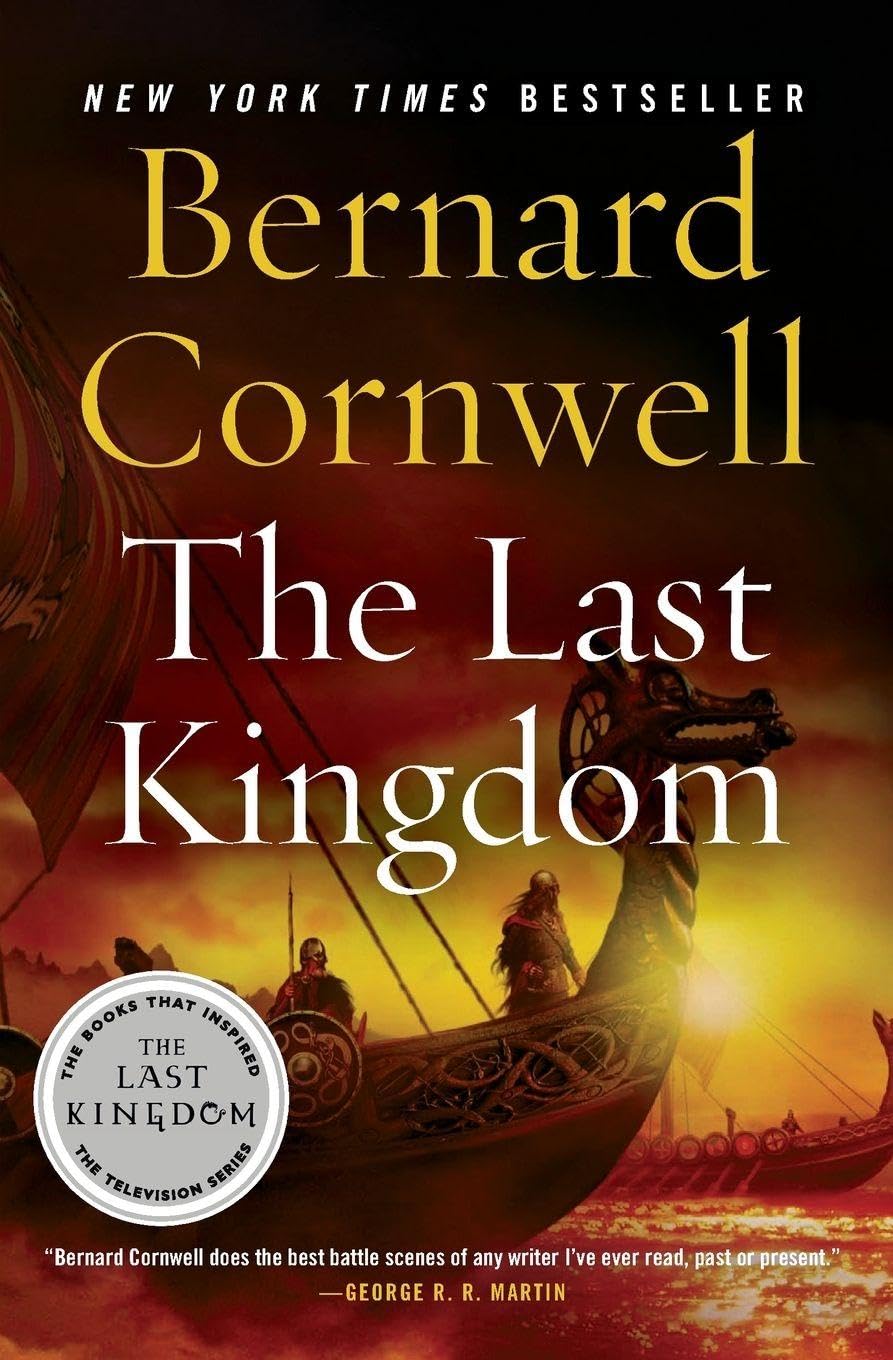
Time Period: 9th-10th Century England (Viking Age)
Number of Books: 13 (Complete)
First Published: 2004
Last Published: 2020
This is Bernard Cornwell’s most popular series, following Uhtred of Bebbanburg, a Saxon nobleman captured and raised by Vikings. The series chronicles the birth of England as Saxon kingdoms unite against Danish invaders, with Uhtred serving (reluctantly) under Alfred the Great and his successors.
Why This Series Is Special
The Last Kingdom series represents Cornwell at his finest. Uhtred is one of historical fiction’s most compelling protagonists, torn between Saxon Christianity and Danish paganism, between duty and personal ambition, between his oath to Alfred and his desire to reclaim his birthright of Bebbanburg.
The series covers a crucial period in English history: the unification of Saxon kingdoms into what would become England. Cornwell brings the Dark Ages to life with vivid battle scenes, intricate political maneuvering, and a profound understanding of the period’s complex religious and cultural tensions.
Complete Reading Order
- The Last Kingdom (2004) – Uhtred’s childhood, capture by Vikings, and early service to Alfred
- The Pale Horseman (2005) – Alfred’s darkest hour and Uhtred’s divided loyalties
- The Lords of the North (2006) – Uhtred returns north to reclaim Bebbanburg
- Sword Song (2007) – The battle for London and Danish threats
- The Burning Land (2009) – Mercian politics and continued Viking invasions
- Death of Kings (2011) – Alfred’s final days and succession crisis
- The Pagan Lord (2013) – Uhtred’s son and the next generation
- The Empty Throne (2014) – Aethelflaed’s struggles and Mercian power
- Warriors of the Storm (2015) – Irish Vikings and new threats
- The Flame Bearer (2016) – Uhtred’s final attempt on Bebbanburg
- War of the Wolf (2018) – Scotland and northern warfare
- Sword of Kings (2019) – Succession and political intrigue
- War Lord (2020) – The saga’s conclusion and Uhtred’s final battle
About the TV Adaptation
Netflix’s “The Last Kingdom” (5 seasons, 2015-2022) brought the series to a global audience. Alexander Dreymon’s portrayal of Uhtred introduced millions to the history of the Saxons. The show generally follows the books’ major plot points but makes changes for dramatic purposes. A feature film, “Seven Kings Must Die,” concluded the TV series in 2023.
Bernard Cornwell had a small cameo appearance as a drunken priest in Season 2, Episode 4 of the Netflix series.
Why Read It: Epic scope, complex protagonist, birth of England, visceral battles, pagan vs. Christian themes, 13 books of consistent quality.
Related Reading: Best Viking Historical Fiction | Best Medieval Historical Fiction | Most Popular Historical Fiction Time Periods
Sharpe Series
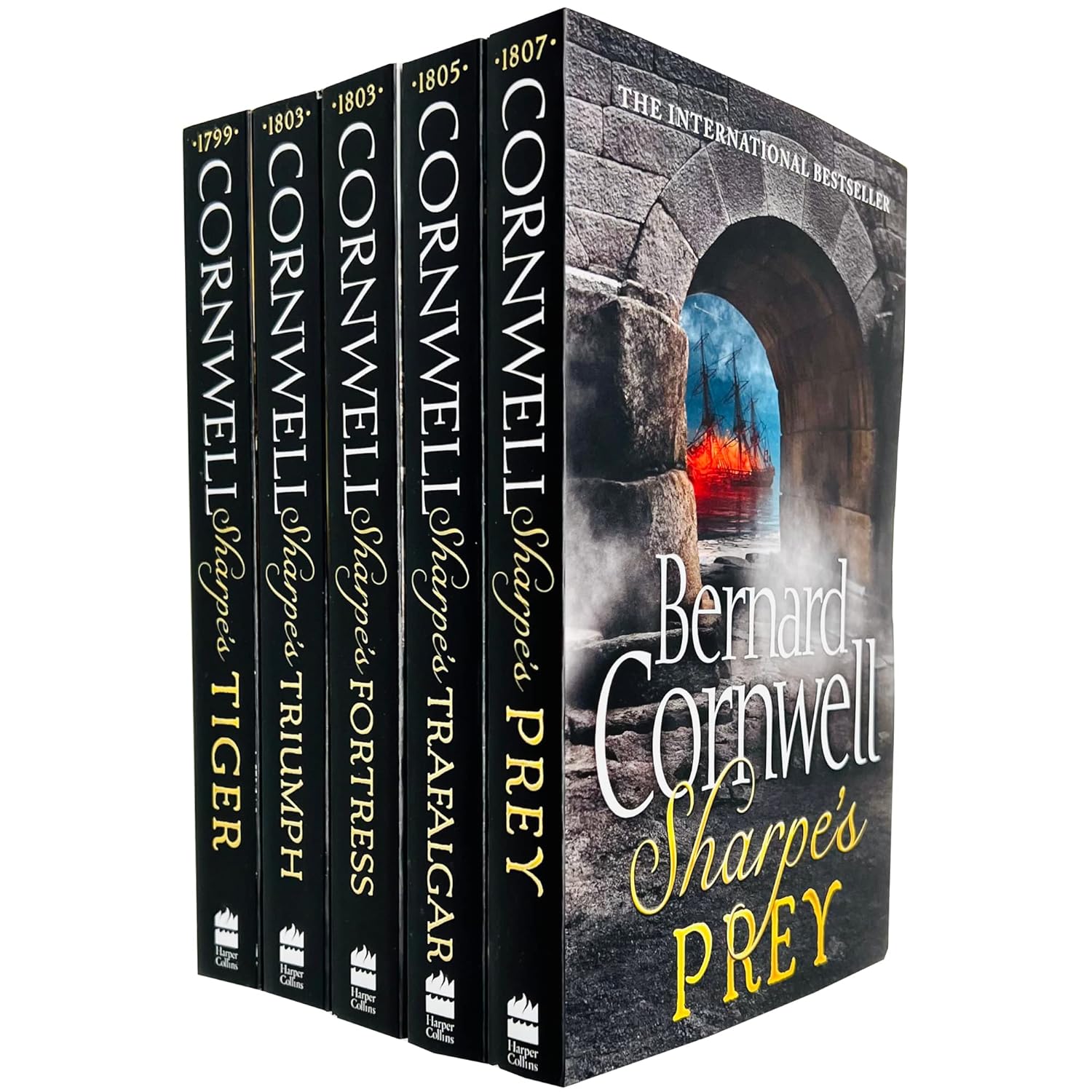
Time Period: Napoleonic Wars (1799-1815) plus later India novels
Number of Books: 24 novels (plus short stories)
First Published: 1981
Last Published: 2007 (main series)
The Sharpe series follows Richard Sharpe, a British soldier who rises from the ranks to become an officer during the Napoleonic Wars. While Cornwell published the books out of chronological order, they can be read either in publication order or historical chronological order.
Why This Series Is Special
Sharpe was Cornwell’s first creation and remains one of the most iconic characters in historical fiction. A rough-edged, working-class soldier in an officer corps dominated by aristocrats, Sharpe earns his promotions through battlefield prowess rather than purchased commissions. He’s the ultimate underdog hero in a historical setting.
What makes the series enduringly popular is its combination of military action, historical accuracy, and character-driven storytelling. Each book is essentially a standalone adventure set during a real Napoleonic battle or campaign, making them perfect for readers who want to dip in anywhere.
Complete Reading Order (Chronological by Story Timeline)
India (1799-1805):
- Sharpe’s Tiger (1997) – Siege of Seringapatam, 1799
- Sharpe’s Triumph (1998) – Battle of Assaye, 1803
- Sharpe’s Fortress (1999) – Siege of Gawilghur, 1803
- Sharpe’s Trafalgar (2000) – Sea voyage home, Battle of Trafalgar, 1805
Peninsular War – Portugal & Spain (1809-1814):
- Sharpe’s Rifles (1988) – Retreat to Corunna, 1809 [First published]
- Sharpe’s Havoc (2003) – Portugal, 1809
- Sharpe’s Eagle (1981) – Battle of Talavera, 1809 [First Sharpe novel written]
- Sharpe’s Gold (1981) – Portugal, 1810
- Sharpe’s Escape (2004) – Lines of Torres Vedras, 1810
- Sharpe’s Fury (2006) – Cádiz and Barrosa, 1811
- Sharpe’s Battle (1995) – Fuentes de Oñoro, 1811
- Sharpe’s Company (1982) – Siege of Badajoz, 1812
- Sharpe’s Command (2023) – Almaraz bridge, May 1812
- Sharpe’s Sword (1983) – Salamanca, 1812
- Sharpe’s Enemy (1984) – Portugal, 1812
- Sharpe’s Honour (1985) – Vitoria, 1813
- Sharpe’s Regiment (1986) – England, 1813
- Sharpe’s Siege (1987) – France, 1814
- Sharpe’s Revenge (1989) – Toulouse, 1814
Waterloo (1815):
- Sharpe’s Waterloo (1990) – Battle of Waterloo, 1815
Later Adventures:
- Sharpe’s Assassin (2021) – Paris after Waterloo, 1815
- Sharpe’s Devil (1992) – Chile and the Pacific, 1820-1821
Short Stories:
- Sharpe’s Skirmish (1999) – Short story, 1812
- Sharpe’s Christmas (2003) – Short story
- Sharpe’s Ransom (1990s, various reprints) – Short story
Publication vs. Chronological Order
Cornwell wrote the Sharpe books out of chronological sequence. He began with “Sharpe’s Eagle” (set in 1809) and later filled in Sharpe’s backstory with the India novels and earlier adventures. You can read them either way:
Publication Order: Follow Cornwell’s writing journey and experience how he developed the character over time.
Chronological Order: Follow Sharpe’s life from beginning to end, watching him age naturally from a young soldier to an experienced officer.
Both approaches have devoted followings among fans. Chronological order provides a more cohesive character arc, while publication order shows Cornwell’s evolution as a writer. For first-time readers, chronological order is often recommended, though many longtime fans prefer publication order.
About the TV Adaptation
The TV series “Sharpe” (1993-2008) starred Sean Bean as Richard Sharpe and is beloved by fans. The show adapted most of the Peninsular War novels, though with changes for budget and dramatic purposes. Bean’s portrayal defined Sharpe for many readers and helped popularize the books beyond their original audience.
Why Read It: Classic military adventure, Napoleonic warfare expertise, charismatic protagonist, can read in any order, 24 novels plus short stories.
Related Reading: Best Historical Fiction Series | Best Historical Fiction of All Time
Warlord Chronicles
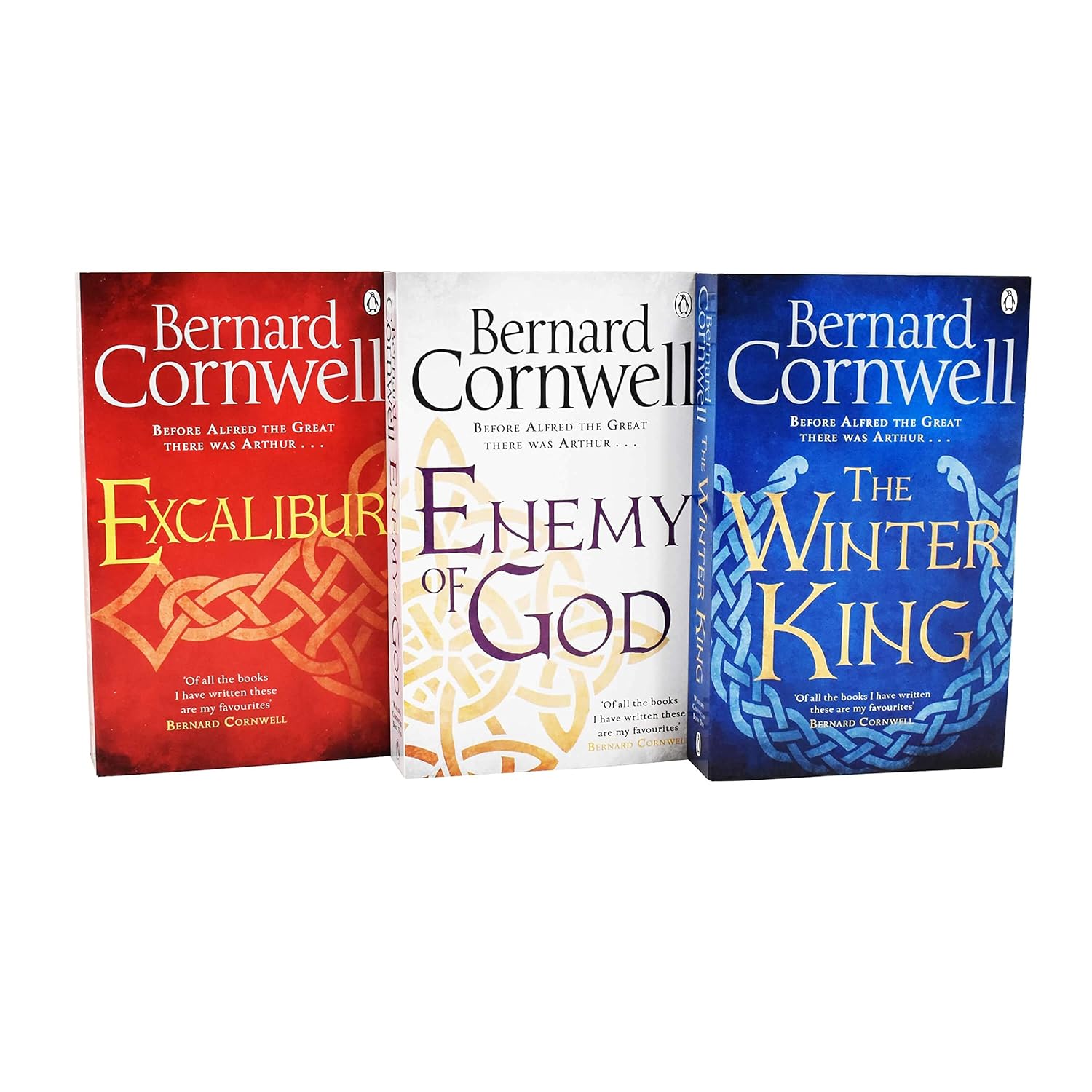
Time Period: 5th-6th Century Britain (Dark Ages/Arthurian Era)
Number of Books: 3 (Complete)
First Published: 1995-1997
Many Cornwell fans consider the Warlord Chronicles his masterpiece. This trilogy reimagines Arthurian legend as historical fiction, stripping away medieval chivalry and magic to reveal a darker, more plausible story of post-Roman Britain.
Why This Series Is Special
Arthur isn’t a king in shining armor; he’s a warlord trying to hold together a fractured Britain against Saxon invaders. Guinevere isn’t a passive queen; she’s a pagan priestess with political ambitions. Lancelot isn’t a noble knight; he’s a vain coward propped up by propaganda. Merlin exists, but as a Druid trying to restore the old gods, not a wizard with mystical powers.
The story is narrated by Derfel Cadarn, one of Arthur’s warriors, writing in his old age as a monk. This framing device allows Cornwell to explore how history becomes legend, how great men become myths, and how the truth gets lost in the telling.
Complete Reading Order
- The Winter King (1995) – Arthur’s rise to power and early campaigns
- Enemy of God (1996) – The height of Arthur’s power and the quest for sacred treasures
- Excalibur (1997) – The fall of Arthur and the final battles
What Makes It Brilliant
Cornwell explains every “magical” element rationally. Excalibur is an exceptional sword whose legend grows with each retelling. The Round Table is a political arrangement, not a piece of furniture. The Holy Grail quest becomes a search for pagan treasures. He demonstrates how historical events evolve into legends through the transmission of oral tradition and the influence of political propaganda.
The battles are visceral and brutal, the politics are complex, and the characters are deeply human. Arthur is heroic but flawed, struggling to maintain order against overwhelming odds. The trilogy builds to a devastating conclusion that honors the tragedy at the heart of Arthurian legend while remaining grounded in historical possibility.
Why Read It: Arthurian legend reimagined as history, brilliant deconstruction of familiar myths, Cornwell at his finest, complete in three books, darker and more mature than his other series.
Related Reading: Best Medieval Historical Fiction | What Makes Historical Fiction Accurate
Grail Quest Series
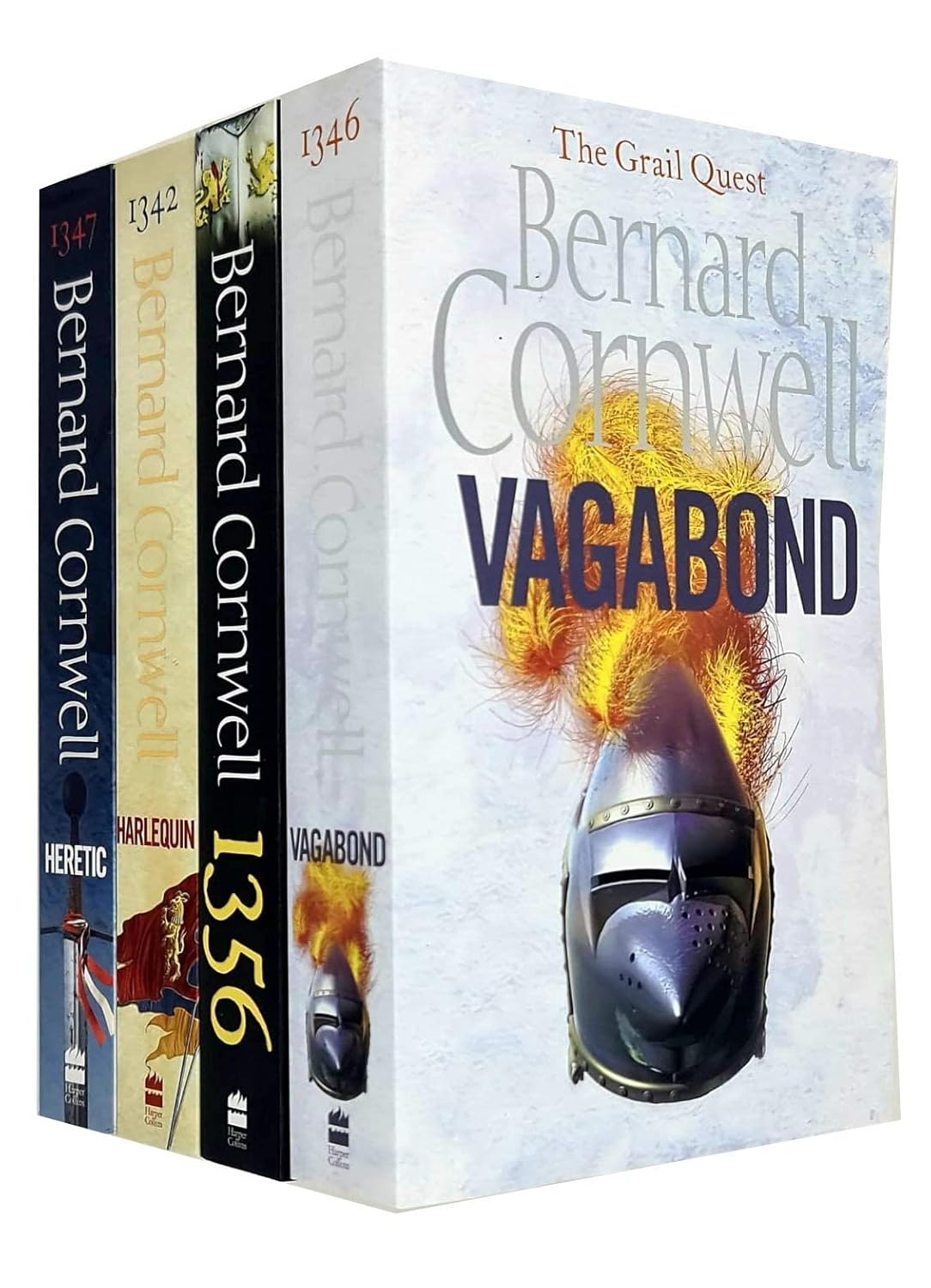
Time Period: Hundred Years’ War (1340s-1350s)
Number of Books: 4 (Complete)
First Published: 2000-2012
The Grail Quest series follows Thomas of Hookton, an English archer whose village is destroyed by French raiders. Thomas becomes one of the feared English longbowmen, fighting at Crécy and other major battles while pursuing a personal quest for the Holy Grail and revenge against those who killed his father.
Complete Reading Order
- Harlequin (2000) – US title: “The Archer’s Tale.”
- Vagabond (2002)
- Heretic (2003)
- 1356 (2012) – Battle of Poitiers
Why This Series Stands Out
The Grail Quest series is essential reading for anyone interested in medieval warfare, particularly those who are passionate about archery. Cornwell explains how longbows were made, the training required to use them effectively (from childhood), and the devastating impact they had on medieval battlefields. The Battle of Crécy, where English archers slaughtered French knights, is rendered with brutal authenticity.
Thomas is driven by both revenge and faith. The quest for the Grail adds a mystical element without overwhelming the historical realism. Cornwell is too smart to resolve whether the Grail is real or symbolic, leaving it ambiguous while using the quest to explore medieval faith and superstition.
At four books, this is one of Cornwell’s shorter series, making it perfect for readers who want a taste of his medieval fiction without committing to a 13-book saga.
Why Read It: Medieval warfare expertise, English longbow mastery, Hundred Years’ War, Grail quest, complete in four books, Battle of Crécy depicted.
Related Reading: Best Medieval Historical Fiction
Starbuck Chronicles
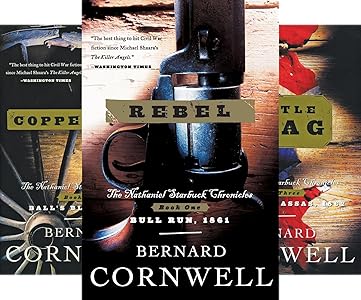
Time Period: American Civil War (1861-1865)
Number of Books: 4 (Incomplete/On Hold)
First Published: 1993-1996
The Starbuck Chronicles follow Nathaniel Starbuck, a Boston abolitionist’s son, who finds himself fighting for the Confederacy. This series showcases Cornwell’s ability to write American history, though it remains incomplete after four books.
Complete Reading Order (So Far)
- Rebel (1993)
- Copperhead (1994)
- Battle Flag (1995)
- The Bloody Ground (1996)
Series Status
Cornwell has stated he intends to return to the Starbuck series someday, but as of 2025, no new books have been published since 1996. The series remains incomplete, ending before major Civil War battles, such as the Battle of Gettysburg. Fans continue to hope for continuation, but Cornwell has been focused on completing The Last Kingdom series and other projects.
Despite being incomplete, the four existing books are excellent Civil War fiction, featuring Cornwell’s trademark battle scenes and complex protagonist.
Why Read It: The American Civil War, a complex moral position (Northerners fighting for the South), Cornwell’s battle scene expertise, and a caveat that the series is incomplete.
Standalone Novels
Beyond his series work, Cornwell has written several standalone historical novels:
Redcoat (1987)
Time Period: American Revolutionary War (1777)
Setting: Philadelphia under British occupation
Cornwell’s first standalone follows Sam Gilpin, a young British soldier (a “Redcoat”), who witnesses his brother’s death and must choose between duty to the King and his own conscience. Set during Philadelphia’s 1777 occupation by the British, the novel explores the American Revolution from the British perspective, showing how the war divided families and tested loyalties. The Becket family represents this divide, with members on both sides of the conflict.
Stonehenge (1999)
Time Period: Neolithic Britain (circa 2000 BC)
Setting: Salisbury Plain
This ambitious novel imagines the building of Stonehenge through the story of three brothers: Lengar (a ruthless warrior), Camaban (a visionary priest), and Saban (the builder). Cornwell explores how and why Stonehenge might have been constructed, weaving archaeology and speculation into an epic family drama about ambition, religion, and the creation of one of history’s most mysterious monuments.
Gallows Thief (2001)
Time Period: Regency England (1820s)
Setting: London after Waterloo
Part detective story, part social commentary, this novel follows Rider Sandman, a Waterloo veteran who must investigate whether a man condemned to hang is truly guilty. Set in a London where public hangings are a form of entertainment and justice is often corrupt, Cornwell creates a compelling mystery while exploring the social problems of post-Napoleonic England.
Azincourt (2008)
US title: “Agincourt”
Time Period: Hundred Years’ War (1415)
Setting: France, Battle of Agincourt
This standalone provides a detailed account of Henry V’s legendary victory at Agincourt. Following Nicholas Hook, an English archer, Cornwell showcases his expertise in medieval warfare and longbow tactics. The book is essentially a military history of the Agincourt campaign wrapped in a compelling narrative, featuring Cornwell’s signature battle scenes.
The Fort (2010)
Time Period: American Revolutionary War (1779)
Setting: Penobscot Bay, Maine
Based on the real but largely forgotten Penobscot Expedition, this novel recounts the story of the worst American naval disaster until the attack on Pearl Harbor. Massachusetts forces attempt to dislodge a British garrison from Penobscot Bay, but the expedition ends in humiliating defeat. Cornwell explores leadership failures and military incompetence in this lesser-known Revolutionary War disaster.
Fools and Mortals (2017)
Time Period: Elizabethan England (1590s)
Setting: London theater world
A departure from military fiction, this novel follows Richard Shakespeare, William’s fictional younger brother, through the dangerous world of Elizabethan theater. When a play manuscript is stolen, Richard must navigate rivalries, betrayals, and the rough underside of London to recover it. The book explores Shakespeare’s theater company and the creative world of Renaissance drama without Cornwell’s usual battlefield focus.
Sailing Thriller Series
Cornwell also wrote a series of contemporary thrillers with sailing themes, though he has stated he’s unlikely to write more:
- Wildtrack (1988)
- Sea Lord (1989) – Also published as “Killer’s Wake.”
- Crackdown (1990)
- Stormchild (1991)
- Scoundrel (1992)
These modern-day adventure novels feature sailing, smuggling, and intrigue. While not historical fiction, they showcase Cornwell’s versatility as a storyteller. He’s a traditional sailor himself, and these books reflect his love of the sea.
Collaborative Works
A Crowning Mercy (1983), Fallen Angels (1984), and Coat of Arms (1986) were co-written by his wife, Judy, under the pseudonym “Susannah Kells.” These novels explore English history, with “A Crowning Mercy” drawing on Cornwell’s strict Protestant upbringing and set during the English Civil War.
Why Read Standalones: Complete stories in one book, showcase Cornwell’s range beyond his series work, perfect for readers who don’t want series commitments, still feature his trademark battle scenes, and research quality.
Where to Start with Bernard Cornwell
With over 60 books, knowing where to begin can be overwhelming. Here are recommendations based on different interests:
Best First Book: The Last Kingdom
This is Cornwell’s most accessible and popular series. The first book introduces you to his style: visceral battles, complex protagonists, meticulous research, and page-turning pacing. If you enjoy it, you have 12 more books to look forward to. The Netflix series also offers a visual companion for those who want to experience the story in multiple formats.
If You Want Classic Military Adventure: Sharpe’s Rifles
This was written as a prequel after Cornwell had established the series, making it a natural starting point. It introduces Sharpe clearly and launches into immediate action. The Peninsular War setting is fascinating, and you’ll quickly understand why the series has endured for over 40 years.
If You Love Arthurian Legend: The Winter King
The Warlord Chronicles consists of three books, making it a manageable commitment. It’s also arguably Cornwell’s finest work. Darker, more complex, and more literary than his other series. If you’re familiar with Arthurian legend, you’ll appreciate how Cornwell deconstructs and reimagines it.
If You’re Not Sure: Azincourt (standalone)
This standalone novel about the Battle of Agincourt gives you everything that makes Cornwell great: medieval warfare, archery expertise, historical detail, and gripping storytelling in a single book. If you love it, you’ll know his series will deliver more of the same quality.
If You Want Completed Series: Warlord Chronicles or Grail Quest
Both series are complete, so you won’t be left waiting for more books. The Warlord Chronicles is a trilogy of books, and is more literary in nature. The Grail Quest is a four-book series and a more straightforward adventure. Choose based on whether you prefer Arthurian reimagining or medieval warfare.
Reading Order Recommendations
Can You Read Cornwell Out of Order?
Series: Each series should be read in order, as they follow continuous character development and story arcs. The exception is Sharpe, which can be read somewhat out of order, as each book is a relatively self-contained adventure; however, chronological reading is still recommended.
Between Series: You can absolutely read different series in any sequence. There’s no connection between The Last Kingdom and Sharpe, or between Warlord Chronicles and Grail Quest. Jump between series based on your mood and interests.
Suggested Reading Path for New Fans
Path 1: Start with the Vikings
- The Last Kingdom series (13 books)
- Warlord Chronicles (3 books)
- Grail Quest (4 books)
- Sharpe series (24 books)
Path 2: Start with the Napoleonic Wars
- Sharpe series (24 books)
- The Last Kingdom series (13 books)
- Other series as interest dictates
Path 3: Taste Everything
- The Last Kingdom (book 1)
- Sharpe’s Rifles (book 1 in chronological order)
- The Winter King (book 1)
- Azincourt (standalone)
- Then commit to whichever series you liked best
Bernard Cornwell’s Writing Style and Approach
Battle Scenes
Cornwell is widely regarded as one of the best writers of battle scenes in historical fiction. His military background research is meticulous—he visits battlefields, studies tactics, and understands weaponry and formations. The battles feel authentic: chaotic, brutal, exhausting, and terrifying. He doesn’t glorify violence but shows warfare’s reality.
Historical Research
Cornwell is a serious historical researcher who reads extensively before writing each book. His author’s notes (always included at the end of his novels) explain what’s historically accurate and where he’s taken creative liberties. He’s honest about the limitations of historical sources, especially for periods like the Dark Ages, where records are sparse. Though he calls himself an entertainer rather than a historian, his commitment to research is evident in every book.
Protagonists
Cornwell’s protagonists tend to share certain traits: they’re skilled warriors, often outsiders to the establishment, driven by personal goals (reclaiming Bebbanburg, rising above their birth, seeking revenge), and they find themselves serving causes they don’t always believe in. They’re not always likable. Uhtred can be arrogant, Sharpe can be brutal, but they’re always compelling.
Pacing
Cornwell writes page-turners. His chapters are relatively short, his prose is clean and uncluttered, and he knows how to maintain momentum. You’re never more than a few chapters from a battle or a dramatic confrontation. This makes his books perfect for readers who want history that reads like adventure.
Historical Detail
Cornwell balances detail with accessibility. He includes enough historical context to make the period come alive, the smell of the battlefield, the weight of armor, and the politics of the time, without overwhelming readers with unnecessary information. His descriptions serve the story rather than replacing it.
Similar Authors You’ll Enjoy
If you love Bernard Cornwell’s work, try these authors who write similar historical military fiction:
Simon Scarrow
Why Similar: Military historical fiction with strong battle scenes
Try: Eagle series (Roman army) or Revolution series (Napoleonic Wars)
Link: Eagle Series Reading Order [when created]
Conn Iggulden
Why Similar: Epic historical fiction with battle scenes, covers Rome and medieval periods
Try: Emperor series (Julius Caesar) or Wars of the Roses series
Link: Conn Iggulden author page [when created]
Giles Kristian
Why Similar: Viking historical fiction with brutal battles
Try: Raven series or Lancelot trilogy
Link: Best Viking Historical Fiction
Patrick O’Brian
Why Similar: Military historical fiction (naval rather than land), Napoleonic era
Try: Aubrey-Maturin series (Master and Commander)
Link: Best Historical Fiction Series
C.S. Forester
Why Similar: Military adventure, created Hornblower (naval equivalent of Sharpe)
Try: Horatio Hornblower series
Ben Kane
Why Similar: Roman military fiction with visceral battle scenes
Try: Forgotten Legion trilogy or Hannibal series
Angus Donald
Why Similar: Medieval warfare, Robin Hood reimagined
Try: Outlaw Chronicles
Matthew Harffy
Why Similar: Dark Ages warfare, a similar period to The Last Kingdom
Try: Bernicia Chronicles
Frequently Asked Questions
How many books has Bernard Cornwell written?
As of 2025, Bernard Cornwell has written over 60 novels. This includes:
- The Last Kingdom/Saxon Stories: 13 books
- Sharpe series: 24 novels plus short stories
- Warlord Chronicles: 3 books
- Grail Quest: 4 books
- Starbuck Chronicles: 4 books (incomplete)
- Standalone novels: 3+ books
- Various short stories and novellas
What order should I read Bernard Cornwell’s books?
Each series should be read in its own order (listed in detail above), but you can read different series in any sequence. For The Last Kingdom, start with “The Last Kingdom” and read through “War Lord.” For Sharpe, you can read in either publication order or chronological order (chronological is recommended for new readers). There’s no connection between different series, so jump between them as you wish.
Where should I start with Bernard Cornwell?
Start with “The Last Kingdom” if you like Vikings and Dark Ages history. Start with “Sharpe’s Rifles” if you prefer Napoleonic warfare. Start with “The Winter King” if you’re a fan of Arthurian legend. Start with “Azincourt” if you want to try a standalone before committing to a series.
What is Bernard Cornwell’s best book?
This is subjective, but many fans and critics consider the Warlord Chronicles (particularly “The Winter King”) to be his finest work. However, “The Last Kingdom” series is his most popular, and the Sharpe novels are his most enduring. The “best” Cornwell book depends on which historical period interests you the most.
Are Bernard Cornwell’s books historically accurate?
Cornwell is meticulous about historical research. Major events, battles, and historical figures are portrayed accurately. He takes creative liberties with dialogue, minor characters, and some plot details where the historical record is unclear. His author’s notes always explain what’s fact and what’s fiction. His battle scenes and military tactics are particularly well-researched and accurate.
Is The Last Kingdom the same as the Saxon Stories?
Yes. “The Last Kingdom” is both the title of the first book and the series name used in the U.S. and for the Netflix adaptation. In the UK, the series is called “The Saxon Stories” or “The Saxon Tales.” They’re the same 13-book series following Uhtred of Bebbanburg.
What is Bernard Cornwell’s latest book?
As of 2025, Bernard Cornwell’s most recent publication is “Sharpe’s Command” (2023), a novella in the Sharpe series set after the Battle of Waterloo. His last full novel was “Sharpe’s Assassin” (2021). “War Lord” (2020) concluded the “The Last Kingdom” series. At 80 years old, Cornwell continues to write, albeit at a slower pace than during his earlier career.
Who did Bernard Cornwell play in The Last Kingdom?
Bernard Cornwell made a cameo appearance in the Netflix series The Last Kingdom as a drunken priest in Season 2, Episode 4. It was a brief but memorable appearance that delighted fans who recognized him.
What is Bernard Cornwell’s net worth?
While exact figures aren’t publicly disclosed, Bernard Cornwell’s net worth is estimated in the millions of pounds/dollars. With over 60 books, multiple TV adaptations, and decades of consistent bestseller status, he’s one of historical fiction’s most financially successful authors. However, he’s known for being private about his finances and personal life.
How old is Bernard Cornwell?
Bernard Cornwell was born on February 23, 1944, making him 80 years old as of 2025. Despite his age, he continues to write and interact with fans through his website and social media.
Where does Bernard Cornwell live?
Bernard Cornwell lives in Cape Cod, Massachusetts, USA. He moved to America in the 1980s after meeting his American wife Judy, and has remained there ever since, though he frequently returns to England for research and book tours.
Will there be more Sharpe books?
Cornwell published two new Sharpe works in the 2020s (“Sharpe’s Assassin” in 2021 and “Sharpe’s Command” in 2023), showing he hasn’t completely left the character behind. However, at 80 years old, it’s unclear if there will be more Sharpe novels. The main series is considered complete, with any new books being “bonus” additions.
Will the Starbuck Chronicles continue?
Cornwell has said he intends to return to the Starbuck Chronicles, but no new books have been published since 1996. At this point, after nearly 30 years, it seems unlikely the series will continue, though Cornwell has never officially declared it abandoned. Fans continue to hope, but shouldn’t hold their breath.
Can I read Sharpe books out of order?
Yes, somewhat. Each Sharpe book is a relatively self-contained adventure set during a specific battle or campaign. You can read them out of order and still follow the plot. However, reading chronologically (by story timeline, not publication order) provides the best experience of Sharpe’s character development, from young soldier to experienced officer.
What is Uhtred’s destiny?
In the Last Kingdom series, Uhtred’s primary goal is to reclaim his ancestral fortress of Bebbanburg in Northumbria, which was stolen from him as a child. His “destiny” (a recurring theme in the series) is intertwined with the birth of England under Alfred the Great and his successors, though Uhtred himself is pagan and often reluctant to serve Christian Saxon kings. The series explores whether Uhtred’s personal destiny (Bebbanburg) or his historical destiny (serving England) holds more significance.
Are Cornwell’s books appropriate for young adults?
Cornwell’s books contain graphic battle violence, occasional sexual content, and strong language. They’re generally marketed to adults. However, mature teenagers who read at an adult level and aren’t bothered by violence would likely enjoy them, particularly The Last Kingdom or the Sharpe series. Parents should preview content to determine appropriateness for individual readers.
Conclusion
Bernard Cornwell has spent four decades bringing history to life for millions of readers. His books have introduced countless people to periods they might never have studied otherwise, the birth of England, the Napoleonic Wars, Arthurian legend reimagined, and medieval warfare. He makes history accessible, exciting, and human.
What distinguishes Cornwell from other historical fiction authors is his ability to combine meticulous research with pure entertainment. He respects history without being pedantic, creates compelling characters without anachronism, and writes battle scenes that are both accurate and thrilling. His prose is clean and unpretentious. He’s a storyteller, not a stylist, and that’s a large part of his appeal.
For readers wondering where to start, the answer is simple: choose the historical period that most fascinates you and dive in. If you love Vikings, start with “The Last Kingdom.” If you prefer Napoleonic warfare, try “Sharpe’s Rifles.” If you want Arthurian legend reimagined, pick up “The Winter King.” If you’re still unsure, grab “Azincourt” and experience Cornwell’s talent in a single book.
With over 60 novels, Bernard Cornwell offers years of reading pleasure. His series has devoted fan bases, his books consistently appear on bestseller lists, and his influence on historical fiction is undeniable. Whether you’re a history buff seeking authenticity or an adventure reader wanting page-turning excitement, Cornwell delivers both.
Start your journey through Bernard Cornwell’s medieval battlefields, Saxon shield walls, and Napoleonic campaigns. You’ll emerge on the other side with a deeper appreciation of history and a new addiction to one of the genre’s masters.
Related Content
Time Periods:
- Best Viking Historical Fiction
- Best Medieval Historical Fiction
- Best WWII Historical Fiction
- Most Popular Historical Fiction Time Periods
Curated Lists:
Understanding the Genre: