


Few historical fiction authors can claim to have once topped the UK charts as a pop singer before taking up the literary pen. Giles Kristian’s journey from frontman of a 1990s band to bestselling novelist is as unconventional as it is fascinating. With Norwegian roots that run deep into his storytelling, Kristian has carved out a distinctive place in historical fiction, bringing Viking sagas, English Civil War drama, and Arthurian legend to vivid life across more than fifteen books.
Kristian’s works have sold over a million copies worldwide and earned critical acclaim, including the prestigious Wilbur Smith Adventure Writing Prize. His novels blend meticulous historical research with fast-paced storytelling, creating immersive worlds where Vikings raid across cold seas, knights grapple with loyalty and betrayal, and warriors face impossible choices. Whether you’re drawn to the brutal beauty of Norse sagas or the mythic resonance of Camelot, Kristian delivers historical fiction that pulses with authenticity and adventure.
Disclosure: This article contains affiliate links. We earn from qualifying purchases at no extra cost to you.
About Giles Kristian
Early Life and Norwegian Heritage
Born in 1975 in Leicestershire, England, Giles Kristian grew up with a unique cultural heritage. His father is English, but his mother is Norwegian, a connection that would profoundly shape his literary career. Kristian spent childhood holidays on Norway’s western coast, where fjords cut through dramatic landscapes and Viking history saturates the culture. These early experiences planted seeds that would later bloom into his acclaimed Raven and Sigurd series.
The influence of his Norwegian background extends beyond setting. Kristian brings an insider’s understanding of Norse culture, mythology, and landscape to his Viking fiction. His descriptions of longships cutting through icy waters, warriors honoring the old gods, and the harsh beauty of Scandinavia carry the weight of personal connection rather than pure research.
From Music and Modeling to Writing
Before becoming a historical novelist, Kristian lived several other creative lives. In the 1990s, he was the lead singer of the pop group Upside Down, which achieved several top 40 hits in the UK. The experience of performing and storytelling through music would later inform his narrative voice, particularly his ability to create rhythm and tension in prose.
After his music career, Kristian worked as a model and later as an advertising copywriter in New York. These diverse experiences gave him a unique perspective on storytelling across different media. The copywriting work, in particular, taught him the power of concise, evocative language, a skill evident in his vivid battle scenes and character descriptions.
Becoming a Historical Fiction Author
Kristian’s transition to historical fiction writing stemmed from his admiration for authors like Bernard Cornwell, whose Saxon Stories (The Last Kingdom) demonstrated how historical authenticity and gripping narrative could be combined. Inspired by Cornwell’s success and driven by his own Norwegian heritage, Kristian began crafting the Viking tales that would become his breakthrough work.
His debut novel in the historical fiction genre, Blood Eye (2009), introduced readers to the Raven series and established him as a fresh voice in Viking fiction. The novel’s success launched a career that has now spanned fifteen years and multiple historical periods.
Writing Career and Recognition
Since 2009, Kristian has published approximately fifteen works, including major series, standalone novels, novellas, and a co-written bestseller. His bibliography spans Viking Age Norway and England, the English Civil War, Arthurian Britain, and even a contemporary thriller.
Notable achievements include:
- Over one million copies sold worldwide
- Translations into multiple languages
- God of Vengeance was named a Times Book of the Year
- Winner of the Wilbur Smith Adventure Writing Prize (2022) for Where Blood Runs Cold
- Lancelot reached The Times and The Sunday Times bestseller lists
Kristian remains actively engaged with his craft. His most recent novel, Arthur, was published on June 6, 2024, completing his Arthurian Tales trilogy. He continues to write while also pursuing cross-media projects, including film production and video game narrative design.
Writing Style and Approach
Kristian’s prose is characterized by visceral immediacy and atmospheric detail. His battle scenes crackle with energy, his descriptions of the natural world evoke both beauty and menace, and his characters grapple with moral complexity beneath their warrior exteriors. He writes action that readers can feel in their bones, whether it’s the shock of shield walls colliding or the spray of sea foam on a longship’s deck.
His approach to historical fiction strikes a balance between authenticity and accessibility. While he conducts thorough research into weapons, tactics, social structures, and daily life, he never lets historical detail overwhelm the story. Instead, history becomes the canvas on which he paints tales of honor, vengeance, loyalty, and survival.
Readers particularly appreciate Kristian’s ability to humanize historical figures and create compelling original characters who feel like they truly belong in their time periods. His protagonists often exist on the margins of society, whether as outcast Vikings, commoners caught in aristocratic wars, or legendary figures reimagined with psychological depth.
Giles Kristian Series in Reading Order
The Raven Series (Viking Age)
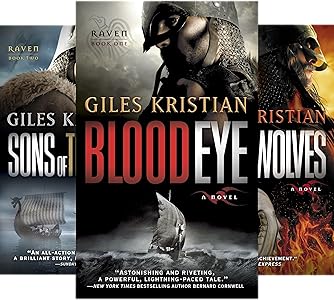
Setting: 9th-century Norway and England, Viking raids and Norse culture
Number of Books: 3 books (complete)
Main Character: Raven, a young Norwegian warrior seeking his destiny
Publication Span: 2009-2011
The Raven series launched Kristian’s career and remains beloved by fans of Viking historical fiction. Set during the height of Viking expansion, the trilogy follows a young man called Raven who joins a crew of Norse warriors sailing to England. The series offers a ground-level view of Viking life, from the brotherhood of a ship’s crew to the violence and honor codes that defined Norse culture.
Kristian’s Norwegian heritage shines throughout these novels. His portrayal of Viking society feels authentic, moving beyond simple “barbarian raider” stereotypes to show the complexity of Norse culture, religion, and social bonds. The series explores themes of fate (wyrd), honor, revenge, and the clash between pagan traditions and the encroaching influence of Christianity.
Reading Order:
- Blood Eye (2009) – Raven, a young outcast, is taken in by a Viking crew led by the fearsome Sigurd the Lucky. As he learns the ways of the warrior, Raven discovers his own destiny is intertwined with the old gods. The novel introduces readers to Viking ship culture, raiding tactics, and the complex honor codes that govern Norse warriors.
- Sons of Thunder (2010) – The crew of the Fjord-Elk continues their adventures in England, navigating treacherous alliances between Viking jarls and Saxon kings. Raven grows into his role as a warrior while the bonds of brotherhood are tested by ambition, love, and betrayal. The novel deepens the series’ exploration of Norse mythology and the tension between Christian and pagan worldviews.
- Odin’s Wolves (2011) – In the final volume, Sigurd’s crew embarks on their most dangerous journey yet, sailing across treacherous seas in pursuit of an artifact of immense power. Raven must reconcile his growing skills as a warrior with the cost of violence and the demands of loyalty. The trilogy concludes with a satisfying resolution while honoring the brutal realities of the Viking Age.
Perfect for readers who love: Viking raids, brotherhood among warriors, Norse mythology, coming-of-age stories, brutal combat, and historical authenticity in the Viking Age.
→ Explore more Viking historical fiction
The Rise of Sigurd Series (Viking Age)
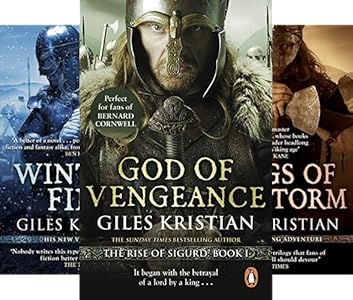
Setting: Late 8th/early 9th century Norway, before the Viking expansion
Number of Books: 3 books (complete)
Main Character: Sigurd Haraldarson, a young warrior seeking vengeance
Publication Span: 2014-2016
The Rise of Sigurd series represents Kristian’s return to Viking fiction after exploring the English Civil War. Often called simply the “Sigurd series,” these novels are set slightly earlier than the Raven books, exploring Norway before the great age of raiding. The trilogy follows young Sigurd, whose family is destroyed by a treacherous jarl, forcing him into exile and setting him on a path of vengeance.
This series showcases Kristian’s growth as a writer. The prose is tighter, the character work deeper, and the historical detail even more immersive. While the Raven books focused on Vikings in England, the Sigurd trilogy delves into Norse society itself, exploring the politics of competing jarls, the role of women in Viking culture, and the spiritual significance of the old gods.
Reading Order:
- God of Vengeance (2014) – Young Sigurd watches his family being slaughtered by the ambitious Jarl Randver. Barely escaping with his life, he gathers a band of oath-sworn warriors and begins his quest for revenge. Named a Times Book of the Year, this novel reestablishes Kristian as a master of Viking fiction with mature storytelling and visceral combat scenes.
- Winter’s Fire (2016) – Sigurd’s quest continues as he builds his reputation and his crew, navigating the deadly politics of Norwegian jarls. The novel explores themes of leadership, loyalty, and the burden of vengeance. Kristian deepens his portrayal of Norse religion, showing how belief in the gods shapes every decision.
- Wings of the Storm (2016) – The trilogy concludes as Sigurd faces his ultimate reckoning with Jarl Randver. Alliances shift, battles rage, and the cost of vengeance becomes clear. Kristian delivers a powerful conclusion that honors both the brutal reality of Viking warfare and the human complexity of his characters.
Perfect for readers who love: Revenge sagas, Viking politics and culture, Norse mythology, complex character development, loyalty and betrayal, and authentic portrayals of pre-Christian Scandinavia.
The Bleeding Land Series (English Civil War)
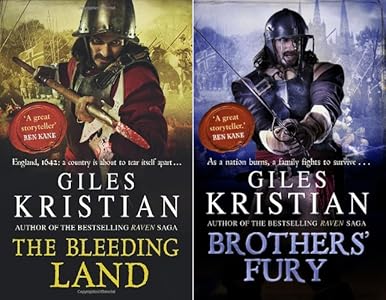
Setting: 1640s England, the English Civil War
Number of Books: 2 books (series incomplete)
Main Characters: Tom and Edmund Rivers, brothers torn apart by civil war
Publication Span: 2012-2013
The Bleeding Land series marked Kristian’s departure from Viking fiction to explore one of England’s bloodiest periods. Set during the English Civil War, when Royalists loyal to King Charles I battled Parliamentarians, the novels follow the Rivers family as they’re torn apart by conflicting loyalties. Brothers Tom and Edmund find themselves on opposite sides of the conflict, transforming a national tragedy into an intensely personal story.
Kristian brings the same visceral combat and moral complexity to 17th-century England that he brought to Viking Age Scandinavia. The novels vividly depict pike formations, cavalry charges, and the brutal reality of civil war, where neighbors become enemies and families are destroyed. The series explores how ideology and loyalty can fracture even the strongest bonds.
Note: As of 2024, only two novels in the trilogy have been published, with Kristian expressing interest in writing a third book.
Reading Order:
- The Bleeding Land (2012) – As England descends into civil war in 1642, the Rivers family fractures along political lines. Tom sides with the Royalists, Edmund with Parliament. What begins as abstract political disagreement rapidly transforms into bloody combat, with brother facing brother across battlefields. The novel captures the chaos and tragedy of a nation torn apart by war.
- Brothers’ Fury (2013) – The war intensifies as both sides commit atrocities in the name of righteousness. Tom and Edmund’s paths continue to diverge as each becomes hardened by combat and loss. Kristian doesn’t romanticize either side, instead showing how civil war corrupts everyone it touches. The novel concludes with the conflict unresolved, both in historical terms and in the Rivers family’s story.
Perfect for readers who love: English Civil War history, stories of divided loyalties, pike-and-shot warfare, family drama set against historical upheaval, and morally complex narratives where neither side is purely righteous.
→ Explore more Medieval historical fiction
Arthurian Tales (Lancelot/Camelot/Arthur Series)
Setting: 5th/6th century Britain, the Age of Arthur
Number of Books: 3 books (complete as of 2024)
Main Characters: Lancelot, Arthur, Guinevere, and the knights of the Round Table
Publication Span: 2018-2024
Kristian’s Arthurian Tales trilogy represents his most ambitious work to date. Rather than retelling familiar medieval romances, he strips away centuries of embellishment to imagine Arthur, Lancelot, and Camelot as they might have existed in the brutal reality of post-Roman Britain. This is Arthur, not as a medieval knight in shining armor, but as a Dark Age warlord fighting to preserve civilization against Saxon invasion.
The trilogy begins with Lancelot’s origin story, continues with the rise of Camelot, and concludes with Arthur’s final battles. Kristian reimagines these legendary figures as complex humans navigating impossible circumstances. His Lancelot is a warrior haunted by his past, his Arthur a brilliant but flawed leader, his Guinevere a woman of agency and strength rather than a passive object of desire.
By grounding the Arthurian legend in historical possibility, Kristian makes it feel immediate and real. These are not fairy tale heroes but flesh-and-blood warriors trying to hold back the darkness, making their triumphs more impressive and their failures more heartbreaking.
Reading Order:
- Lancelot (2018) – The legend begins with Lancelot’s origin story. Cast out as a child, he grows up far from civilization, eventually returning to a Britain fractured by war and chaos. Kristian reimagines the greatest knight as a man forged by hardship and haunted by violence. The novel reached bestseller lists and introduced readers to Kristian’s darker, more historically grounded take on Arthurian legend.
- Camelot (2020) – Arthur rises to power, gathering warriors around him as he attempts to unite Britain against Saxon invaders. Lancelot becomes Arthur’s greatest champion, while Guinevere emerges as a force in her own right. Kristian explores the formation of the Round Table fellowship and the ideals that both inspire and doom them. The novel balances the mythic weight of the legend with gritty historical realism.
- Arthur (2024) – Published in June 2024, the trilogy concludes with Arthur’s final struggles. The dream of Camelot faces internal betrayals and external threats. Kristian brings the legend to its inevitable tragic conclusion while maintaining his commitment to psychological realism and historical authenticity. This final volume completes one of the most distinctive takes on Arthurian legend in recent historical fiction.
Perfect for readers who love: Arthurian legend reimagined, Dark Age Britain, warrior kings and knights, tragic heroes, historical approaches to myth, complex character relationships, and stories about idealism confronting brutal reality.
Standalone Novels and Other Works
Night’s Touch (2007)
Kristian’s earliest novel, Night’s Touch, was published before he found his niche in historical fiction. Details about this early work are limited in public sources, and it remains less well-known than his historical novels. It represents an author finding his voice before discovering his true calling in bringing the past to life.
Where Blood Runs Cold (2022)
After more than a decade writing historical fiction, Kristian surprised readers by pivoting to contemporary thriller territory with Where Blood Runs Cold. This modern-day novel showcases his versatility beyond historical settings while maintaining his signature strengths in pacing, atmosphere, and visceral action.
The novel earned Kristian the Wilbur Smith Adventure Writing Prize in 2022, demonstrating that his storytelling skills transcend historical periods. According to his website, “Where Blood Runs Cold” is currently in development for a film adaptation, potentially bringing Kristian’s work to a broader audience through cinema.
While details of the plot are limited to avoid spoilers, the novel maintains Kristian’s focus on character-driven tension and his ability to create immersive, atmospheric settings. For readers who’ve enjoyed his historical work, this thriller offers a chance to see his talents applied to contemporary storytelling.
Golden Lion (2015) – Co-written with Wilbur Smith
Kristian collaborated with bestselling adventure novelist Wilbur Smith on Golden Lion, part of Smith’s long-running Courtney series. This co-writing project connected Kristian with one of historical fiction’s most successful authors and demonstrated his ability to work within established fictional universes while bringing his own distinctive voice.
The Courtney series spans generations of an adventurous family across African and world history. Kristian’s contribution to this beloved series introduced his work to Smith’s extensive readership and showcased his versatility in handling different historical periods and narrative styles.
Short Stories and Novellas
The Terror (2014) – This short work showcases Kristian’s ability to craft compelling narratives in a concise form, maintaining the atmospheric tension and historical detail of his novels in a condensed format.
Hellmouth (2021) – Kristian’s more recent novella continues his exploration of historical periods and themes through shorter fiction. These shorter works enable him to experiment with different voices, time periods, and narrative structures, freeing him from the demands of full-length novels.
Where to Start with Giles Kristian
Best First Book
Recommendation: Blood Eye (Raven series, Book 1)
For most readers, Blood Eye represents the ideal entry point into Kristian’s work. It’s his breakthrough novel, the book that established his reputation and introduced his signature strengths: visceral combat, atmospheric historical detail, compelling characters, and stories rooted in thorough research.
Starting with Blood Eye allows you to experience Kristian’s work in the order he wrote it, watching his craft develop across subsequent books. The Raven series is complete, so you won’t face the frustration of unfinished storylines. The Viking setting showcases Kristian’s Norwegian heritage and cultural knowledge, giving his work authenticity that readers consistently praise.
The novel balances accessibility with depth. Kristian doesn’t overwhelm newcomers with excessive historical detail; instead, weaving context naturally into the narrative. The coming-of-age story provides an entry point for readers unfamiliar with Viking culture, as Raven himself learns about the warrior life alongside the audience.
Alternative Starting Points
If you want his most mature work, start with God of Vengeance (Rise of Sigurd, Book 1)
Written five years after Blood Eye, God of Vengeance represents Kristian at the height of his Viking fiction powers. The prose is tighter, the character work deeper, and the historical immersion even more complete. This was named a Times Book of the Year for good reason. If you prefer starting with an author’s strongest work rather than following their development, this is your entry point.
If you prefer Arthurian legend over Vikings, start with Lancelot
Kristian’s reimagining of Arthurian legend offers a completely different flavor than his Viking work, grounded in Dark Age Britain rather than Scandinavian culture. If King Arthur, knights, and medieval British legend appeal more than Norse warriors, Lancelot provides an excellent introduction to Kristian’s storytelling while exploring mythology you may already know.
If you want to see his versatility, start with The Bleeding Land
The English Civil War setting demonstrates that Kristian’s talents extend beyond Viking Age Scandinavia. This series explores a different period, type of warfare, and themes. It’s an excellent choice if you want to experience his range of historical fiction. Note, however, that this series remains incomplete, with only two of a planned three books published.
If you want a contemporary thriller rather than historical fiction, Start with Where Blood Runs Cold
Kristian’s 2022 thriller offers modern-day tension and adventure, proving his storytelling prowess isn’t limited to historical periods. This Wilbur Smith Prize winner shows what Kristian can do with contemporary settings while maintaining his signature atmospheric tension and character-driven narrative.
Cross-Media Work and Other Projects
Film Production
Kristian hasn’t limited himself to the written word. In 2016, he co-founded World Serpent Productions and wrote and produced the short film The Last Viking. The film was selected for the 2017 Aesthetica Film Festival and the Midlands Movies Awards, demonstrating his ability to translate historical storytelling to cinema.
His experience in film production adds another dimension to his creative repertoire. Understanding visual storytelling has likely influenced his prose, particularly his cinematic approach to action sequences and his attention to visual detail in descriptive passages.
As mentioned earlier, “Where Blood Runs Cold” is currently in development for a film adaptation, potentially bringing Kristian’s contemporary thriller work to the big screen.
Video Game Narrative Design
Kristian worked as a narrative designer for Valnir Rok, a multiplayer online survival role-playing game set in Viking Age Scandinavia. This role enabled him to apply his knowledge of Norse culture and mythology to interactive storytelling, creating narrative frameworks that allowed players to explore.
The gaming industry’s emphasis on player agency and branching narratives offers different challenges than linear novel writing. Kristian’s involvement in game design shows his interest in exploring storytelling across multiple media formats.
The Pop Music Background
While his days as lead singer of Upside Down are behind him, that early career shaped Kristian’s approach to narrative rhythm and emotional resonance. The performative aspects of music, the understanding of audience engagement, and the craft of creating emotional impact through structured composition all translate to his fiction writing.
Some authors come from academic backgrounds. Some begin as journalists. Kristian’s path through music, modeling, and advertising gave him a unique creative toolkit that sets his voice apart in historical fiction.
Awards and Recognition
Major Awards
Wilbur Smith Adventure Writing Prize (2022)
Kristian won this prestigious prize for Where Blood Runs Cold, his contemporary thriller. The award, established to honor Wilbur Smith’s legacy in adventure fiction, recognizes the year’s best adventure novel. This win is particularly meaningful given Kristian’s earlier collaboration with Smith on Golden Lion.
Times Book of the Year
God of Vengeance, the first novel in the Rise of Sigurd series, received this distinction, cementing Kristian’s reputation as a leading voice in Viking historical fiction.
Commercial Success
- Over one million copies sold worldwide
- Multiple translations into international languages
- Lancelot reached The Times and The Sunday Times bestseller lists
- Consistent strong sales across multiple series
Critical Recognition
Kristian’s work regularly receives praise for its historical authenticity, visceral action, and character depth. Reviewers frequently compare him favorably to Bernard Cornwell, noting similar strengths in combining meticulous research with compelling storytelling. His ability to make historical periods feel immediate and real has earned him a dedicated readership that spans his various series and time periods.
Writing Schedule and Latest Releases
Most Recent Release
Arthur (June 6, 2024)
Kristian’s latest novel completes his Arthurian Tales trilogy, bringing the legend of Camelot to its tragic conclusion. Published in mid-2024, Arthur represents his most recent work and demonstrates his continued commitment to reimagining legendary material through historically grounded storytelling.
The novel’s publication confirms that Kristian remains actively engaged with his craft, producing substantial works on a regular schedule.
Future Projects
As of late 2024, Kristian has not publicly announced his next project. Given his pattern of exploring new historical periods and occasionally revisiting previous settings, future works could include:
- A return to Viking Age fiction with new characters or settings
- Further exploration of British history in different periods
- Additional contemporary thrillers following the success of Where Blood Runs Cold
- New collaborations or cross-media projects
The third Bleeding Land novel remains unwritten, though Kristian has expressed interest in completing the trilogy. Whether this will happen depends on various factors, including reader demand and publishing opportunities.
Readers can follow Kristian’s official website and social media for announcements about upcoming releases and projects.
Similar Authors You’ll Enjoy
If you appreciate Giles Kristian’s blend of historical authenticity, visceral action, and character-driven storytelling, these authors offer comparable experiences:
Bernard Cornwell
Kristian cites Cornwell as a major influence, and the connection is clear. Cornwell’s Saxon Stories (The Last Kingdom series) covers similar Viking Age territory with comparable attention to military detail and historical authenticity. His Sharpe series demonstrates similar strengths in different historical periods.
Conn Iggulden
Iggulden’s Emperor and Conqueror series showcases epic historical scope and military action across Roman and Mongol settings. Like Kristian, Iggulden crafts accessible historical fiction that strikes a balance between entertainment and historical knowledge.
Robert Low
Low’s Oathsworn series offers another take on Viking Age fiction, following a crew of Norse warriors through raids and adventures. His prose style and approach to Viking culture provide interesting comparison points to Kristian’s work.
Simon Scarrow
Scarrow’s Eagle series and other Roman military fiction share Kristian’s focus on brotherhood among warriors, tactical military detail, and the bonds forged through combat. His pacing and action sequences will appeal to fans of Kristian.
Ben Kane
Kane’s novels, which cover Roman legions and Spartacus, demonstrate similar strengths in military historical fiction. His attention to period detail and ability to create compelling original characters in historical settings parallel Kristian’s approach.
Matthew Harffy
Harffy’s Bernicia Chronicles, set in 7th-century Britain, offer more Anglo-Saxon and early medieval fiction with the same emphasis on historical authenticity and warrior culture that defines Kristian’s best work.
Frequently Asked Questions
What is Giles Kristian’s best book?
This depends on your preferences, but many readers and critics consider God of Vengeance to be Kristian’s strongest single novel. Named a Times Book of the Year, it represents his Viking fiction at its most mature and accomplished. The character work is deeper, the prose is tighter, and the historical immersion is more complete than in his earlier works.
However, Blood Eye holds a special place as the novel that launched his career and introduced readers to his distinctive voice. The Raven series as a whole remains beloved by longtime fans.
For readers interested in Arthurian legend, Lancelot achieved bestseller status and offers his most ambitious reimagining of familiar material.
In what order should I read Giles Kristian’s books?
Each series should be read in publication order:
Raven Series: Blood Eye → Sons of Thunder → Odin’s Wolves
Bleeding Land: The Bleeding Land → Brothers’ Fury
Rise of Sigurd: God of Vengeance → Winter’s Fire → Wings of the Storm
Arthurian Tales: Lancelot → Camelot → Arthur
However, the series are independent of each other. You don’t need to read the Raven series before starting the Sigurd books, for example. Choose based on which time period or setting most appeals to you.
Is Giles Kristian historically accurate?
Kristian conducts thorough research for his historical novels, bringing authentic details about weapons, tactics, social structures, and daily life to his fiction. His Norwegian heritage provides additional authenticity to his Viking Age novels, as he draws on cultural knowledge and landscape familiarity beyond pure research.
That said, like all historical fiction writers, Kristian creates fictional characters and narratives within historical frameworks. He takes creative liberties when historical records are incomplete or contradictory, particularly in areas such as dialogue, character motivations, and specific events.
His Arthurian novels explicitly reimagine legend rather than claiming strict historical accuracy, as the historical Arthur (if he existed) remains shrouded in uncertainty.
What time periods does Giles Kristian write about?
Kristian’s primary focus is the Viking Age (late 8th through 9th centuries), covered in both his Raven and Sigurd series. He’s also written about:
- Dark Age Britain (5th-6th centuries) in his Arthurian Tales
- The English Civil War (1640s) in The Bleeding Land series
- Contemporary settings in Where Blood Runs Cold
- Various periods through his work on the Courtney series with Wilbur Smith
How many books has Giles Kristian written?
Kristian has written approximately fifteen works, including:
- 3 Raven novels
- 3 Rise of Sigurd novels
- 2 Bleeding Land novels
- 3 Arthurian Tales novels
- 2 standalone novels (Night’s Touch, Where Blood Runs Cold)
- 1 co-written novel (Golden Lion)
- 2+ short stories/novellas (The Terror, Hellmouth)
The exact count varies depending on whether co-written works, short fiction, and novellas are included.
Are Giles Kristian’s books appropriate for young adults?
Kristian’s historical fiction contains graphic violence, including detailed battle scenes with realistic depictions of combat injuries and death. There is also moderate sexual content in some novels and frequent strong language.
The books are generally marketed to adult audiences. Mature teenagers (16+) who are comfortable with violent content and enjoy reading adult historical fiction may appreciate them, but they’re not specifically written for young adult audiences.
Parents and younger readers should be aware that Viking Age fiction in particular involves brutal combat, human sacrifice, and other violent elements inherent to the historical period.
Has Giles Kristian’s work been adapted for TV or film?
Not yet in major productions, but there are developments:
- Kristian wrote and produced the short film The Last Viking (2016), which was selected for film festivals
- Where Blood Runs Cold is reportedly in development for a film adaptation
- No television series based on his novels has been produced as of 2024
Given the success of Viking-themed television (like Netflix’s adaptation of Bernard Cornwell’s The Last Kingdom), Kristian’s Raven and Sigurd series would seem natural candidates for adaptation.
When will the 4th book in the Raven series be published?
There is no fourth book in the Raven series. The trilogy is complete with three novels: Blood Eye, Sons of Thunder, and Odin’s Wolves.
Some readers may be confusing the Raven series with Kristian’s later Viking Age work, the Rise of Sigurd series (also three books). While both series feature Viking Age settings and Norse warriors, they are separate stories with different characters.
Did Giles Kristian win a literary prize in 2024?
The search query about a “2024 literary prize” likely refers to either:
- The publication of Arthur in June 2024 (the book itself, not an award)
- Confusion with his 2022 Wilbur Smith Adventure Writing Prize for Where Blood Runs Cold
As of late 2024, no major new literary award for Kristian has been publicly announced.
What is “Hellmouth” by Giles Kristian?
Hellmouth (2021) is a novella by Kristian. Details about this shorter work are limited in public sources, but it represents his continued exploration of historical fiction in condensed form. Like his other short fiction, it enables him to experiment with various narrative approaches and historical periods that fall outside the scope of full-length novels.
What is “Winterblut” by Giles Kristian?
“Winterblut” may refer to alternative foreign-language titles for Kristian’s books translated into German or other languages. Winter’s Fire, the second book in the Rise of Sigurd series, could have variant titles in translation. Always verify publication details when purchasing international editions to ensure you receive the correct book in your preferred language.
Is Giles Kristian still writing?
Yes. His most recent novel, Arthur, was published in June 2024, confirming his continued active engagement with writing. While he hasn’t announced his next project as of late 2024, the 2024 publication demonstrates ongoing productivity.
Where can I buy Giles Kristian’s books?
Kristian’s books are widely available in multiple formats:
- Print editions through bookstores and online retailers
- Ebook versions for Kindle and other e-readers
- Audiobook editions through Audible and other platforms
His works remain in print and are readily accessible to readers worldwide.
Conclusion: A Versatile Voice in Historical Fiction
Giles Kristian’s journey from pop music to historical fiction exemplifies the diverse paths creative talent can follow. His Norwegian heritage, combined with his storytelling skills honed across multiple media, has produced some of contemporary historical fiction’s most immersive and exciting work.
Whether he’s depicting Viking warriors sailing cold northern seas, English families torn apart by civil war, or legendary knights struggling to preserve civilization in Dark Age Britain, Kristian brings the same commitment to authenticity, character depth, and visceral storytelling. His novels transport readers not just to different times but into the hearts and minds of people facing impossible choices in violent eras.
With over a million copies sold and growing recognition through awards like the Wilbur Smith Prize, Kristian has established himself as a major voice in historical adventure fiction. His willingness to explore new periods (from Vikings to Arthurian legend to contemporary thrillers) demonstrates creative ambition beyond simply repeating successful formulas.
For readers seeking historical fiction that combines meticulous research with page-turning narrative, complex characters with spectacular action, and authentic period detail with emotional resonance, Giles Kristian delivers. His relatively modest search volumes today may not reflect his quality or his potential for future popularity. Getting in early on a talented author building a diverse, high-quality backlist positions you to discover hidden gems before they become widely celebrated.
Ready to begin your Kristian reading journey? Start with Blood Eye to experience his breakthrough Viking fiction, or dive into God of Vengeance for his most acclaimed work. For something different, try Lancelot to see legendary material reimagined through his historical lens. With fifteen books and multiple series, you’ll have plenty of reading ahead once you discover why critics and readers alike praise his powerful blend of history and adventure.