
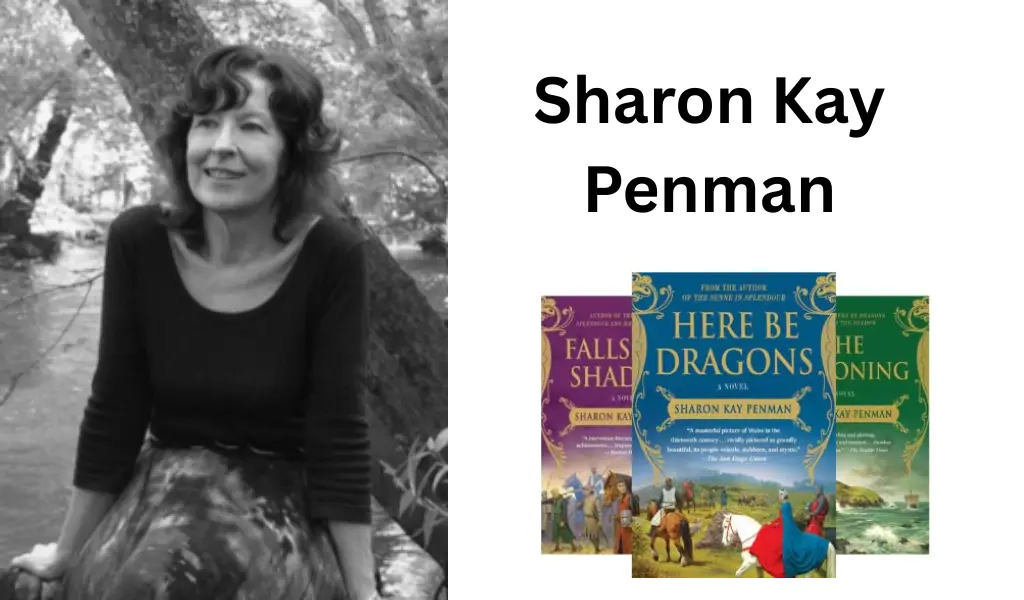

Sharon Kay Penman was one of historical fiction’s most beloved voices, bringing medieval England and Wales to vivid life through meticulously researched novels spanning three centuries of tumultuous history. From the Welsh princes fighting for independence to the Plantagenet dynasty’s power struggles, her books immerse readers in the politics, passions, and battles that shaped the Middle Ages.
Penman published 14 novels over her four-decade career, including 10 historical novels and 4 medieval mysteries. Her debut, The Sunne in Splendour, revolutionized how readers viewed Richard III, while her Welsh Princes Trilogy and Plantagenet Saga established her as a master of bringing lesser-known historical figures and periods into the spotlight. Although she passed away in 2021, her legacy endures through her richly detailed novels, which continue to captivate new generations of readers of historical fiction.
Disclosure: This article contains affiliate links. We earn from qualifying purchases at no extra cost to you.
About Sharon Kay Penman
Early Life and Background
Sharon Kay Penman was born in New York City and raised in New Jersey. She was American, though her deep connection to Welsh and English history led many readers to assume she was British. Her passion for medieval history began early, sparked by a childhood fascination with Richard III that would eventually become her first published novel.
Penman earned a law degree and worked as a tax lawyer, writing novels in her spare time. In a heartbreaking setback, the only manuscript of her first completed novel was stolen from her car in 1975. Rather than give up, she rewrote the entire book from memory, a testament to her dedication that would define her career.
Writing Career
Penman’s debut novel, The Sunne in Splendour, was finally published in 1982 after years of research and the rewrite following the theft. The sweeping 900-page novel challenged the traditional portrayal of Richard III as a villain, presenting him instead as a tragic hero caught in the brutal politics of the Wars of the Roses. The book became a bestseller, establishing Penman as a major voice in historical fiction.
Over the next four decades, she published 13 more novels, becoming known for her exhaustive historical research, complex characterizations, and ability to humanize figures often reduced to caricatures in popular history. She spent months researching in England and Wales for each book, walking battlefields, visiting castles, and consulting primary sources to ensure the accuracy of her work.
Historical Approach and Research
What set Penman apart was her commitment to historical accuracy without sacrificing narrative drive. She extensively researched each time period, consulting medieval chronicles, archaeological findings, and historical scholarship to gain a deeper understanding. Her author’s notes at the end of each book detail what is documented history and where she took necessary fictional liberties.
Penman had a particular gift for bringing lesser-known historical periods to life. While many historical novelists gravitated toward the Tudors or ancient Rome, she championed medieval Welsh history, the Angevin Empire, and the complex politics of 12th and 13th-century England. Her Welsh Princes Trilogy, in particular, introduced English-speaking readers to Llywelyn the Great and the struggle for Welsh independence.
Legacy and Recognition
Sharon Kay Penman passed away on January 22, 2021, from pneumonia, leaving behind a remarkable body of work that continues to influence the historical fiction genre. She was 75 years old.
Her novels have sold millions of copies worldwide and remain in print, a testament to their enduring appeal. She received numerous accolades during her career, including being a New York Times bestselling author multiple times. More importantly, she inspired countless readers to explore medieval history and influenced a generation of historical fiction writers who followed her example of meticulous research combined with compelling storytelling.
Penman was known for her generous engagement with readers, maintaining an active website and responding to fans’ historical questions. Her legacy lives on not just through her 14 novels but through the community of medieval history enthusiasts she helped create.
Sharon Kay Penman Series in Reading Order
Series 1: The Welsh Princes Trilogy
Setting: 13th-century Wales and England
Number of Books: 3 books (complete)
Main Characters: Llywelyn the Great, Llywelyn ap Gruffydd, and the Welsh princes fighting for independence
The Welsh Princes Trilogy is Penman’s passionate love letter to medieval Wales. These novels follow three generations of Welsh rulers as they struggle to maintain their independence against English expansion. The series is notable for bringing Welsh history, often overlooked in English-language historical fiction, to vivid life.
Reading Order:
- Here Be Dragons (1985) – The story of Llywelyn the Great (Llywelyn Fawr) and his English wife Joanna, illegitimate daughter of King John of England. Set between 1183 and 1240, this sweeping epic explores the political and personal conflicts that arise when Joanna is torn between her Welsh husband and her English family. The novel depicts Llywelyn’s struggle to unite Wales while navigating treacherous political alliances with England.
- Falls the Shadow (1988) – Continuing the Welsh struggle for independence, this novel focuses on Simon de Montfort’s rebellion against Henry III and the role of Llywelyn ap Gruffydd (Llywelyn the Last). Set from 1240 to 1265, it weaves together English baronial conflict with the Welsh fight for sovereignty. The title refers to the shadow falling over Wales as English power grows.
- The Reckoning (1991) – The trilogy’s tragic conclusion follows Llywelyn ap Gruffydd’s final years and the English conquest of Wales under Edward I. Set from 1267 to 1294, it chronicles the end of Welsh independence and the devastating aftermath of Edward’s campaigns. The novel depicts one of medieval history’s great tragedies, the extinction of the native Welsh principality.
Why Read This Series:
The Welsh Princes Trilogy offers a rare and detailed glimpse into medieval Welsh history through compelling characters and epic storytelling. If you love political intrigue, complex family dynamics, and tragic historical narratives, this series delivers all three. Penman’s portrayal of the Welsh princes as nuanced, intelligent leaders fighting an ultimately doomed cause is both heartbreaking and inspiring.
Series 2: The Plantagenet Saga
Setting: 12th-century England and France
Number of Books: 5 books (complete)
Main Characters: Henry II, Eleanor of Aquitaine, Richard the Lionheart, King John
The Plantagenet Saga chronicles one of history’s most dramatic dynasties across five novels. The series is often divided into two parts: the Eleanor of Aquitaine trilogy (books 1-3) and the Richard the Lionheart duology (books 4-5). Together, they paint an intimate portrait of the Angevin Empire at its height, and the family conflicts that nearly tore it apart.
Reading Order:
- When Christ and His Saints Slept (1995) – Set during The Anarchy (1135-1153), England’s brutal civil war between Empress Matilda and King Stephen. This novel depicts one of medieval England’s darkest periods, when “Christ and his saints slept,” and the country descended into chaos. The book introduces young Henry Plantagenet (future Henry II) and sets up the dynasty that will dominate the series.
- Time and Chance (2002) – Follows Henry II’s reign from his accession in 1154 through his conflict with Thomas Becket and his turbulent marriage to Eleanor of Aquitaine. Set between 1156 and 1171, the novel explores Henry’s transformation from an idealistic young king to a hardened ruler, his friendship and fatal conflict with Becket, and the growing tensions within his family.
- Devil’s Brood (2008) – Chronicles the great rebellion of 1173-74, when Eleanor and Henry’s sons (including the future Richard the Lionheart and King John) revolted against their father. Set from 1172 to 1189, this is Penman’s most intense family drama, depicting the Plantagenet family tearing itself apart through betrayal, ambition, and conflicting loyalties. The novel ends with Henry II’s death and Richard’s accession.
- Lionheart (2011) – The first of two novels focusing on Richard I’s reign, covering the Third Crusade and Richard’s journey from England to the Holy Land. Set between 1189 and 1192, the book follows Richard’s military campaigns against Saladin, his conflicts with King Philip of France, and the political intrigue surrounding the Crusade. Penman portrays Richard as a complex military genius rather than a simple warrior-king.
- A King’s Ransom (2014) – Richard’s captivity in Germany, his ransom, and his wars in France against Philip II. Set from 1192 to 1199, this novel follows Richard’s imprisonment by the Holy Roman Emperor, Eleanor of Aquitaine’s tireless efforts to raise his ransom, and Richard’s final campaigns before his death at Chalus. The book was Penman’s final published novel.
Why Read This Series:
The Plantagenet Saga provides an unparalleled glimpse into medieval Europe’s most powerful family. Penman’s Eleanor of Aquitaine is one of historical fiction’s great characters, a brilliant, politically astute woman navigating a man’s world. The series combines epic battles, political machinations, and deeply personal family conflicts, making medieval history feel immediate and emotionally resonant.
Series 3: The Justin de Quincy Mysteries
Setting: Late 12th-century England
Number of Books: 4 books (complete)
Main Characters: Justin de Quincy, a young man investigating crimes for Queen Eleanor of Aquitaine
This series represents Penman’s foray into historical mystery, combining her trademark historical detail with medieval detective work. Set during Richard the Lionheart’s reign, the mysteries follow Justin de Quincy, a clerk who becomes involved in investigations for Eleanor of Aquitaine while Richard is away on crusade.
Reading Order:
- The Queen’s Man (1996) – Justin de Quincy, a young clerk, accidentally becomes embroiled in a murder investigation and catches Queen Eleanor’s attention. Set in 1193, while Richard is imprisoned in Germany, Justin must uncover a conspiracy that threatens England’s stability.
- Cruel as the Grave (1998) – Justin investigates a murdered prostitute in London, uncovering a conspiracy that threatens the queen’s plans to ransom Richard from captivity. The novel delves into the medieval London underworld and the intricate politics surrounding Richard’s absence.
- Dragon’s Lair (2003) – Set in Wales, Justin travels to investigate a missing ransom payment needed for Richard’s release. The novel combines mystery with Penman’s beloved Welsh setting and political intrigue.
- Prince of Darkness (2005) – The final mystery finds Justin investigating a murder at an abbey while political tensions mount between Richard and Philip of France. The novel weaves together threads from the previous books, delivering a satisfying conclusion to the series.
Why Read This Series:
If you love medieval settings but prefer mystery to epic saga, the Justin de Quincy novels offer the perfect blend. They’re more accessible than Penman’s sprawling historical novels, with faster pacing and mystery plotting, while still maintaining her signature historical accuracy and atmospheric detail.
Standalone Novels by Sharon Kay Penman
The Sunne in Splendour (1982)
Setting: Wars of the Roses, England 1459-1485
Main Character: Richard III
Penman’s debut novel and many readers’ favorite, The Sunne in Splendour, tells the story of Richard III from childhood to his death at Bosworth Field. At 900+ pages, it’s an epic reimagining of the last Plantagenet king, challenging Shakespeare’s villainous portrayal and presenting Richard as an honorable man caught in brutal times.
The novel follows Richard from the age of seven through his brother Edward IV’s reign, Richard’s controversial assumption of the throne, and his two-year kingship, which ends in defeat to Henry Tudor. Penman meticulously researched the period and presents a detailed case for Richard’s innocence in the deaths of the Princes in the Tower.
Why Read It:
This is essential reading for anyone interested in the Wars of the Roses or the life of Richard III. Even if you disagree with Penman’s sympathetic interpretation, her detailed recreation of 15th-century England and the brutal politics of the period is masterful. The novel works as both a historical argument and a compelling family saga.
Where to Start with Sharon Kay Penman
Best First Book
Recommendation: Here Be Dragons
For most readers new to Penman, Here Be Dragons is the ideal starting point. It’s the first book in the Welsh Princes Trilogy and requires no prior knowledge of medieval history. The novel has all of Penman’s strengths: epic scope, complex characters, detailed historical setting, and a compelling central romance between Llywelyn and Joanna.
The Welsh setting also distinguishes it from numerous other medieval novels centered on English kings. Readers discover a lesser-known history while experiencing Penman’s storytelling at its finest.
Alternative Starting Points
If You Want a Standalone, Start with The Sunne in Splendour. It’s Penman’s most famous book, and while massive, it tells a complete story. Richard III’s tragic arc offers a compelling narrative while showcasing Penman’s ability to humanize the controversial historical figure.
If You Want Medieval Mysteries: Begin with The Queen’s Man. These books are shorter and more plot-driven than the epic sagas, making them more accessible for readers who want a medieval atmosphere without committing to 600-page novels.
If You Want the Plantagenets: Start with When Christ and His Saints Slept. It’s the chronological beginning of the saga and introduces the dynasty. However, be aware that this covers The Anarchy, a particularly brutal period, so the book has a darker tone.
If You Want…
Epic family drama: Devil’s Brood offers the Plantagenets at their most dysfunctional, with Henry II’s family literally going to war against each other.
Romance and politics: Here Be Dragons perfectly balances a passionate marriage with political intrigue as Joanna is torn between Welsh and English loyalties.
Military campaigns: Lionheart follows Richard I’s crusade with detailed battle sequences and military strategy.
Her most acclaimed work, The Sunne in Splendour, remains her most famous novel, though Here Be Dragons and Lionheart are equally beloved by fans.
Books by Time Period
12th Century (1135-1199)
The Anarchy and Early Plantagenets:
- When Christ and His Saints Slept (1135-1153)
- Time and Chance (1156-1171)
- Devil’s Brood (1172-1189)
- Lionheart (1189-1192)
- A King’s Ransom (1192-1199)
Justin de Quincy Mysteries:
- The Queen’s Man (1193)
- Cruel as the Grave (1193-1194)
- Dragon’s Lair (1194)
- Prince of Darkness (1195)
13th Century (1200-1294)
Welsh Independence Struggle:
- Here Be Dragons (1183-1240)
- Falls the Shadow (1240-1265)
- The Reckoning (1267-1294)
15th Century (1459-1485)
Wars of the Roses:
- The Sunne in Splendour (1459-1485)
Sharon Kay Penman’s Writing Style
Historical Accuracy and Research
Penman was renowned for exhaustive research. She spent years studying each period she wrote about, consulting medieval chronicles, visiting historical sites, and working with academic historians. Her author’s notes meticulously document what is historical record and where she took creative liberties.
She had particular expertise in medieval Welsh history, a passion that led her to walk Welsh battlefields, study Welsh castles, and consult with Welsh historians. This dedication shows in the Welsh Princes Trilogy’s authentic portrayal of a culture often marginalized in English-language historical fiction.
Character Development
Penman excelled at humanizing historical figures. Her Eleanor of Aquitaine is brilliant, politically savvy, and deeply human. Her Richard III is honorable and capable rather than a one-dimensional villain. Her Welsh princes are complex leaders balancing idealism with political reality.
She avoided simplistic good-versus-evil narratives, instead showing how decent people made terrible choices and how historical “villains” often had understandable motivations. This nuanced approach makes her characters feel like real people rather than historical archetypes.
Narrative Approach
Penman wrote doorstopper novels, most of which ranged from 600 to 900 pages. She employed multiple viewpoints to present events from various perspectives, often incorporating both historical major players and fictional minor characters who offer ground-level insights into historical events.
Her pacing is deliberate, building slowly to major historical events. Readers who prefer fast-paced action might find her novels slow, but those who enjoy immersive historical detail and character development will appreciate her thorough approach.
Dialogue and Atmosphere
Penman’s dialogue strikes a balance between period flavor and readability. She avoided heavy use of archaic language but gave her characters speech patterns that feel appropriate to their time and station. Her atmospheric descriptions of medieval settings, from Welsh castles to French courts to crusader camps, transport readers into the period.
How Many Books Did Sharon Kay Penman Write?
Sharon Kay Penman wrote 14 novels during her career:
- 10 historical novels (including the Welsh Princes Trilogy, Plantagenet Saga, and The Sunne in Splendour)
- 4 medieval mystery novels (the Justin de Quincy series)
She also contributed short stories to anthologies, including “The Queen’s Man” in Dangerous Women (2013), expanding the Justin de Quincy universe. However, her primary body of work consists of the 14 full-length novels published between 1982 and 2014.
Reading Order Options
By Publication Order (Recommended)
Reading in publication order lets you experience Penman’s evolution as a writer:
- The Sunne in Splendour (1982)
- Here Be Dragons (1985)
- Falls the Shadow (1988)
- The Reckoning (1991)
- When Christ and His Saints Slept (1995)
- The Queen’s Man (1996)
- Cruel as the Grave (1998)
- Time and Chance (2002)
- Dragon’s Lair (2003)
- Prince of Darkness (2005)
- Devil’s Brood (2008)
- Lionheart (2011)
- A King’s Ransom (2014)
By Series Order
For series completeness:
Welsh Princes Trilogy:
- Here Be Dragons
- Falls the Shadow
- The Reckoning
Plantagenet Saga:
- When Christ and His Saints Slept
- Time and Chance
- Devil’s Brood
- Lionheart
- A King’s Ransom
Justin de Quincy Mysteries:
- The Queen’s Man
- Cruel as the Grave
- Dragon’s Lair
- Prince of Darkness
Standalone:
- The Sunne in Splendour
By Historical Chronology
For historical timeline:
- When Christ and His Saints Slept (1135-1153)
- Time and Chance (1156-1171)
- Devil’s Brood (1172-1189)
- Here Be Dragons (1183-1240) – overlaps with previous
- Lionheart (1189-1192)
- The Queen’s Man (1193)
- Cruel as the Grave (1193-1194)
- Dragon’s Lair (1194)
- A King’s Ransom (1192-1199)
- Prince of Darkness (1195)
- Falls the Shadow (1240-1265)
- The Reckoning (1267-1294)
- The Sunne in Splendour (1459-1485)
Frequently Asked Questions
What is Sharon Kay Penman’s best book?
Readers are divided between The Sunne in Splendour and Here Be Dragons as Penman’s masterpiece. The Sunne in Splendour was her debut and revolutionized Richard III’s portrayal in historical fiction. Here Be Dragons is beloved for its epic scope and the passionate romance between Llywelyn and Joanna. Lionheart is also frequently cited as her finest work for its portrayal of the Third Crusade. The “best” depends on your period preference, but these three consistently rank highest among fans.
In what order should I read Sharon Kay Penman?
For new readers, start with Here Be Dragons (Welsh Princes Trilogy) or When Christ and His Saints Slept (the Plantagenet Saga, beginning). Read each series in publication order for the best experience. The series is independent, so you can read the Welsh trilogy without reading the Plantagenet books, though they cover overlapping time periods. The Sunne in Splendour works as a standalone introduction to her style.
Is Sharon Kay Penman historically accurate?
Yes, Penman was known for meticulous historical research. She spent years researching each novel, consulting primary sources, academic historians, and visiting historical sites. Her author’s notes detail the distinction between documented history and necessary fictional invention. While she occasionally condensed timelines or invented dialogue, the major events, historical figures, and period details are accurate. She’s considered one of historical fiction’s most reliable authors for medieval history.
What nationality was Sharon Kay Penman?
Sharon Kay Penman was American. She was born in New York City and lived most of her life in New Jersey. However, her deep passion for British and Welsh medieval history led many readers to assume she was British. She spent a significant amount of time in England and Wales researching her novels, yet remained an American author throughout her career.
How many books did Sharon Kay Penman write?
Sharon Kay Penman wrote 14 novels: 10 historical novels and 4 medieval mystery novels (the Justin de Quincy series). She also contributed short stories to anthologies. Her novels span from 1982’s The Sunne in Splendour to 2014’s A King’s Ransom.
Is Sharon Kay Penman dead?
Yes, Sharon Kay Penman passed away on January 22, 2021, from pneumonia. She was 75 years old. Her death was a significant loss to the historical fiction community, as she left behind an extraordinary legacy of meticulously researched medieval novels that continue to influence the genre.
What is the Plantagenet series in order?
The Plantagenet Saga consists of five books in order:
- When Christ and His Saints Slept (1995)
- Time and Chance (2002)
- Devil’s Brood (2008)
- Lionheart (2011)
- A King’s Ransom (2014)
These books chronicle the Plantagenet dynasty from The Anarchy through Richard the Lionheart’s death, spanning 1135-1199.
Which Sharon Kay Penman book should I read first?
Here Be Dragons is recommended for most readers. It’s accessible, doesn’t require prior historical knowledge, and showcases Penman’s strengths: epic scope, complex characters, and immersive historical detail. The Welsh setting also offers something different from typical medieval fiction. Alternatively, The Sunne in Splendour works as a standalone introduction, though at 900+ pages, it’s a significant commitment.
Are Sharon Kay Penman’s books part of a series?
Most are. Penman wrote three series: the Welsh Princes Trilogy (comprising three books), the Plantagenet Saga (comprising five books), and the Justin de Quincy Mysteries (comprising four books). The Sunne in Splendour is her only standalone novel. While the series books are interconnected, each can be read independently with sufficient context provided.
What is Here Be Dragons about?
Here Be Dragons tells the story of Llywelyn the Great, Prince of Wales, and his English wife Joanna, illegitimate daughter of King John. Set between 1183 and 1240, the novel chronicles Llywelyn’s efforts to unite Wales and maintain its independence from England, while Joanna is torn between loyalty to her husband and her English family. It’s an epic tale of political intrigue, family conflict, and a passionate marriage tested by war and betrayal.
What happened to Sharon Kay Penman?
Sharon Kay Penman passed away from pneumonia on January 22, 2021, at age 75. She had been working on a new novel when she died. Her passing was mourned by the historical fiction community, with tributes from readers, fellow authors, and historians acknowledging her contributions to popularizing medieval history through meticulously researched fiction.
Are there any books after A King’s Ransom?
No. A King’s Ransom (2014) was Sharon Kay Penman’s final published novel. She passed away in 2021 before completing any additional books. Readers hoping for more Plantagenet novels, particularly covering King John’s reign (the next logical continuation), were disappointed by her death. Her 14 published novels remain her complete body of work.
Similar Authors You’ll Enjoy
If you love Sharon Kay Penman’s work, these authors offer similar appeals:
Elizabeth Chadwick – Another master of medieval England, Chadwick writes meticulously researched novels about lesser-known historical figures. Like Penman, she champions underrepresented perspectives, particularly medieval women. Try The Greatest Knight for William Marshal’s story.
Bernard Cornwell – For readers who enjoy Penman’s battle scenes and political intrigue, Cornwell’s Saxon Stories (The Last Kingdom series) offers similar medieval English settings with faster pacing and more action-focused narratives.
Ken Follett – The Kingsbridge series (The Pillars of the Earth, World Without End) covers medieval England with epic scope similar to Penman’s novels, though with more fictional characters and less focus on historical figures.
Cecelia Holland – A pioneer of medieval historical fiction, Holland writes spare, powerful novels about Vikings, medieval Europe, and lesser-known periods. Try The Kings in Winter for an Irish medieval setting.
Judith Merkle Riley – For readers who love Penman’s Eleanor of Aquitaine, Riley’s A Vision of Light and its sequels offer medieval England from a lower-class perspective with wit and period detail.
Conn Iggulden – The Wars of the Roses series offers similar coverage of the period as The Sunne in Splendour, with accessible, fast-paced storytelling.
Alison Weir – Historian turned novelist, Weir writes meticulously researched historical fiction with a similar commitment to accuracy as Penman. Try “Innocent Traitor” or her “Six Tudor Queens” series.
Sharon Kay Penman’s Legacy
Sharon Kay Penman’s impact on historical fiction extends beyond her 14 novels. She helped popularize medieval history, particularly the Welsh and Plantagenet periods, which were often overshadowed by Tudor mania. Her meticulous research raised the bar for historical accuracy in the genre, influencing countless authors who followed.
She championed underrepresented perspectives, giving voice to Welsh independence struggles, depicting Eleanor of Aquitaine as a brilliant political player rather than just a queen consort, and humanizing Richard III decades before archaeological discoveries vindicated some of her interpretations.
Perhaps most importantly, Penman created a community. Her generous engagement with readers, detailed author’s notes, and accessible website helped readers develop a passion for medieval history. Many credit her novels with sparking lifelong interests in the Middle Ages.
Though she’s gone, her novels remain essential reading for anyone interested in medieval history. From The Sunne in Splendour‘s passionate defense of Richard III to A King’s Ransom‘s epic conclusion to Richard the Lionheart’s story, Penman’s work continues to bring the Middle Ages to vivid, emotionally resonant life.
Conclusion
Sharon Kay Penman leaves behind an extraordinary legacy of 14 meticulously researched historical novels that bring medieval England, Wales, and France to vivid life. Whether you’re drawn to the Welsh struggle for independence, the Plantagenet family’s epic dysfunction, Richard III’s tragic arc, or medieval mysteries, Penman offers something for every historical fiction reader.
Her commitment to historical accuracy, combined with compelling characterization and epic storytelling, makes her work stand apart in a crowded genre. She didn’t just write about history; she made readers care about it, transforming distant medieval figures into flesh-and-blood people whose struggles resonate across centuries.
Start with Here Be Dragons for an accessible introduction to her epic style, or dive into The Sunne in Splendour for her most famous work. Whatever you choose, you’re entering a richly detailed medieval world brought to life by one of historical fiction’s true masters.
Related Content
- Best Medieval Historical Fiction
- Bernard Cornwell – Complete Guide
- Ken Follett – Complete Guide
- Best Historical Fiction Series
- What Makes Historical Fiction Accurate?