
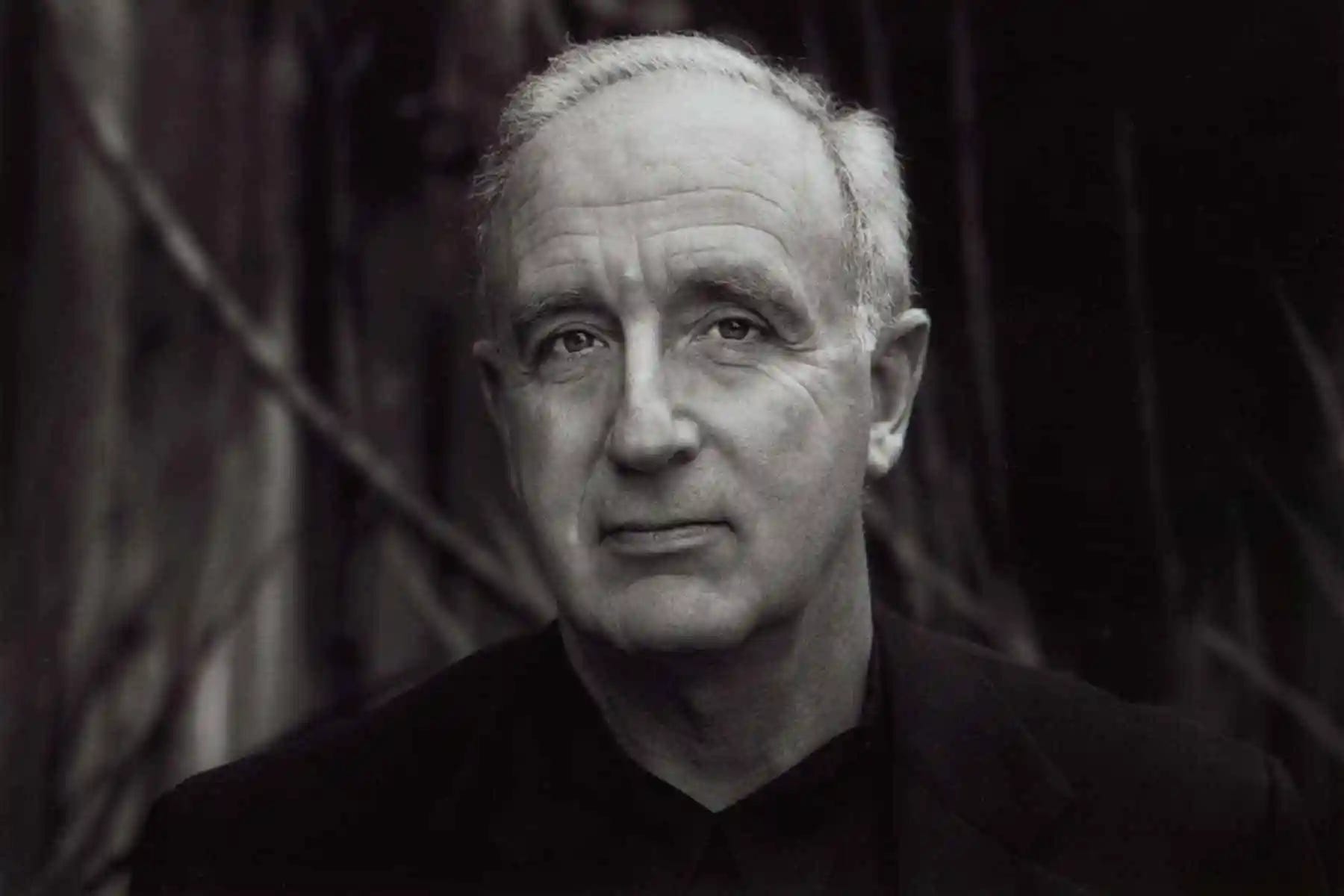

Steven Pressfield has earned a reputation as one of the finest writers of ancient warfare fiction, bringing battles such as Thermopylae and the Peloponnesian War to vivid life through meticulous research and gripping storytelling. His debut historical novel, Gates of Fire, is required reading at West Point and for all Marine Corps officers.
He is a master storyteller who excels in both historical fiction and motivational nonfiction. Best known for his ancient Greek warfare novels, particularly Gates of Fire, he has also written extensively about creativity and overcoming resistance through his internationally bestselling War of Art series. His work bridges military history, classical literature, and the creative process.
Disclosure: This article contains affiliate links. We earn from qualifying purchases at no extra cost to you.About Steven
Early Life and Background
Steven Pressfield was born on September 1, 1943, in Port of Spain, Trinidad, while his father was stationed there with the U.S. Navy. He grew up experiencing different cultures and eventually graduated from Duke University in 1965.
In 1966, Pressfield joined the U.S. Marine Corps, serving as an infantryman. This military experience would profoundly influence his later writing about warfare, brotherhood, and the warrior ethos.
After his military service, Pressfield held an astonishing variety of jobs: advertising copywriter, schoolteacher, tractor-trailer driver, bartender, oilfield roustabout, attendant in a mental hospital, and fruit picker in Washington state. During his struggles to become a writer, he experienced homelessness and lived out of the back of his car for a period. These experiences, which he details in his 2002 book The War of Art, shaped his understanding of resistance and the creative process.
Writing Career
Pressfield’s path to publication was a long and arduous one. He spent over 30 years working toward his first novel, The Legend of Bagger Vance, which was finally published in 1995 when he was 52 years old. The book was adapted into a 2000 film directed by Robert Redford and starring Matt Damon and Will Smith.
Before becoming a novelist, Pressfield wrote several Hollywood screenplays, including King Kong Lives (1986), Above the Law (1988) starring Steven Seagal, Freejack (1992) with Emilio Estevez and Anthony Hopkins, and Joshua Tree (1993) starring Dolph Lundgren.
His second novel, Gates of Fire (1998), transformed his career and established him as a master of historical fiction about ancient warfare. The book became a phenomenon in military circles, adopted for required reading at West Point, the U.S. Naval Academy, and on the Commandant of the Marine Corps Reading List (where it has remained since 2002). The novel also topped the bestseller list in Greece.
Since then, Pressfield has written multiple acclaimed historical novels about ancient Greece, Alexander the Great, and World War II, while also building a parallel career as one of the most influential writers on creativity and overcoming self-sabotage.
In 2012, he launched the publishing house Black Irish Books with his agent Shawn Coyne.
Writing Style and Approach
Pressfield combines meticulous historical research with powerful storytelling that emphasizes the warrior ethos, brotherhood, honor, and duty. His ancient warfare novels feature detailed descriptions of military tactics, particularly Greek phalanx formations, while never losing sight of the human stories at their center.
For his historical novels, Pressfield conducts extensive research but prioritizes dramatic flow over strict adherence to every historical detail. He may alter event sequences or use contemporary terms when he believes it serves the story, his stated aim being to capture the spirit of the times rather than create a textbook.
His nonfiction work on creativity explores “Resistance” (with a capital R), the internal force of fear, self-doubt, procrastination, and perfectionism that prevents artists and creators from doing their work. The War of Art has sold over one million copies globally and been translated into multiple languages, earning him a devoted following among writers, artists, and entrepreneurs.
Readers love Pressfield for his visceral battle scenes, philosophical depth, exploration of the warrior’s inner life, and ability to make ancient conflicts feel immediately relevant to modern readers.
Steven Pressfield Series in Reading Order
Pressfield’s historical fiction consists primarily of standalone novels rather than connected series, with one notable exception.
Telamon of Arcadia Series
Series Overview
Telamon is a Greek mercenary who appears in two novels (with a third forthcoming). While each book works as a standalone, they follow this warrior across different points in his life, exploring themes of violence, redemption, and fate.
Reading Order:
- The Knowledge (2016)
- A Man at Arms (2021)
- The Arcadian (June 2026) – Upcoming
Note on The Arcadian: This will be Telamon’s final story, exploring his last life as a soldier and delving into themes of justice, retribution, and whether redemption is possible after lifetimes steeped in blood.
Standalone Novels by Steven Pressfield
The Legend of Bagger Vance (1995)
Setting: 1930s Georgia, United States
Genre: Mystical Sports Fiction
Pressfield’s debut novel tells the story of Rannulph Junah, a disillusioned World War I veteran and former golf champion, who rediscovers his game and himself through the wisdom of a mysterious caddie named Bagger Vance. Loosely based on the Bhagavad Gita, the novel explores spiritual themes through the medium of golf.
Film Adaptation: Directed by Robert Redford (2000), starring Matt Damon and Will Smith. The adaptation was criticized for its use of the “Magical Negro” trope.
Gates of Fire (1998)
Setting: 480 BCE, Greece (Battle of Thermopylae)
Genre: Ancient Warfare Historical Fiction
Pressfield’s breakthrough novel recounts the legendary stand of 300 Spartans (plus allies) against the massive Persian army at the mountain pass of Thermopylae. Told through the eyes of Xeones, a Spartan squire and one of only three Greek survivors, the novel explores Spartan society, the agoge training system, and themes of honor, duty, and sacrifice.
Military Recognition:
- Required reading at West Point
- Required reading at U.S. Naval Academy
- On Commandant of the Marine Corps Reading List (all ranks) since 2002
- Recommended reading list of the Joint Chiefs of Staff
Commercial Success: Over 1 million copies sold, topped bestseller lists in Greece
Note: This is NOT the source material for the 2006 film 300 (that was Frank Miller’s graphic novel).
Tides of War (2000)
Setting: 5th century BCE, Greece (Peloponnesian War)
Genre: Ancient Warfare Historical Fiction
A sweeping novel about Alcibiades, the brilliant but controversial Athenian general and politician during the 27-year Peloponnesian War between Athens and Sparta. The novel explores the complexities of this larger-than-life figure who switched sides multiple times during the conflict.
Last of the Amazons (2002)
Setting: 1250 BCE, Black Sea region
Genre: Mythological/Ancient Historical Fiction
Pressfield reimagines the legend of the Amazons, the fierce female warriors of Greek mythology. The novel follows Theseus, legendary King of Athens, as he sails to the north coast of the Black Sea to encounter these mounted warrior women who fought with bow and axe. The only Pressfield novel narrated by a female character.
The Virtues of War (2004)
Setting: 356-323 BCE, Macedonia to India
Genre: Biographical Ancient Historical Fiction
Told in Alexander the Great’s own voice, this novel presents the legendary conqueror’s life from his perspective. “I have always been a soldier. I have known no other life.” Alexander recounts his campaigns, philosophy, and the burden of destiny with brutal honesty, exploring both his heroism and ruthlessness.
The Afghan Campaign (2006)
Setting: 330 BCE, Afghanistan
Genre: Ancient Warfare Historical Fiction
A gripping account of Alexander the Great’s invasion of the Afghan kingdoms, told through the eyes of a young Macedonian soldier. Pressfield draws deliberate parallels to modern conflicts in Afghanistan, showing how the challenges of fighting in that region have remained constant across millennia.
Killing Rommel (2008)
Setting: 1940-1943, North African Campaign of World War II
Genre: Military Historical Fiction
A fictionalized account of the British Long Range Desert Group (LRDG), commandos who operated behind enemy lines against Field Marshal Erwin Rommel and the Afrika Korps. Framed as a memoir of a British officer, the novel brings Pressfield’s signature attention to military detail and warrior psychology to a World War II setting.
The Profession (2011)
Setting: 2032, Near-future
Genre: Military Thriller
Pressfield’s first novel set in the future envisions a world where military force is privatized and for hire everywhere. The novel explores the implications of professional soldiers operating outside national boundaries and addresses America’s evolving relationship with warfare.
36 Righteous Men (2019)
Setting: 2034, Post-apocalyptic future
Genre: Apocalyptic Thriller
When global warming has pushed humankind to extinction’s brink, New York homicide detectives pursue a serial killer whose murders carry apocalyptic significance. The novel is steeped in Jewish eschatology, particularly the legend of the Thirty-Six Righteous Men who, according to tradition, sustain the world through their virtue.
Steven Pressfield Nonfiction Books
Pressfield has built a second career as a writing coach and creativity guru, exploring the psychology of the creative process.
The Resistance Series
The War of Art: Break Through the Blocks and Win Your Inner Creative Battles (2002)
The book that launched Pressfield’s nonfiction career. It identifies “Resistance” (fear, self-doubt, procrastination, perfectionism) as the enemy that prevents artists, entrepreneurs, and anyone pursuing their calling from doing their work. Over 1 million copies sold globally, translated into multiple languages.
Read this first among his nonfiction works.
Do the Work (2011)
A tactical guide showing specific techniques to overcome Resistance at each predictable sticking point in a creative project. More prescriptive than The War of Art.
Read this second after The War of Art.
Turning Pro: Tap Your Inner Power and Create Your Life’s Work (2012)
Explores the shift from amateur to professional mindset. “You don’t need to take a course or buy a product. All you have to do is change your mind.”
Read this third to deepen understanding of the professional creative life.
The Artist’s Journey: The Wake of the Hero’s Journey and the Lifelong Pursuit of Meaning (2018)
Examines the artist’s journey after finding their calling, the truly productive years when the challenge is no longer to find your destiny but to fulfill it.
Read this once you’ve entered the productive phase of your creative career.
Put Your Ass Where Your Heart Wants to Be (2022)
A brief, powerful book about shifting from ego-driven to self-driven creativity and committing to your dream for the long haul.
Other Nonfiction
- The Warrior Ethos (2011) – A mini-book (90 pages) written for military personnel, drawing on stories from ancient warriors
- The Authentic Swing (2013) – About writing his first novel, The Legend of Bagger Vance, and finally succeeding after three failed attempts
- The Lion’s Gate (2014) – Narrative nonfiction about the 1967 Six Day War, based on 63 hours of interviews with Israeli soldiers
- An American Jew (2015) – Memoir about writing The Lion’s Gate and how immersion in Israel’s history changed him
- Nobody Wants to Read Your Sh*t (2016) – Lessons from five different writing careers (advertising, screenwriting, fiction, nonfiction, self-help)
- Govt Cheese (2022) – Memoir about his early struggles
- The Daily Pressfield (2023) – 365 days of motivation and inspiration for creators
Where to Start with Steven Pressfield
Best First Book
For Historical Fiction Readers: Start with Gates of Fire
This is Pressfield at his absolute best. If you want ancient warfare, Greek culture, and a story that will stay with you forever, this is the definitive starting point. It’s his most acclaimed historical novel and requires no prior knowledge of ancient history.
For Writers/Creatives: Start with The War of Art
If you’re a creator struggling with procrastination or self-doubt, this short book (under 200 pages) will change how you think about your work. Read this before any of his other nonfiction.
If You Want…
Epic battle scenes and ancient Greek warfare: Gates of Fire (Thermopylae), Tides of War (Peloponnesian War)
Alexander the Great: The Virtues of War (his life) or The Afghan Campaign (his Afghan invasion)
World War II: Killing Rommel (North Africa campaign)
Female warriors: Last of the Amazons (only novel with female narrator)
A quick introduction to his style: The Legend of Bagger Vance (his first novel, different genre)
Near-future thriller: The Profession or 36 Righteous Men
Recurring character: Start with A Man at Arms (Telamon series, most recent historical)
To overcome creative blocks: The War of Art (his most influential nonfiction)
Popular Steven Pressfield Novels
Gates of Fire
Gates of Fire is Pressfield’s masterpiece and one of the finest novels ever written about ancient warfare. The novel doesn’t just describe the Battle of Thermopylae; it immerses you in Spartan culture, the brutal agoge training system, and the bonds between warriors facing certain death.
What makes it special: Pressfield presents the Spartans not as superhuman warriors but as disciplined men shaped by their culture, bound by brotherhood, and capable of extraordinary courage. The novel explores themes that transcend its historical setting: duty, honor, the meaning of freedom, and what men will sacrifice for each other and their ideals.
Military adoption: The fact that this novel is required reading at West Point and for Marine Corps officers speaks to its authentic portrayal of military culture and the warrior’s psychology.
Perfect for readers who love: Ancient history, military fiction, character-driven war stories, Greek culture, stories about brotherhood and sacrifice
Note: This novel has nothing to do with the 2006 film 300. That film was based on Frank Miller’s graphic novel, while Gates of Fire predates it by 8 years and takes a completely different approach.
The War of Art
While not historical fiction, The War of Art deserves mention as Pressfield’s most influential work. This short book (under 200 pages) identifies the internal forces that prevent creative people from doing their work and provides a philosophy for overcoming them.
What makes it special: Pressfield names the enemy (“Resistance”) and shows you how to recognize and fight it. The book has become essential reading for writers, artists, entrepreneurs, and anyone pursuing a calling.
Perfect for: Anyone who procrastinates, doubts themselves, or struggles to start or finish creative projects
Awards and Recognition
Military Recognition (Gates of Fire)
- Required reading list at U.S. Military Academy (West Point) since 2011
- Required reading list at U.S. Naval Academy (Annapolis)
- Commandant of the Marine Corps Reading List (all ranks) since 2002
- Recommended reading list of the Joint Chiefs of Staff
Commercial Success
- The War of Art: Over 1 million copies sold globally
- Gates of Fire: Over 1 million copies sold
- Gates of Fire: #1 bestseller in Greece
- Multiple novels became national bestsellers
Critical Acclaim
- Pat Conroy on Gates of Fire: “Steven Pressfield brings the battle of Thermopylae to brilliant life.”
- The New Yorker: “Pressfield’s powerful, historically accurate novel explores Spartan society and the nature of courage.”
- Publishers Weekly (starred review): “Riveting, rich with historical detail, hot action and crafty storytelling.”
Writing Schedule and Upcoming Books
Latest Release
Govt Cheese (December 2022)
The Daily Pressfield (2023)
His most recent books have been in his nonfiction/memoir series.
Upcoming Releases
The Arcadian (June 2026)
The final novel in the Telamon of Arcadia series. Into a world of conflict rides Telamon, soldier, killer, eternal outcast, drawn into brutal conflicts across lifetimes. As Pressfield builds to a remarkable siege, he poses the questions every warrior confronts: Can a man born to fight ever lay down his sword? And is redemption possible after so many lifetimes soaked in blood?
Similar Authors You’ll Enjoy
If you enjoy Steven Pressfield’s work, you might also like:
- Bernard Cornwell – Master of military historical fiction across multiple eras. Like Pressfield, Cornwell excels at battle scenes and warrior psychology. His Saxon Stories and Sharpe series are essential reading for fans of military fiction.
- Conn Iggulden – Writes epic historical fiction about conquerors (Genghis Khan, Julius Caesar) with the same attention to military tactics and character development that Pressfield brings to his work.
- Simon Scarrow – Roman military fiction (Eagles of the Empire series) with detailed battle scenes and authentic military culture. Perfect for readers who loved Gates of Fire.
- Michael Curtis Ford – Historical novels about ancient warfare (The Ten Thousand, Gods and Legions). Direct stylistic similarities to Pressfield’s Greek novels.
- Ben Kane – Roman military fiction with gritty realism and extensive research into ancient warfare. His attention to military detail rivals Pressfield’s.
- Colleen McCullough – Masters of Rome series. Epic, meticulously researched novels about Roman Republic and Empire. More political intrigue than Pressfield, but equally committed to historical authenticity.
Frequently Asked Questions
What is Steven Pressfield’s best book?
Gates of Fire is widely considered his masterpiece and finest historical novel. Among his nonfiction, The War of Art is his most influential work. However, “best” depends on what you’re looking for: ancient warfare (Gates of Fire), Alexander the Great (The Virtues of War), WWII (Killing Rommel), or creative inspiration (The War of Art).
In what order should I read Steven Pressfield’s books?
Most of Pressfield’s historical novels are standalone and can be read in any order. Start with Gates of Fire for his best work. The only connected series is Telamon of Arcadia: The Knowledge, A Man at Arms, The Arcadian (forthcoming). For nonfiction, read The War of Art first, then Do the Work, then Turning Pro.
Is Steven Pressfield historically accurate?
Pressfield researches extensively but prioritizes dramatic storytelling over strict historical accuracy. He may alter event sequences or use contemporary terminology when he believes it serves the story. His goal is to capture the spirit of ancient times rather than create a documentary. Military professionals praise his authentic portrayal of warrior psychology and military culture.
What time periods does Steven Pressfield write about?
Primarily ancient Greece (480 BCE to 330 BCE), plus one early Christian era novel (1st century CE), one WWII novel (1940-1943), and several modern/near-future thrillers. His specialty is ancient Greek warfare.
Is Gates of Fire the same as the movie 300?
No. Gates of Fire (1998 novel by Pressfield) and 300 (2006 film based on Frank Miller’s 1998 graphic novel) are completely separate works about the same historical event (Battle of Thermopylae). Gates of Fire is a realistic, character-driven novel adopted by military academies. The film 300 is a stylized, action-focused adaptation of Miller’s graphic novel.
Are Steven Pressfield’s books appropriate for young adults?
His historical fiction contains graphic violence, strong language, and some sexual content. Recommended for mature readers 16+. His nonfiction books on creativity (The War of Art, etc.) are appropriate for all ages and widely read by high school students pursuing creative work.
Has Steven Pressfield’s work been adapted for TV or film?
The Legend of Bagger Vance was adapted into a 2000 film directed by Robert Redford, starring Matt Damon and Will Smith. Despite multiple attempts and interest, Gates of Fire has never been adapted for film, though it remains one of the most sought-after properties in Hollywood for a potential epic adaptation.
Is Steven Pressfield still writing?
Yes. At 81 years old (as of 2025), Pressfield continues to write and publish regularly. His next novel, The Arcadian, is scheduled for June 2026. He also maintains an active blog and weekly newsletter at stevenpressfield.com.
What is The War of Art about?
The War of Art is a short motivational book (under 200 pages) that identifies “Resistance” as the internal force (fear, self-doubt, procrastination, perfectionism) that prevents creative people from doing their work. It has sold over 1 million copies and become essential reading for writers, artists, and entrepreneurs.
Where can I follow Steven Pressfield’s work?
Website: stevenpressfield.com (weekly writing newsletter)
Instagram: @steven_pressfield
He publishes regular blog posts about writing, creativity, and his work process.
Conclusion
Steven Pressfield stands as one of the premier writers of ancient warfare fiction, bringing battles from 2,500 years ago to vivid life with a combination of meticulous research and deep understanding of the warrior’s psychology. His masterpiece, Gates of Fire, has achieved the rare distinction of becoming required reading for military officers while remaining accessible and compelling for general readers.
Beyond his historical fiction, Pressfield has helped countless creative people overcome their inner obstacles through The War of Art and his other books on creativity. He bridges the ancient and modern, showing how the struggles of Spartan warriors and contemporary artists share common ground: the battle against fear and the pursuit of excellence.
Whether you’re drawn to the clash of bronze on bronze at Thermopylae, the philosophical complexity of Alexander the Great, or the creative struggle to finish your novel or start your business, Pressfield offers both inspiration and instruction. His work demonstrates that great historical fiction does more than recreate the past; it illuminates timeless truths about courage, duty, and what it means to be human.
Ready to begin your Steven Pressfield reading journey? Start with Gates of Fire for an unforgettable experience of ancient warfare, or pick up The War of Art if you’re a creator seeking to overcome resistance and do your most important work.