


World War II remains the most written-about conflict in historical fiction, and for good reason. The scale of the war, the diversity of experiences across continents, and the profound human stories of courage, survival, and sacrifice provide an endless source of material for compelling narratives.
Whether you’re drawn to stories of resistance fighters in occupied France, soldiers on the front lines, civilians enduring the Blitz, or the Holocaust survivors who persevered against impossible odds, WWII historical fiction offers some of the most moving and memorable novels ever written.
This guide presents 18 of the best World War II historical fiction books, spanning various theaters of war, perspectives, and narrative styles. From intimate character studies to sweeping epics, these novels illuminate one of history’s darkest periods while celebrating the human spirit’s resilience.
Disclosure: This article contains affiliate links. We earn from qualifying purchases at no extra cost to you.Why WWII Historical Fiction Resonates
World War II historical fiction continues to captivate readers for several reasons:
Universal Themes: The war touched every corner of the globe, creating stories that resonate across cultures and generations. Themes of courage, moral choice, loss, and hope remain timeless.
Diverse Perspectives: Unlike earlier conflicts, WWII generated stories from multiple fronts, the European theater, the Pacific, the home front, resistance movements, and the Holocaust, each offering unique narrative possibilities.
Living Memory: Although the generation that experienced World War II firsthand is nearly gone, their stories remain vivid through memoirs, interviews, and historical records, providing fiction writers with rich material to work with.
Moral Complexity: The war presented clear-cut evil in fascism while also revealing the complexity of human behavior under extreme pressure, making for nuanced storytelling.
The best WWII historical fiction doesn’t just recount battles and dates; it puts you inside the experiences of people who lived through history’s most devastating conflict, helping us understand not only what happened but also what it meant to be human during those years.
The Classics: Essential WWII Historical Fiction
These novels have stood the test of time, defining what great World War II historical fiction can achieve.
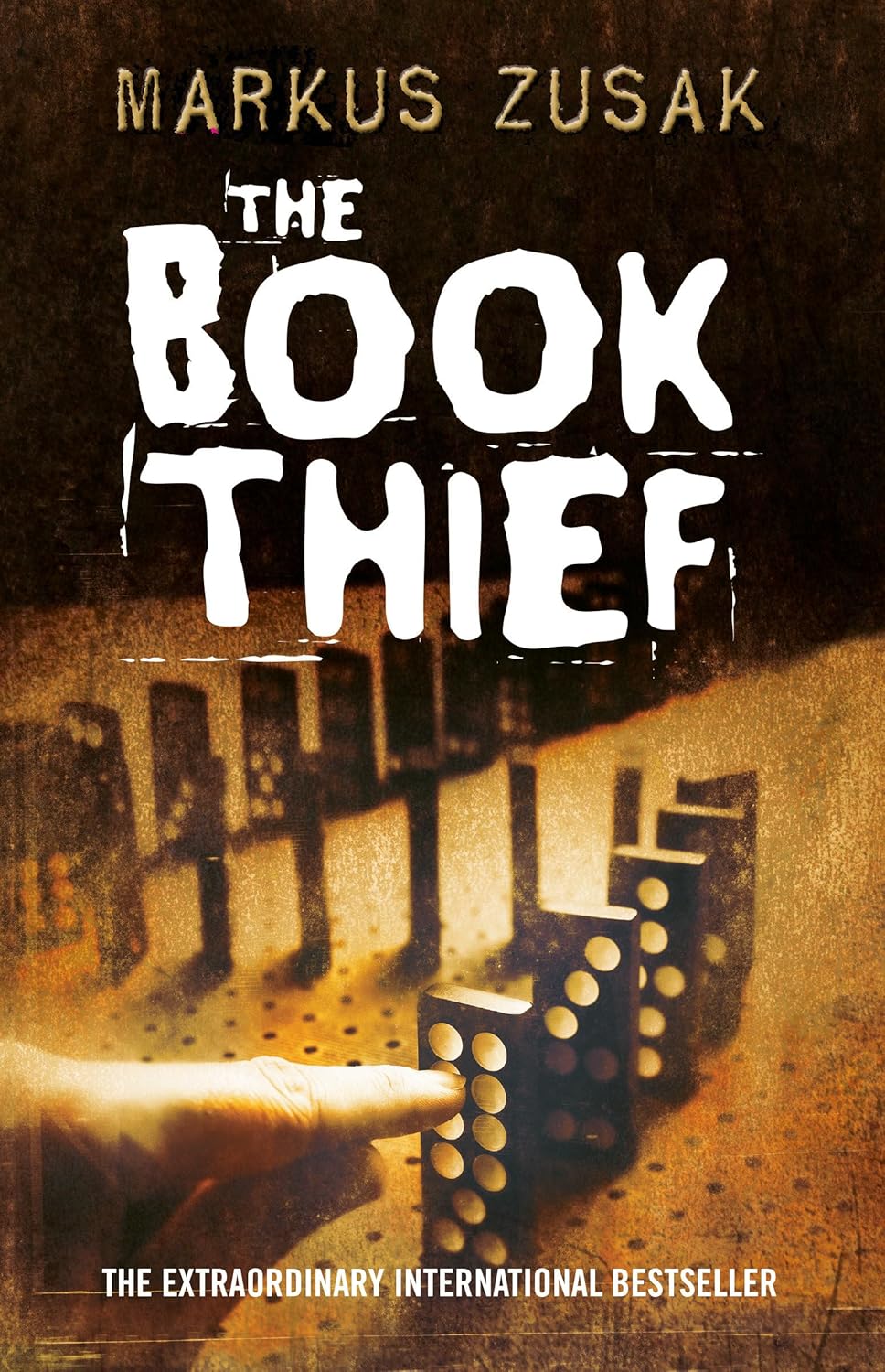
The Book Thief by Markus Zusak
Setting: Nazi Germany, 1938-1943
Perspective: German civilian (narrated by Death)
Zusak’s extraordinary novel follows Liesel Meminger, a young girl living with foster parents in a small German town during World War II. As she learns to read, Liesel begins stealing books from Nazi book burnings, from the mayor’s library in an act of defiance against a regime that would destroy knowledge.
What makes The Book Thief unforgettable is its unique narration by Death himself, who observes Liesel’s story with both cosmic detachment and surprising warmth. The novel shows ordinary Germans who secretly resist Liesel’s foster father, Hans, hiding a Jewish refugee, Max, in their basement while the horrors of war gradually close in.
The book’s power lies in its portrayal of how literature and storytelling become acts of resistance and humanity. In a world designed to dehumanize, Liesel’s stolen books preserve compassion, imagination, and hope.
Perfect for readers who love: Unique narrative voices, coming-of-age stories, books about the power of reading, German home front perspective
All the Light We Cannot See by Anthony Doerr

Setting: France and Germany, 1934-1944
Perspective: Dual narratives (French and German)
Winner of the Pulitzer Prize, Doerr’s luminous novel interweaves the lives of two characters: Marie-Laure, a blind French girl who flees Paris with her father and a legendary diamond, and Werner, a German orphan whose gift for radios leads him into the Hitler Youth and eventually the Wehrmacht.
The novel’s structure, with short, jewel-like chapters that move between characters and timelines, creates mounting tension as we watch these two lives converge toward a fateful meeting in the besieged coastal town of Saint-Malo.
Doerr’s prose is extraordinary, making the invisible visible. Marie-Laure navigates her world through touch and sound, while Werner sees radio waves dancing through the air. The novel asks profound questions about complicity, courage, and the small acts of kindness that survive even in wartime.
Perfect for readers who love: Lyrical prose, dual timelines, morally complex characters, French resistance, coming-of-age during war
The Nightingale by Kristin Hannah
Setting: Occupied France, 1939-1945
Perspective: Two French sisters
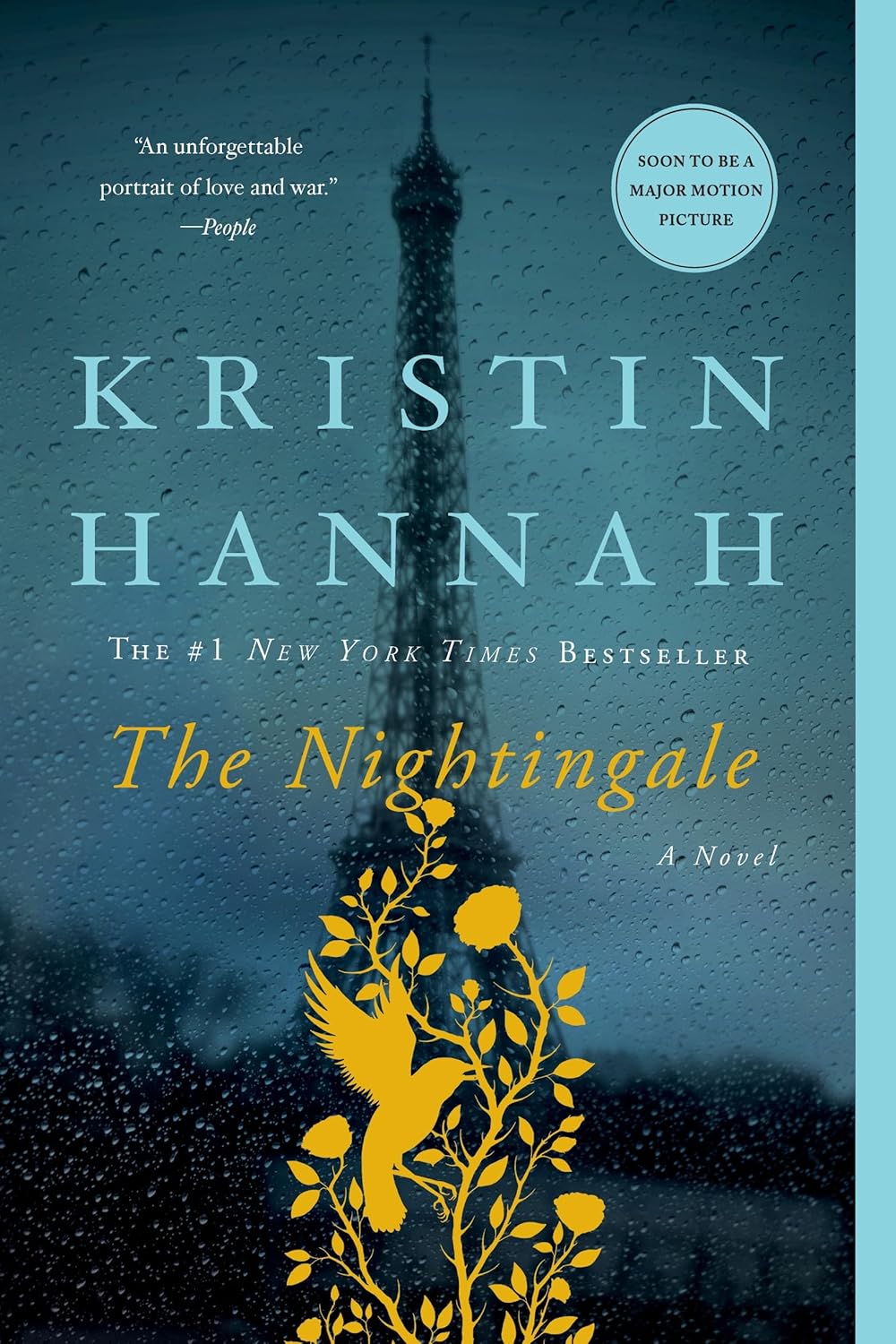
Hannah’s epic novel follows two very different sisters in Nazi-occupied France: Vianne, who must house a German officer while her husband is a prisoner of war, and Isabelle, who joins the Resistance and becomes “The Nightingale,” smuggling downed Allied pilots over the Pyrenees.
The novel excels at showing how ordinary women became heroes through small acts of courage that accumulated into extraordinary resistance. Vianne’s seemingly passive survival, hiding a Jewish child, sharing scarce food, is revealed as its own form of bravery alongside Isabelle’s more dramatic exploits.
The Nightingale explores sisterhood, the different ways women resisted occupation, and the long shadow trauma casts over survivors. It’s both a thriller and an intimate family drama.
Perfect for readers who love: Female protagonists, sister relationships, French resistance, survival stories, dual perspectives
The Winds of War by Herman Wouk
Setting: Global, 1939-1941
Perspective: American military family
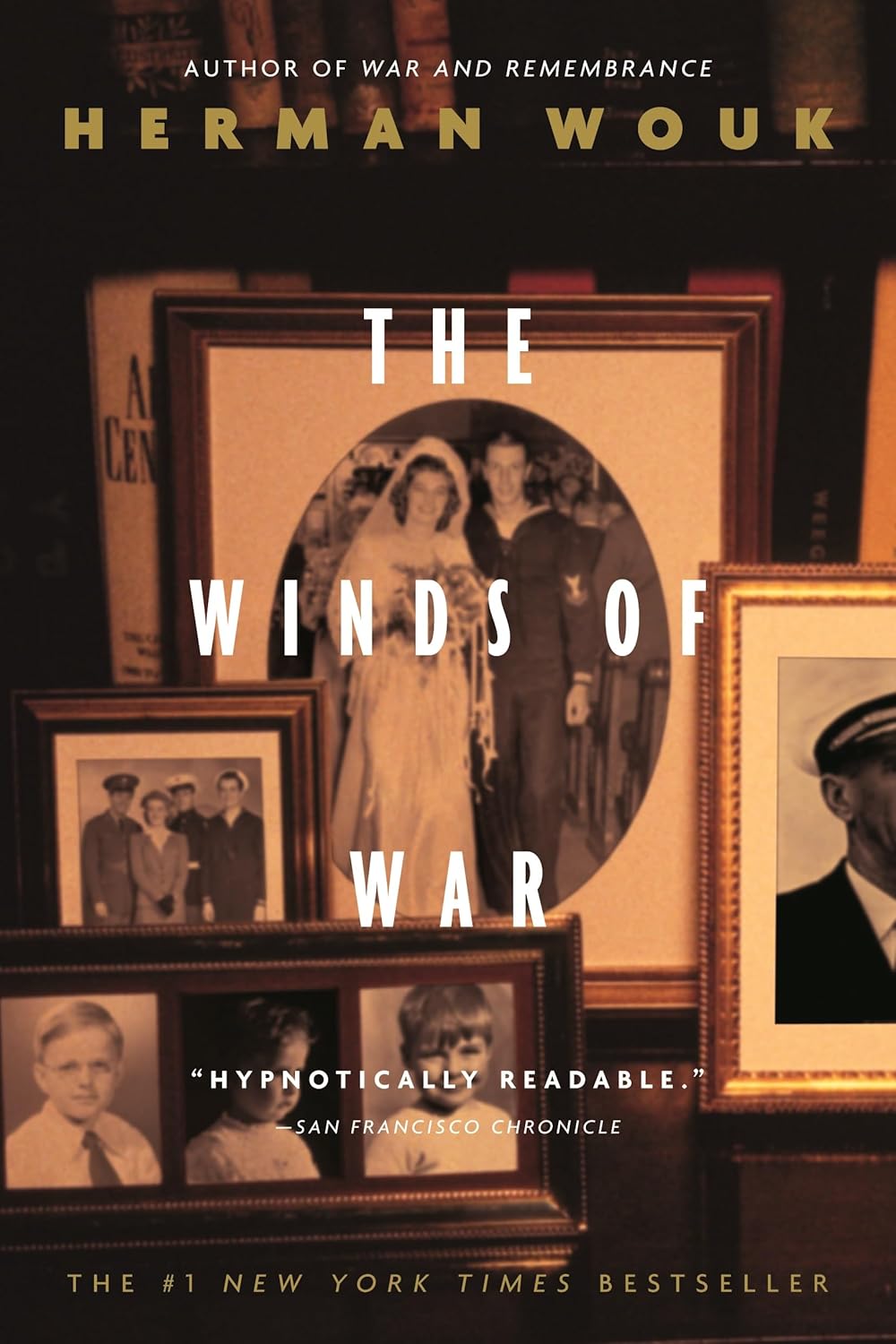
Wouk’s massive historical epic follows the Henry family, naval officer Victor “Pug” Henry, and his adult children as they experience the outbreak of war from posts around the world: Berlin, London, Moscow, and Washington.
What sets The Winds of War apart is its scope. Through the Henry family’s connections, readers witness major historical events, including the fall of Poland, the Battle of Britain, the Siege of Leningrad, and ultimately, the attack on Pearl Harbor. The novel seamlessly blends fictional characters with real historical figures, such as Roosevelt, Hitler, and Churchill.
The book is also a romance, a family saga, and a diplomatic thriller. Wouk, a World War II veteran, brings authenticity to both the military detail and the personal cost of war. The novel continues in War and Remembrance, together forming one of literature’s most ambitious projects about World War II.
Perfect for readers who love: Epic scale, multiple POVs, military history, political intrigue, family sagas spanning the entire war
The Holocaust: Stories of Survival and Remembrance
These novels bear witness to the Holocaust, honoring those who suffered while ensuring their stories endure.
The Tattooist of Auschwitz by Heather Morris
Setting: Auschwitz, 1942-1945
Based on a true story
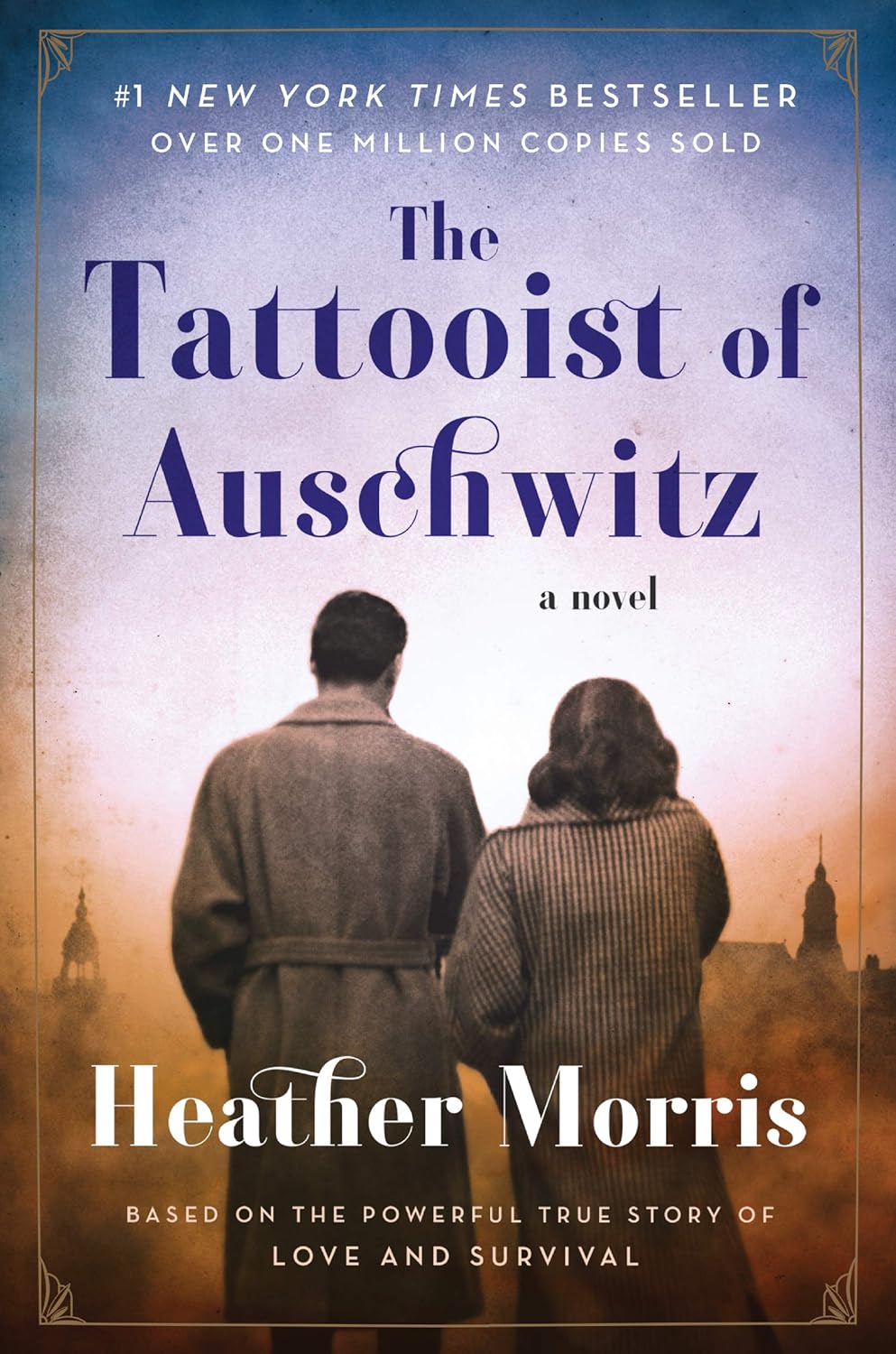
Morris’s novel tells the true story of Lale Sokolov, a Slovakian Jew who was forced to tattoo identification numbers on fellow prisoners at Auschwitz-Birkenau. In the midst of unimaginable horror, Lale meets Gita, another prisoner, and the two form a love that sustains them through the camp’s darkest days.
The novel is unflinching in its portrayal of concentration camp realities, while also demonstrating how love, small acts of kindness, and the will to survive persisted even in the most hellish conditions. Lale uses his position to smuggle food and medicine, taking enormous risks to help fellow prisoners.
The Tattooist of Auschwitz sparked debate about Holocaust fiction. Some praised its accessibility and emotional power, while others questioned the fictionalization of such events. Regardless, it has introduced millions of readers to the history of the Holocaust.
Perfect for readers who love: True stories, survival against odds, Holocaust remembrance, love in dark times
Sarah’s Key by Tatiana de Rosnay
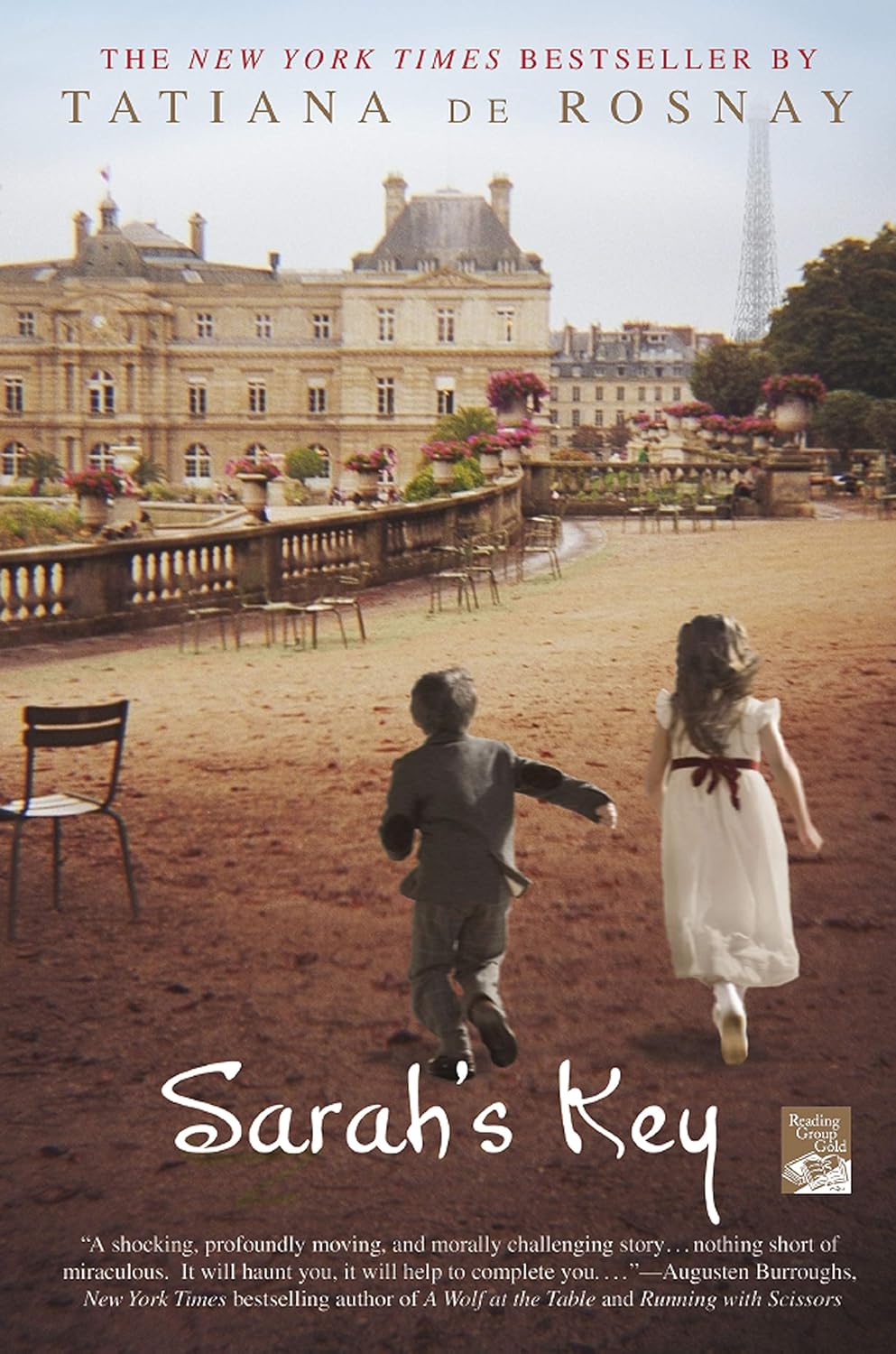
Setting: Paris, 1942 and 2002
Perspective: Dual timeline (past and present)
De Rosnay’s novel interweaves two timelines: in 1942, ten-year-old Sarah is arrested during the Vel’ d’Hiv Roundup in Paris and locks her younger brother in a secret cupboard, promising to return. Sixty years later, American journalist Julia Jarmond investigates Sarah’s story while uncovering uncomfortable truths about French collaboration.
The novel explores collective memory and national guilt, the uncomfortable truth that French police rounded up Jewish citizens for deportation. It asks: How do we remember atrocities when our own ancestors may have been complicit?
Sarah’s story is heartbreaking, while Julia’s modern investigation raises questions about historical responsibility, the stories we choose to tell, and the secrets families keep.
Perfect for readers who love: Dual timelines, investigative narratives, French history, Holocaust remembrance, moral complexity
Schindler’s List by Thomas Keneally
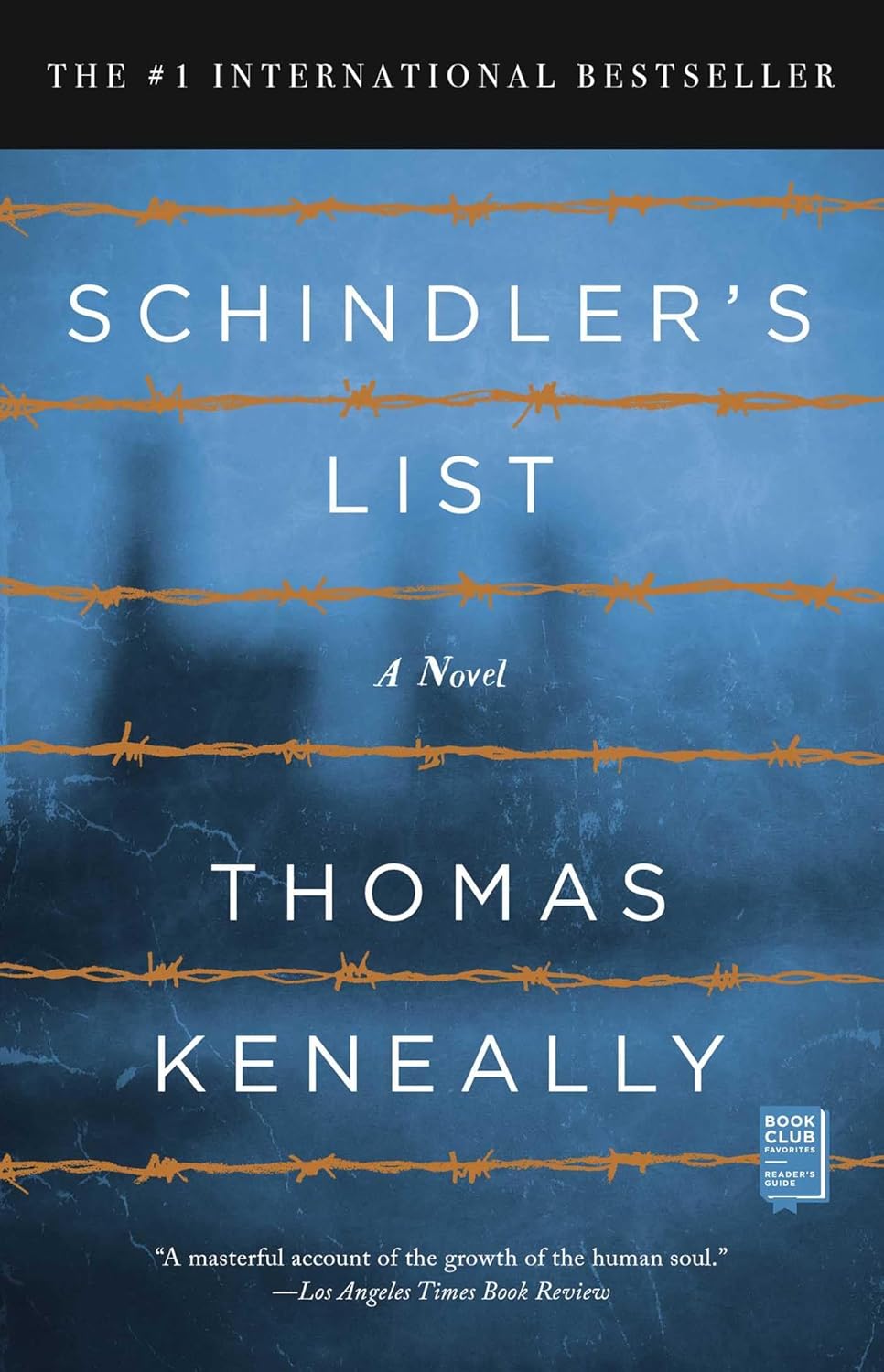
Setting: Krakow and Czechoslovakia, 1939-1945
Based on a true story
Keneally’s masterwork tells the true story of Oskar Schindler, a German industrialist and Nazi Party member who saved over 1,100 Jews by employing them in his factories. The novel (published in some editions as Schindler’s Ark) reads like fiction but meticulously documents real events.
What makes the story compelling is Schindler’s complexity. He was a war profiteer, a womanizer, an opportunist who somehow became a hero. The novel doesn’t sanitize his flaws but shows how even flawed people can choose to be courageous.
The book inspired Steven Spielberg’s acclaimed film but offers more depth on Schindler’s operations, the prisoners he saved, and the moral ambiguity of surviving through collaboration with evil.
Perfect for readers who love: True stories, moral complexity, Holocaust history, stories of rescue, character transformation
The Resistance and Espionage
These novels capture the shadow war of spies, resistance fighters, and ordinary people who refused to submit to occupation.
Code Name Verity by Elizabeth Wein

Setting: Nazi-occupied France and England, 1943
Perspective: Young female spy
Wein’s masterful novel follows two young women: “Verity,” a British spy captured by the Gestapo in France, and Maddie, the pilot who flew her there. As Verity writes her confession under torture, revealing British intelligence secrets, the true story slowly emerges.
Code Name Verity is a mystery, a thriller, and above all, a story about female friendship under the most extreme circumstances. The novel’s structure, Verity’s confession, allows for unreliable narration and devastating reveals. Nothing is quite what it seems.
The book celebrates the real women who served in the SOE (Special Operations Executive) and ATA (Air Transport Auxiliary), flying planes and working behind enemy lines. It’s both heartbreaking and ultimately hopeful about the bonds between women.
Perfect for readers who love: Female spies, twist endings, unreliable narrators, British SOE, friendship stories, aviation
The Alice Network by Kate Quinn
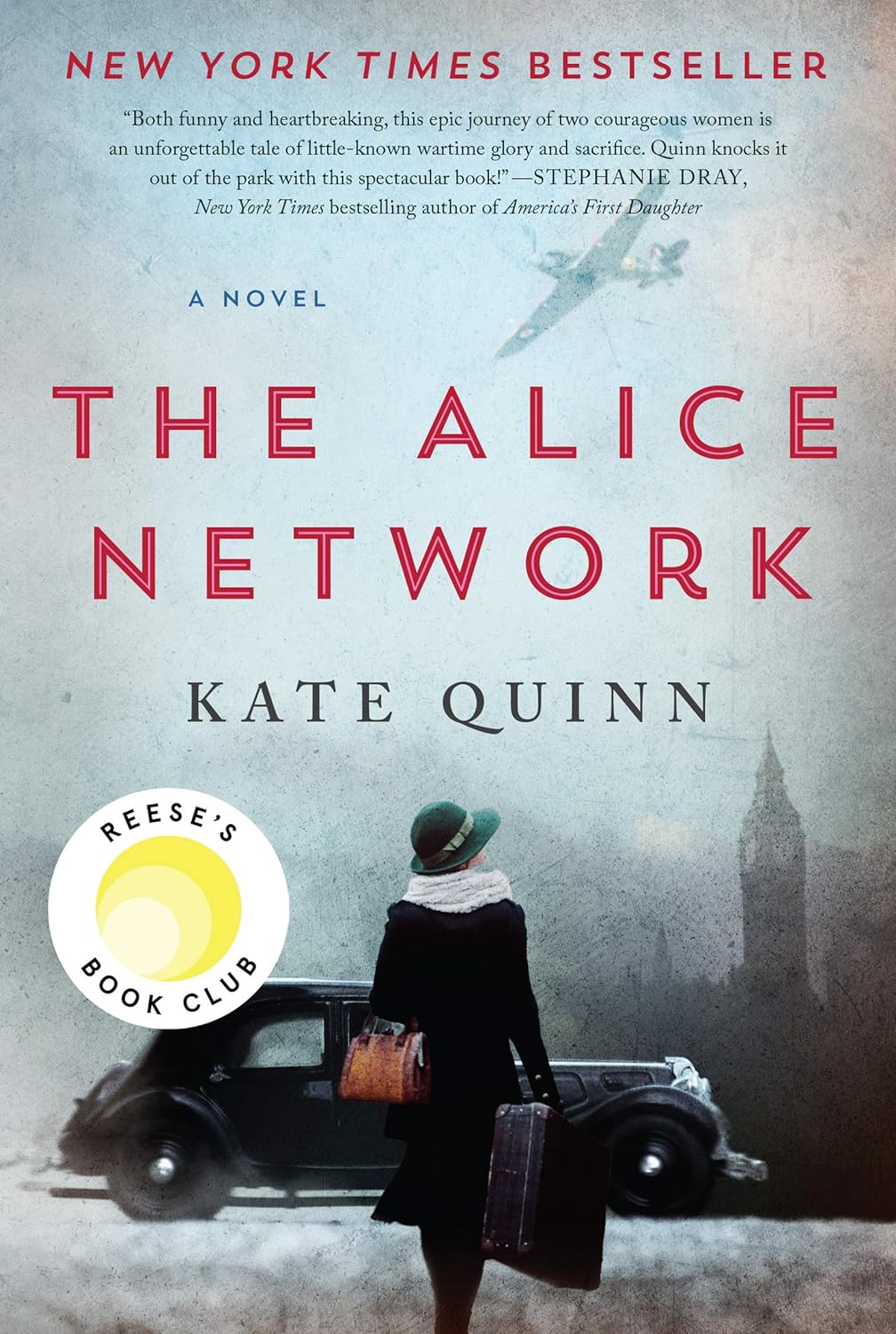
Setting: France, WWI and WWII (dual timeline)
Perspective: Dual narratives across both world wars
Quinn’s novel connects two women across two wars: Eve, a real WWI spy in the Alice Network (a group of female spies operating in German-occupied France), and Charlie, an American searching for her missing cousin in post-WWII France.
The novel alternates between Eve’s dangerous work in WWI gathering intelligence while working as a server in a restaurant frequented by Germans, and her damaged post-war life. In 1947, Charlie recruits the bitter, alcoholic Eve to help find her cousin, rekindling Eve’s sense of purpose.
The Alice Network is both a spy thriller and a character study, exploring trauma, redemption, and the bonds between women who understand the cost of courage. Based on the real Alice Network, it brings recognition to unsung female heroes.
Perfect for readers who love: Dual timelines, female spies, redemption arcs, French resistance, WWI and WWII connections
The Paris Architect by Charles Belfoure
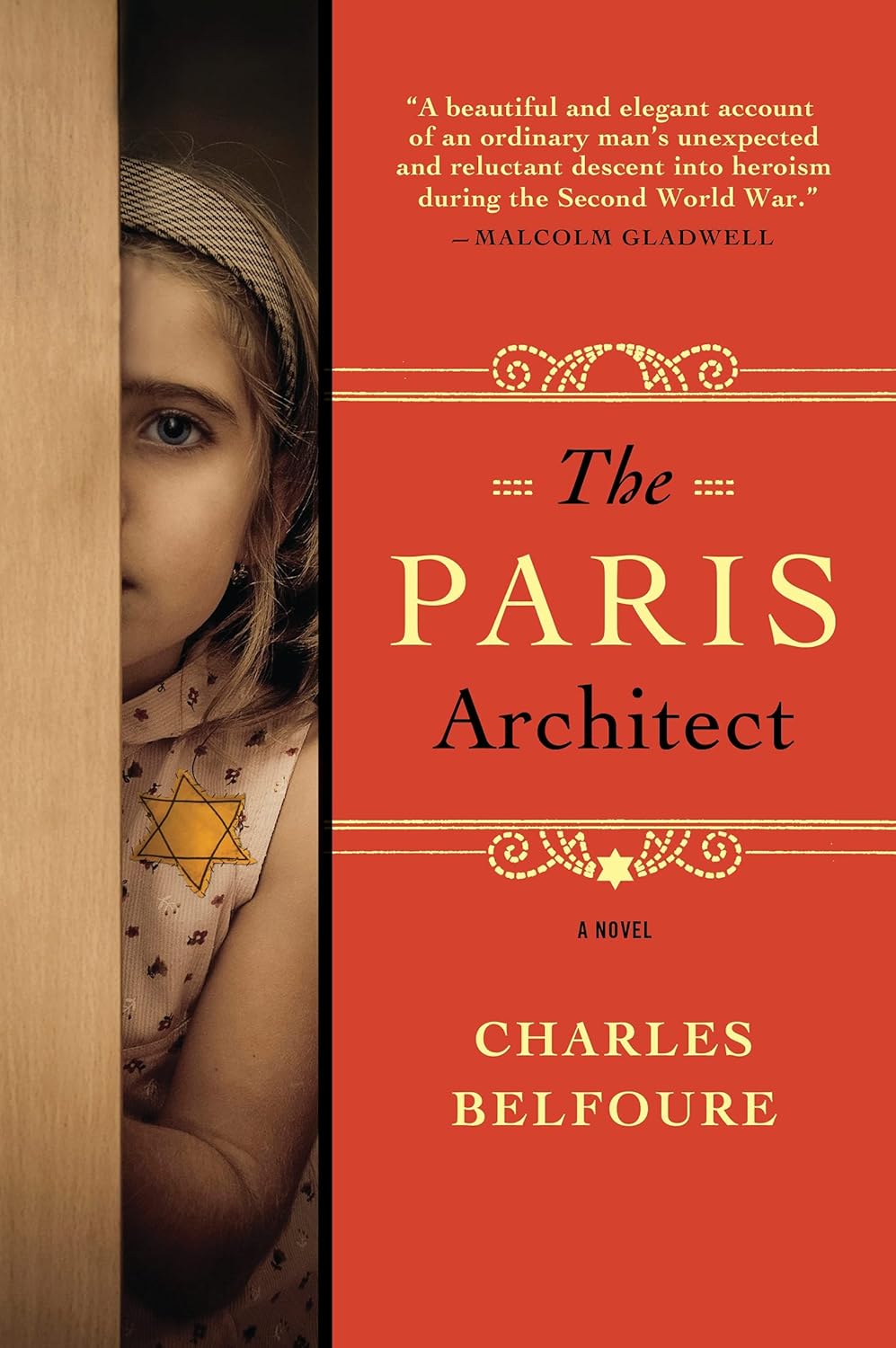
Setting: Nazi-occupied Paris, 1942-1944
Perspective: French architect
Belfoure’s thriller follows Lucien Bernard, a Parisian architect commissioned by a wealthy industrialist to design hiding places for Jews in occupied Paris. Initially motivated by money and self-interest, Lucien gradually transforms into someone willing to risk everything.
The novel’s genius lies in its premise as a form of resistance. Lucien utilizes his professional knowledge to create ingenious hiding places, including false walls, hidden rooms, and secret passages. Each design becomes a life-or-death puzzle.
As the Gestapo closes in and Lucien’s creations are put to the test, the novel becomes a taut thriller. But it’s also a character study of moral awakening, how an ordinary, self-centered man discovers courage he didn’t know he possessed.
Perfect for readers who love: Unique premises, moral transformation, Paris setting, architectural detail, suspense
The Home Front and Women’s War
These novels illuminate the experiences of those who fought the war away from battlefields.
The Guernsey Literary and Potato Peel Pie Society by Mary Ann Shaffer and Annie Barrows
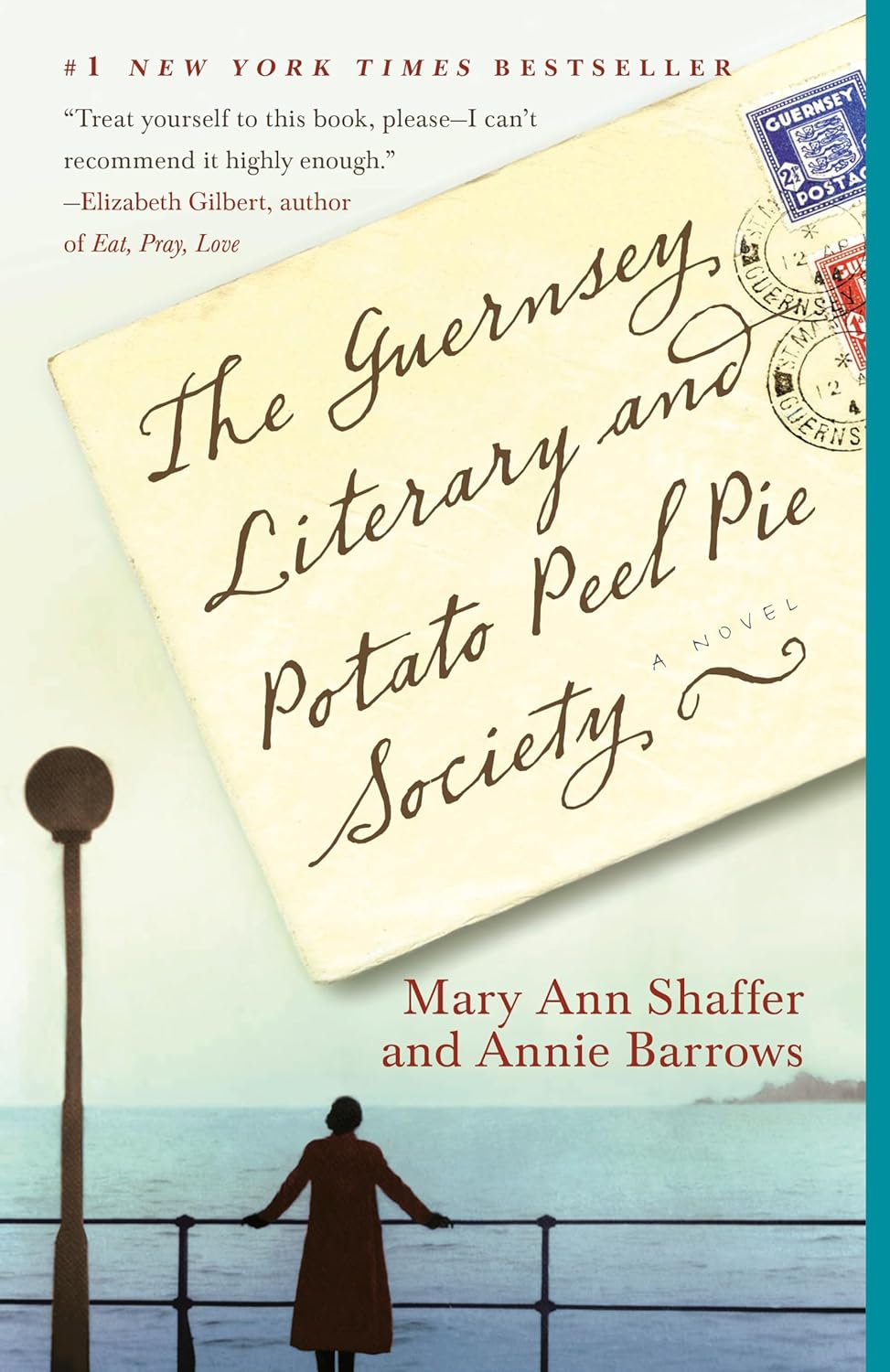
Setting: Guernsey (Channel Islands), 1946
Format: Epistolary novel (letters)
Told entirely through letters, this charming novel follows Juliet Ashton, a London writer who discovers the Guernsey Literary and Potato Peel Pie Society, formed during the German occupation of the Channel Islands as a cover story when members were caught breaking curfew.
Through correspondence with society members, Juliet learns about life under occupation on Guernsey: the hardships, small rebellions, romance, and tragedies. The novel celebrates books and reading as sources of comfort and connection in dark times.
While lighter in tone than many WWII novels, Guernsey doesn’t shy from the darkness of characters who died, suffered, and carry scars. But it’s ultimately about rebuilding community after trauma and finding love again.
Perfect for readers who love: Epistolary format, British Channel Islands, lighter tone, book clubs, romance, community
Mrs. Miniver by Jan Struther

Setting: England, 1939-1940
Perspective: British middle-class housewife
Originally published as newspaper columns, Struther’s novel follows Mrs. Miniver, a middle-class English housewife navigating the early days of World War II. From evacuating children to dealing with rationing to sheltering from air raids, Mrs. Miniver represents the “ordinary” British citizen keeping calm and carrying on.
What makes the book significant is its historical impact. It was enormously popular in America and is credited with shifting public opinion in favor of Britain before the Pearl Harbor attack. Winston Churchill said the book did more for the Allied cause than a fleet of battleships.
While the tone is gentler than modern war novels, Mrs. Miniver captures the British spirit during the war’s darkest early days. The book later inspired an Oscar-winning film that further boosted American support for Britain.
Perfect for readers who love: British home front, earlier war novels, historical significance, slice-of-life narratives, “keep calm” spirit
The Kitchen Front by Jennifer Ryan

Setting: England, 1942
Perspective: Four women, BBC cooking competition
Ryan’s novel follows four very different women competing in a BBC radio cooking competition during wartime rationing: a lady of the manor fallen on hard times, a young widow, a kitchen maid with ambitions, and a factory worker.
The novel explores how WWII transformed British women’s lives, taking on men’s jobs, managing severe rationing, and keeping families together while husbands were away. The cooking competition framework allows Ryan to explore class, friendship, and women’s ingenuity.
The Kitchen Front is both historical fiction and feel-good storytelling, showcasing how women kept Britain functioning while making the most of scarce resources, including spam, powdered eggs, and turnips.
Perfect for readers who love: Home front stories, female friendship, British WWII, food history, competition narratives
The Pacific Theater and Global War
Most World War II fiction focuses on Europe, but these novels explore the war in Asia and the Pacific.
Unbroken by Laura Hillenbrand
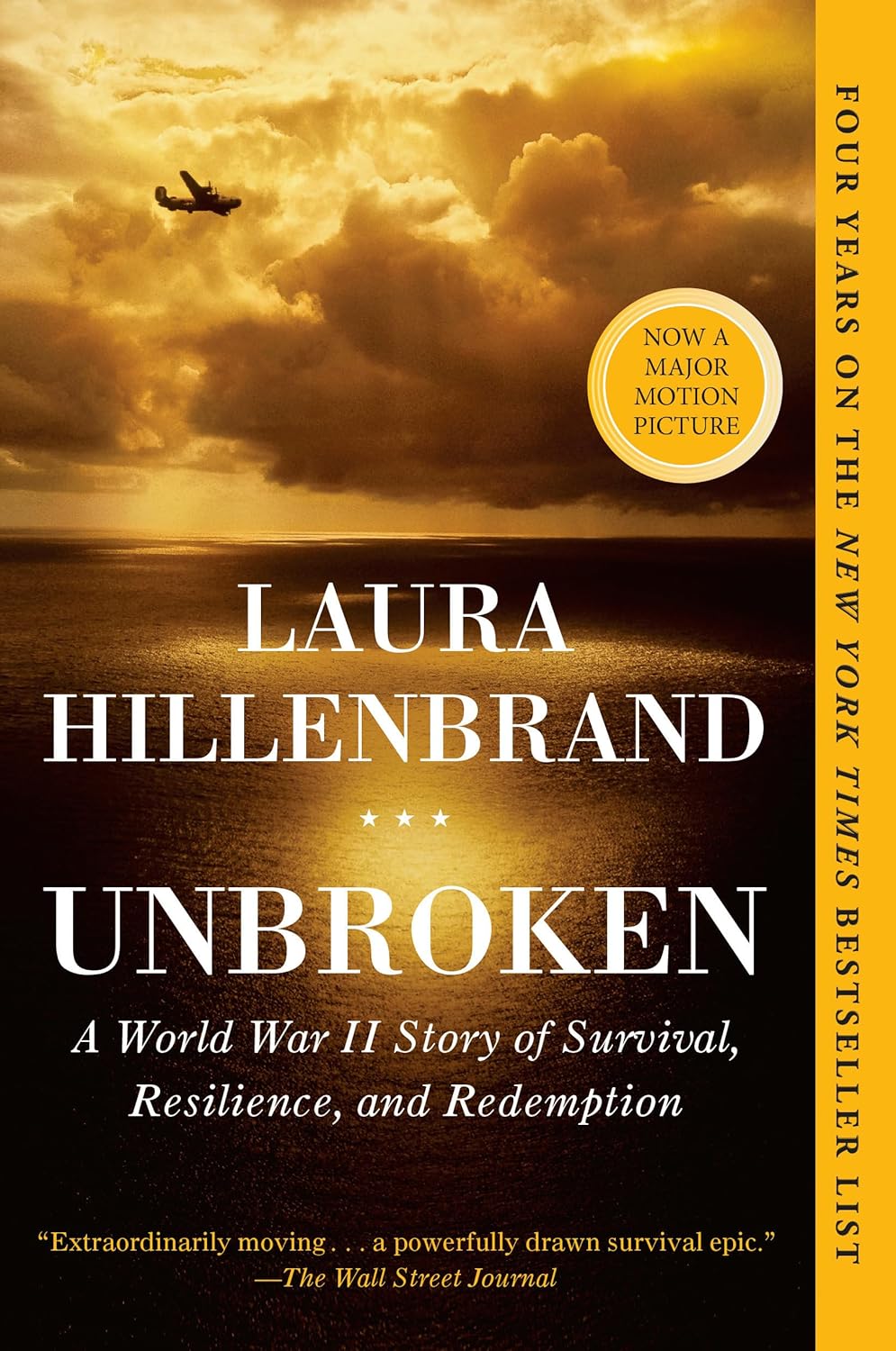
Setting: Pacific Theater, Japanese POW camps, 1943-1945
Based on a true story
Hillenbrand’s extraordinary biography-as-narrative tells the true story of Louis Zamperini, an Olympic runner who became a bombardier, survived 47 days adrift in the Pacific after his plane crashed, and then endured brutal years in Japanese POW camps.
While technically non-fiction, Unbroken reads like a novel, with suspense, character development, and storytelling craft. Zamperini’s story is one of almost unbelievable survival, the physical torments he endured, the psychological warfare of camp commander “The Bird,” and his post-war journey through PTSD and eventual forgiveness.
The book illuminates the brutality of the Pacific War while celebrating the resilience of the human spirit. It’s inspiring without being sentimental, horrifying without being gratuitous.
Perfect for readers who love: True stories, survival narratives, Pacific Theater, POW experiences, redemption stories, athletic backgrounds
The Narrow Road to the Deep North by Richard Flanagan
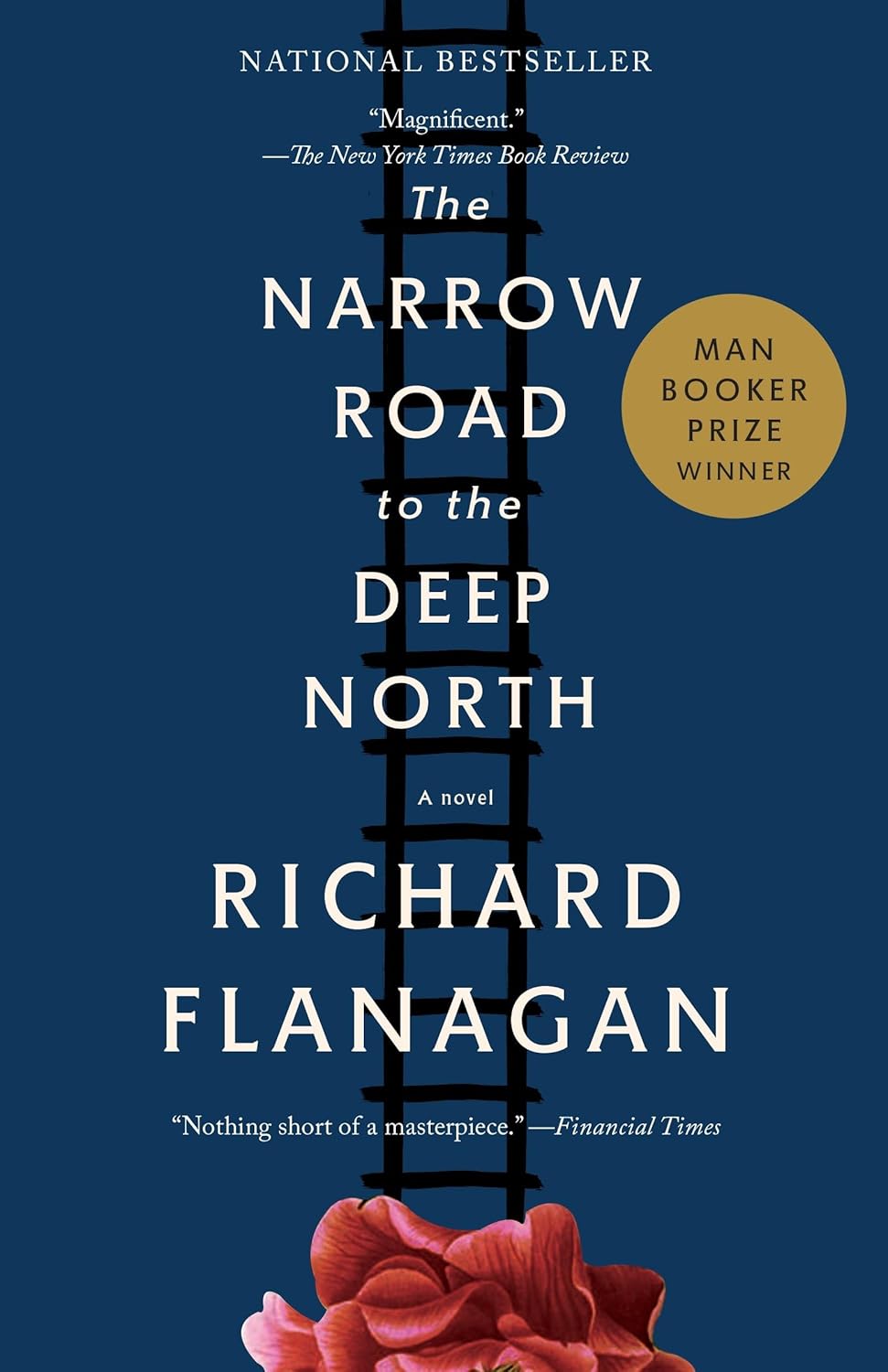
Setting: Burma Railway (Thailand-Burma Railway), 1943
Perspective: Australian POW surgeon
Flanagan’s Booker Prize-winning novel follows Dorrigo Evans, an Australian surgeon in a Japanese POW camp forced to build the Burma Railway, the infamous “Death Railway” that killed thousands through disease, starvation, and brutality.
The novel shifts between past and present, revealing both Dorrigo’s wartime suffering and his post-war life, which carries that trauma. Flanagan, whose father survived these camps, writes with authority about the physical degradation, moral compromises, and unexpected moments of humanity.
What elevates the novel is its exploration of memory, how do survivors live with what they endured and what they were forced to do? The prose is lyrical even when describing horror, creating a meditation on suffering, love, and forgetting.
Perfect for readers who love: Literary fiction, Pacific Theater, Australian perspective, POW narratives, non-linear timelines, prize-winning literature
When the Emperor Was Divine by Julie Otsuka
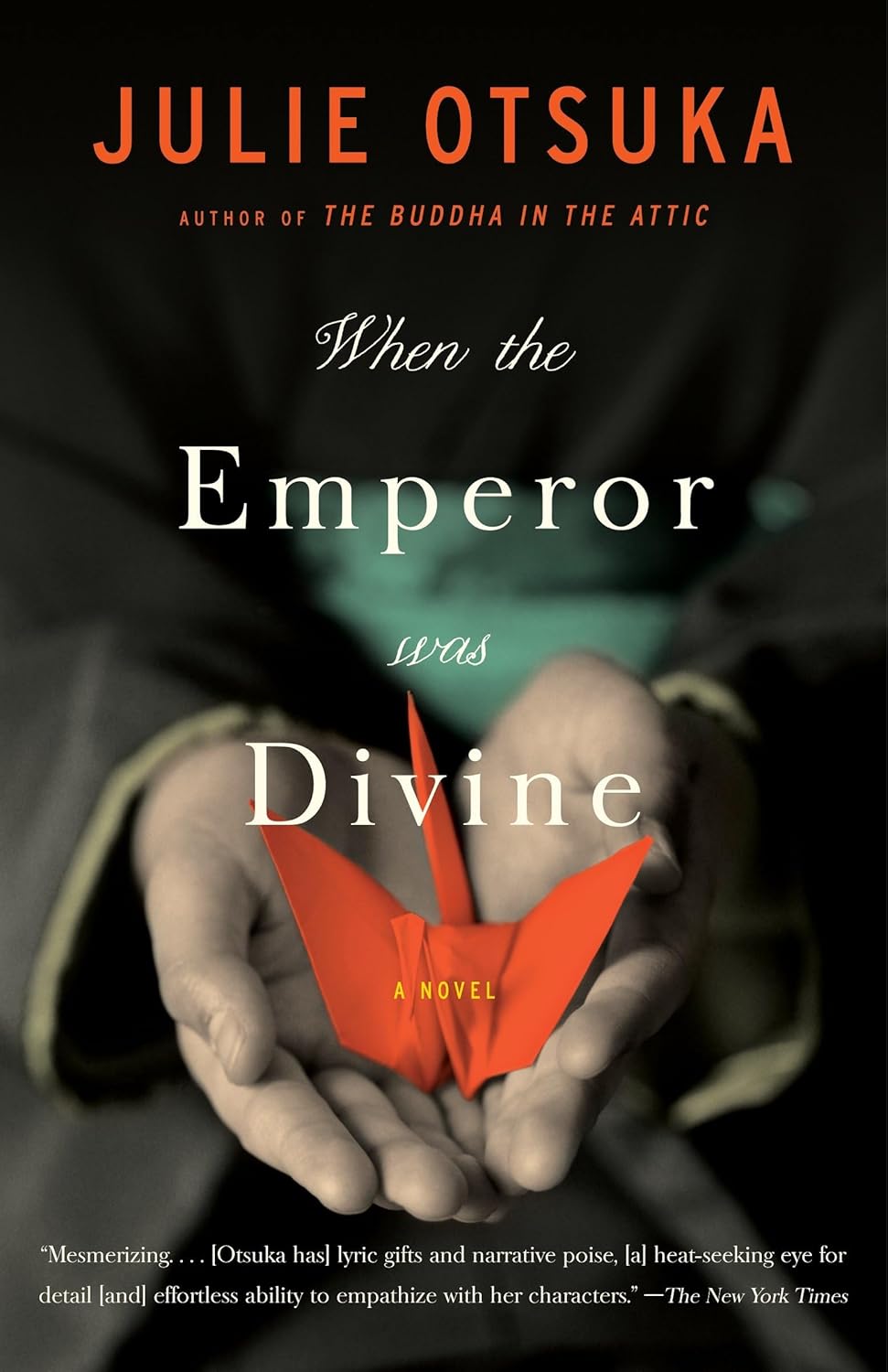
Setting: American West, Japanese internment camps, 1942-1945
Perspective: Japanese-American family
Otsuka’s spare, powerful novel follows a Japanese-American family: mother, daughter, and son evacuated from their California home and sent to an internment camp in Utah. The father was arrested earlier, suspected of being a spy simply for being Japanese.
In brief, concise chapters, each focusing on a different family member, the novel delves into this shameful chapter of American history. The prose is restrained yet devastating, illustrating how ordinary American citizens were transformed into enemies overnight, losing their homes, businesses, and dignity.
The novel’s power lies in what it doesn’t say: the understated horror of injustice and the quiet endurance of people maintaining their humanity under dehumanizing conditions. It’s essential reading for understanding World War II’s home front beyond the battlefield.
Perfect for readers who love: Sparse prose, Japanese-American perspective, internment camp history, literary fiction, family stories, American home front
The Aftermath: Stories of Liberation and Rebuilding
These novels explore what came after the difficult work of rebuilding lives and nations.
The Postmistress by Sarah Blake
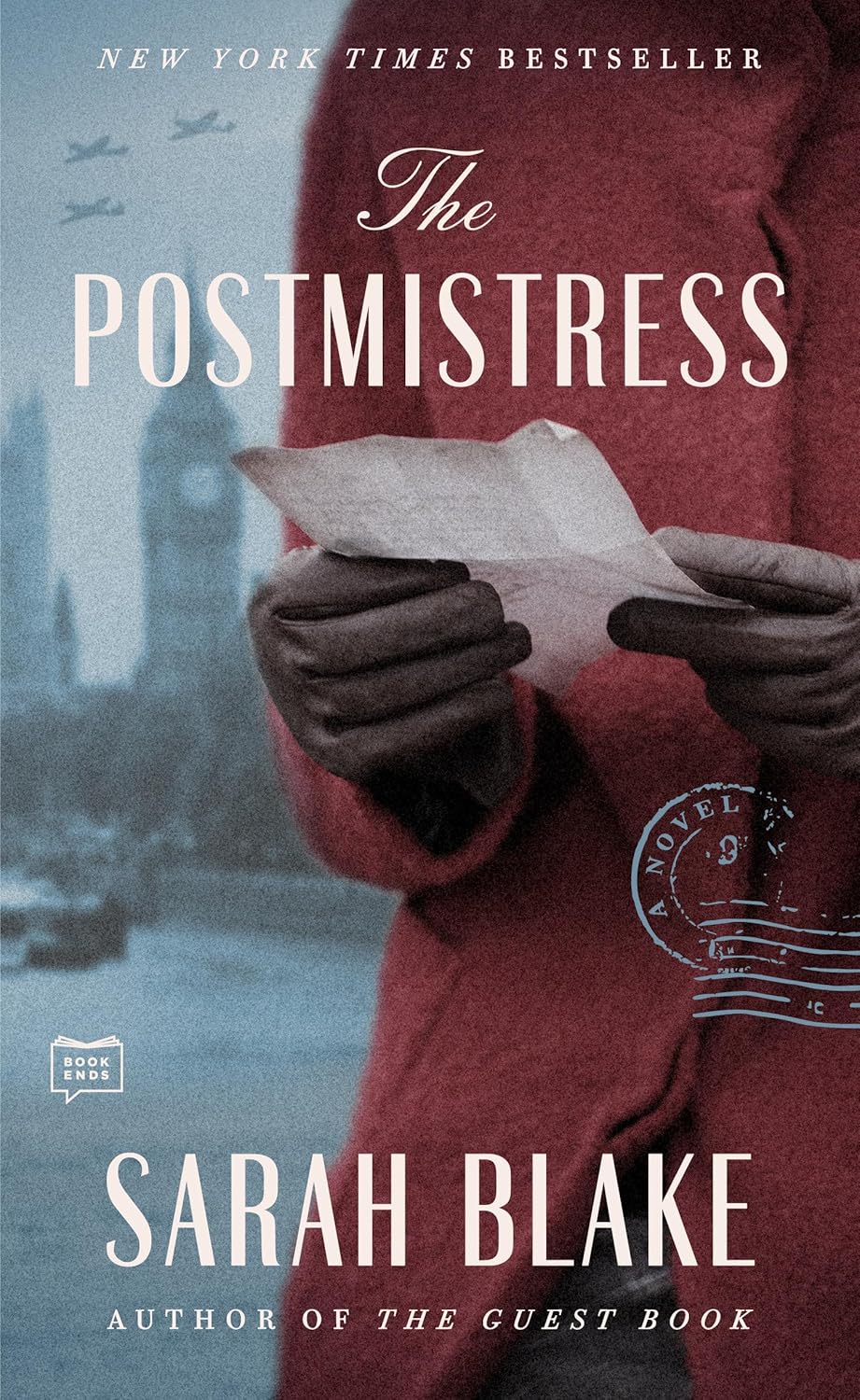
Setting: Massachusetts and London, 1940-1941
Perspective: Three women (American postmistress, radio reporter, doctor’s wife)
Blake’s novel follows three women whose lives intersect through letters and radio broadcasts: Iris, a postmistress in Cape Cod who begins withholding mail; Frankie, an American reporter broadcasting from London during the Blitz; and Emma, a young bride whose doctor husband travels to London.
The novel explores how news of the war reached Americans before Pearl Harbor, when intervention was debated, and Europe’s suffering seemed distant. It asks what we owe to the truth, the cost of bearing witness, and how war touches even those far from battlefields.
The Postmistress is both historical fiction and a literary exploration of storytelling itself, which examines the stories that are told, the stories that are left untold, and what happens to the untold.
Perfect for readers who love: American home front, journalist protagonists, multiple POVs, the London Blitz, pre-Pearl Harbor America
The Invisible Bridge by Julie Orringer

Setting: Hungary, France, labor camps, 1937-1944
Perspective: Hungarian Jewish architecture student
Orringer’s epic novel follows Andras Lévi, a Hungarian Jewish architecture student who wins a scholarship to Paris in 1937. As he studies, falls in love, and builds a life, the shadows of war and antisemitism gradually close in.
What makes The Invisible Bridge remarkable is its length and ambition. It takes time to build Andras’s world before destroying it. We care deeply about his relationships, his dreams, and his small joys, which makes their loss all the more devastating.
The novel follows Andras from Paris through labor camps, showing how Hungarian Jews faced persecution even before deportation. It’s about architecture, building, and destruction as a metaphor for the war’s impact on lives and civilizations.
Perfect for readers who love: Epic length, pre-war buildup, Hungarian Jewish experience, Paris setting, architecture, multi-generational scope
The English Patient by Michael Ondaatje
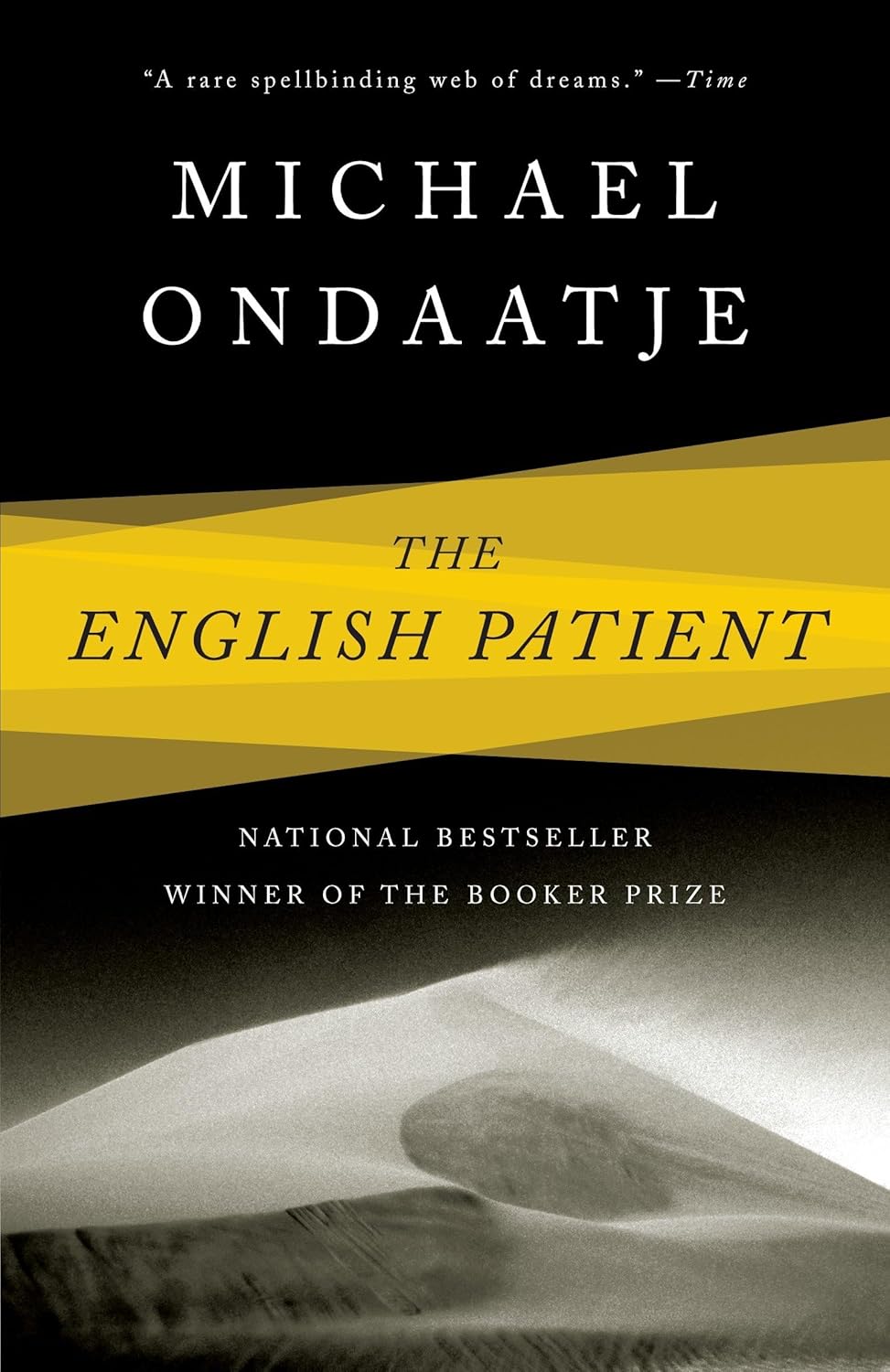
Setting: Italy, end of WWII, 1945
Perspective: Multiple characters in a war-damaged villa
Ondaatje’s poetic novel (later adapted into an Oscar-winning film) follows four people living in an Italian villa at war’s end: a burn victim known as “the English patient” whose identity is mysterious, Hana, his Canadian nurse, Caravaggio, a Canadian thief with missing thumbs, and Kip, a Sikh bomb disposal expert.
The novel moves between past and present, gradually revealing how these damaged people found each other. The “English patient” narrates his past, including desert exploration, a doomed love affair, and wartime espionage, while the present shows four people learning to live again.
The English Patient is literary fiction set during WWII, more focused on interior landscapes than battles, exploring how war fragments identity and how love might restore it. The prose is luminous, the structure experimental.
Perfect for readers who love: Literary fiction, poetic prose, mysterious identities, non-linear narratives, romance, post-war healing
Hidden Perspectives: Overlooked Stories of WWII
These novels shed light on lesser-known aspects of the war.
The Lost Girls of Paris by Pam Jenoff
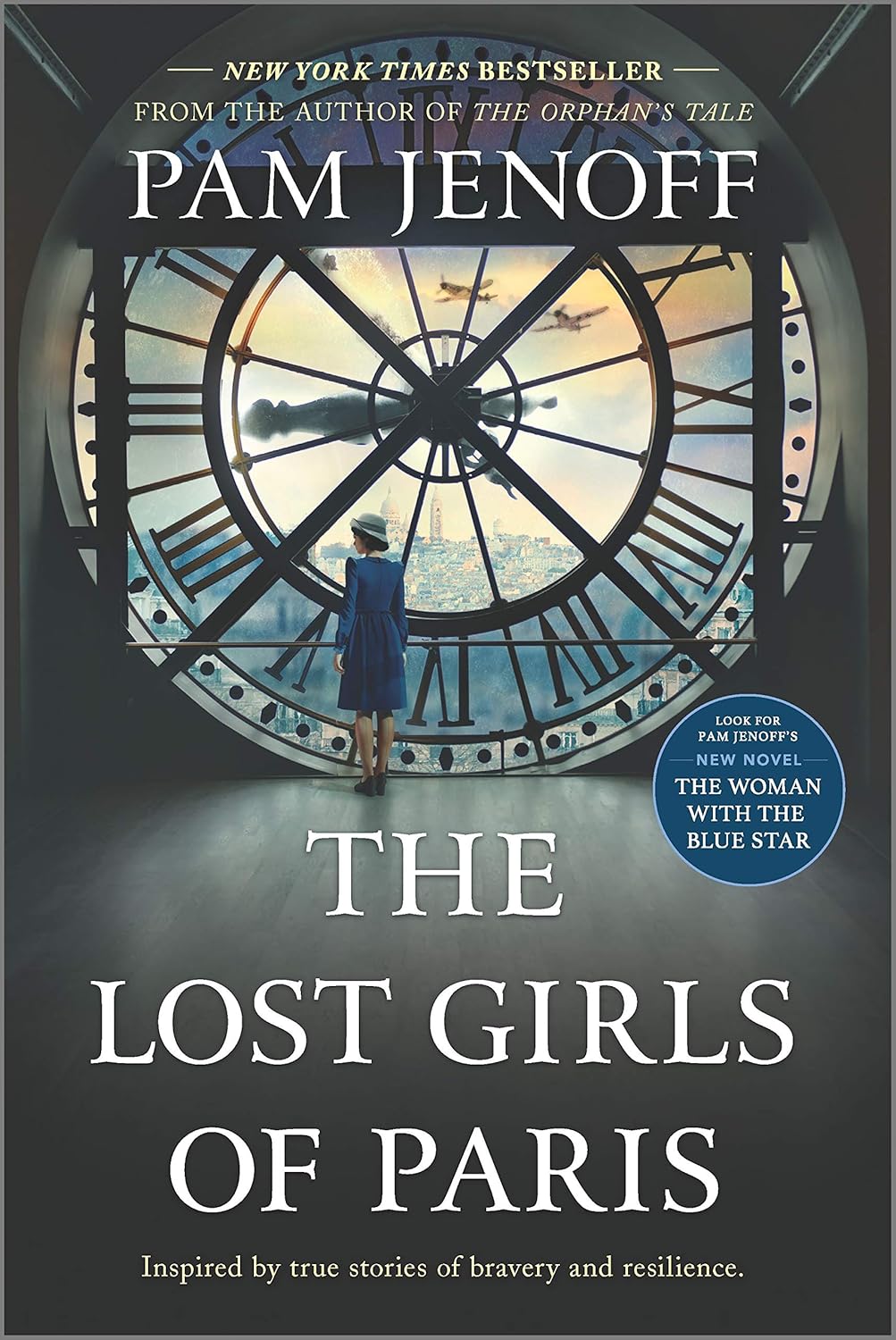
Setting: London and New York, 1946 and 1944 (dual timeline)
Perspective: Female SOE agents
Jenoff’s novel follows Grace, who discovers a suitcase full of photographs of twelve young women in 1946 New York, leading her to investigate their connection to Eleanor Trigg, who recruited female agents for the British SOE during the war.
The novel alternates between Grace’s 1946 investigation and the wartime experiences of Marie, one of the agents sent to occupied France. As the women’s stories emerge, so does the question: what happened to these twelve agents?
The Lost Girls of Paris celebrates real female SOE agents while acknowledging that many of their stories remain untold. It’s both a mystery and a memorial, ensuring these women aren’t forgotten.
Perfect for readers who love: Female spies, dual timelines, mystery elements, SOE history, New York and London settings
Finding the Right WWII Novel for You
With so many exceptional WWII novels available, here’s how to choose:
If you want sweeping scope: The Winds of War (Herman Wouk) or The Invisible Bridge (Julie Orringer)
If you want literary prose: All the Light We Cannot See (Anthony Doerr) or The English Patient (Michael Ondaatje)
If you want female protagonists: The Nightingale (Kristin Hannah), Code Name Verity (Elizabeth Wein), or The Alice Network (Kate Quinn)
If you want Holocaust narratives: The Tattooist of Auschwitz (Heather Morris), Sarah’s Key (Tatiana de Rosnay), or Schindler’s List (Thomas Keneally)
If you want resistance/espionage: The Alice Network (Kate Quinn), The Paris Architect (Charles Belfoure), or Code Name Verity (Elizabeth Wein)
If you want Pacific Theater: Unbroken (Laura Hillenbrand) or The Narrow Road to the Deep North (Richard Flanagan)
If you want a lighter tone: The Guernsey Literary and Potato Peel Pie Society (Shaffer/Barrows) or The Kitchen Front (Jennifer Ryan)
If you want unique perspectives: The Book Thief (German civilian), When the Emperor Was Divine (Japanese-American internment), or The Narrow Road to the Deep North (Australian POW)
Why These Stories Matter
Eighty years after the war’s end, WWII historical fiction serves crucial purposes:
Preserving Memory: As the last veterans and survivors pass away, fiction becomes one way to keep their experiences alive for future generations.
Creating Empathy: By placing readers inside the experiences of people who lived through the war, regardless of their nationality or circumstances, these novels foster understanding across time and culture.
Exploring Moral Complexity: WWII offers clear moral lessons (fascism is evil), but the best fiction explores how ordinary people navigate impossible choices, collaborate or resist, survive or sacrifice.
Honoring the Forgotten: Many WWII novels draw attention to overlooked stories such as women’s contributions, civilian suffering, the experiences of colonial soldiers, and the efforts of resistance fighters, ensuring a more complete historical record.
The best WWII historical fiction doesn’t just entertain, it educates, commemorates, and asks us to consider what we would do in similar circumstances.
Beyond the Books: Exploring WWII History
If these novels inspire you to learn more about World War II:
Historical Context: Understanding the historical events that underlie these novels enriches your reading experience. Research the specific battles, occupations, or campaigns featured in books you enjoy.
Memoirs and Non-Fiction: Many novels are inspired by true stories. Seek out memoirs and histories to complement your fiction reading.
Visit Museums: Holocaust museums, WWII museums, and historical sites offer powerful contexts for understanding the period.
Related Historical Fiction: If you love WWII novels, you might also enjoy historical fiction set in other wartime periods. See our guide to WWI historical fiction or Victorian era novels.
Author Interviews: Many WWII fiction authors discuss their research processes and inspirations. Their insights can deepen your appreciation of the work.
Conclusion: The Enduring Power of WWII Stories
World War II historical fiction remains popular because these stories matter. They remind us of what humans are capable of, both terrible cruelty and extraordinary courage. They show us that ordinary people can make heroic choices, that love persists even in darkness, and that bearing witness to suffering honors those who endured it.
Whether you’re drawn to stories of resistance fighters, concentration camp survivors, soldiers on the front lines, or families on the home front, these eighteen novels offer profound insights into history’s most devastating conflict. Each book asks us to remember, to empathize, and to consider what we would do when tested by impossible circumstances.
Start with any of these novels, and you’ll discover why WWII historical fiction continues to captivate readers worldwide. These stories don’t just tell us what happened; they help us understand what it means to be human when humanity itself is under siege.
Ready to begin? Choose a novel that speaks to your interests, settle in for a powerful reading experience, and prepare to be transported to one of history’s most significant eras.
Frequently Asked Questions
What is the best WWII historical fiction book?
The “best” depends on what you’re looking for, but All the Light We Cannot See by Anthony Doerr is widely considered one of the finest, winning the Pulitzer Prize for its lyrical prose and dual narrative structure. For sweeping epic scope, The Winds of War by Herman Wouk is unmatched. For female perspectives, The Nightingale by Kristin Hannah is exceptional.
Are WWII historical fiction books based on true stories?
Many are inspired by true events, people, or historical records, though they fictionalize details and characters. Books like Schindler’s List, Unbroken, and The Tattooist of Auschwitz are based on true stories. Others like All the Light We Cannot See, and The Nightingale are entirely fictional but set against meticulously researched historical backgrounds.
What is the most accurate WWII historical fiction?
Herman Wouk’s The Winds of War is renowned for historical accuracy. Wouk was a World War II veteran and conducted extensive research. Schindler’s List by Thomas Keneally is a thoroughly documented non-fiction presented as a narrative. Unbroken by Laura Hillenbrand, while biography, offers extraordinary accuracy about Pacific Theater POW experiences.
What WWII novels focus on women’s experiences?
Excellent choices include The Nightingale (French resistance), Code Name Verity (British spies), The Alice Network (female spies across both world wars), The Lost Girls of Paris (SOE agents), and The Kitchen Front (British home front). These novels illuminate women’s crucial but often overlooked contributions.
Are there WWII books about the Pacific Theater?
Yes, though fewer than European theater novels. Unbroken, by Laura Hillenbrand, and The Narrow Road to the Deep North, by Richard Flanagan, both explore the experiences of Pacific POWs. When the Emperor Was Divine by Julie Otsuka explores the Japanese-American internment experience. The Pacific Theater remains underrepresented in fiction.
What is the easiest WWII historical fiction to read?
The Guernsey Literary and Potato Peel Pie Society is accessible and lighter in tone, yet still addresses serious themes. The Book Thief, with its distinctive narrative style, is engaging for readers of various skill levels. The Nightingale, while emotionally heavy, is a page-turner that draws readers in quickly.
Should I read World War II historical fiction in a particular order?
No specific order is necessary. You might start with more accessible novels like The Nightingale or All the Light We Cannot See before tackling denser works like The Winds of War. Alternating between different perspectives (European vs. Pacific, military vs. civilian, Allied vs. Axis) provides a varied understanding.
Are there any WWII novels told from a German perspective?
The Book Thief by Markus Zusak offers a German civilian perspective, showing ordinary Germans who quietly resisted. All the Light We Cannot See features Werner, a German soldier struggling with feelings of complicity. While fewer novels center on German protagonists, many explore moral complexity beyond the simple dichotomy of Allied heroes versus Nazi villains.
Related Content
Explore More Historical Fiction:
- Best Historical Fiction of All Time – Our comprehensive guide to the genre’s greatest novels
- Best Medieval Historical Fiction – Epic tales of knights, castles, and medieval warfare
- Most Popular Historical Fiction Time Periods – Discover which eras resonate most with readers
- What Is Historical Fiction? – Learn about the genre’s definition and characteristics
- Historical Fiction for Beginners – New to the genre? Start here
Author Guides:
- Bernard Cornwell – Complete guide to his WWII and other series (coming soon)
- Ken Follett – Century Trilogy and other works (coming soon)
More “Best Of” Lists:
- Best WWI Historical Fiction (coming soon)
- Best Cold War Historical Fiction (coming soon)
- Best Vietnam War Historical Fiction (coming soon)


