
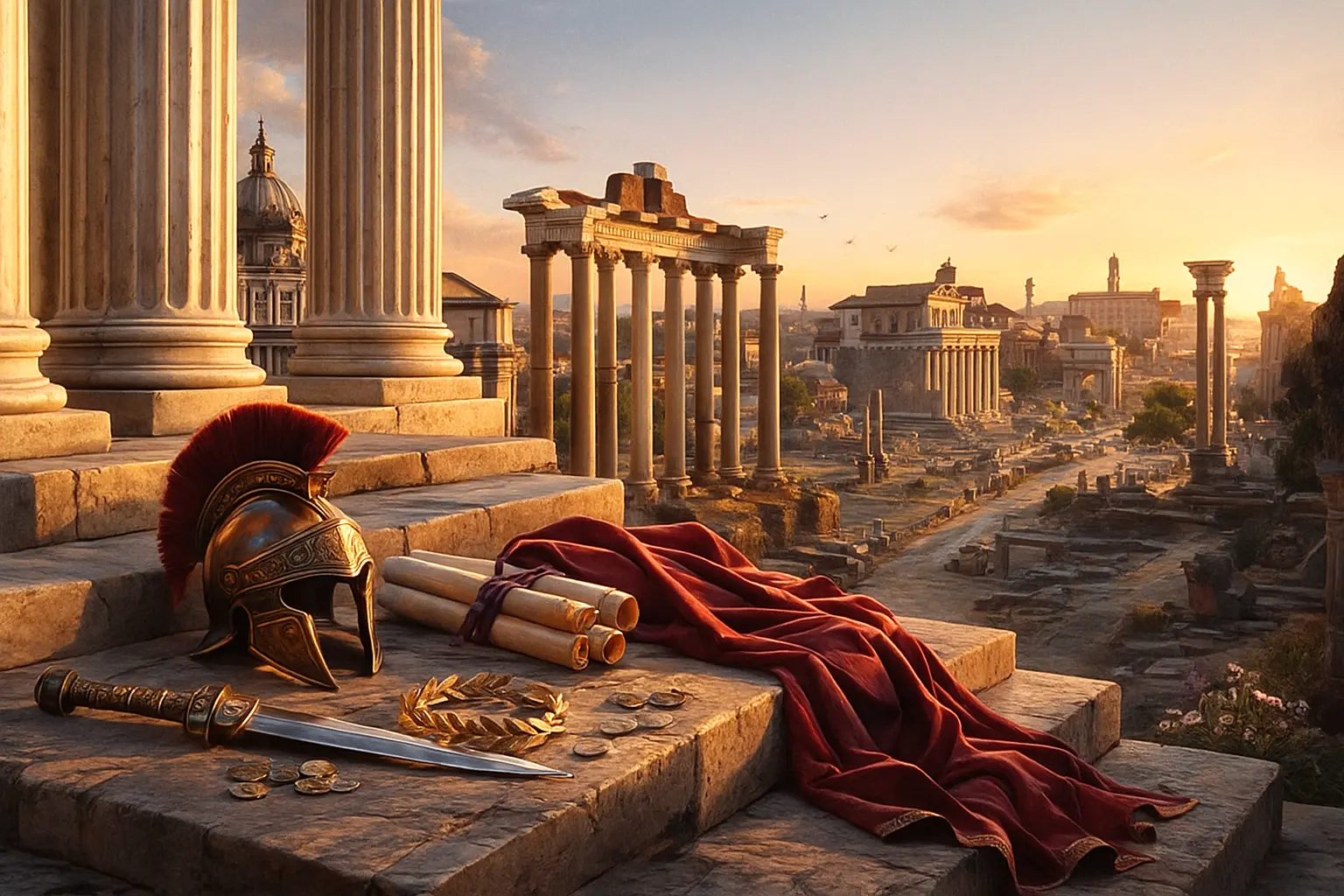

Ancient Rome, the civilization that shaped Western culture, law, language, and thought, remains one of the most compelling settings in historical fiction. From the Republic’s rise to the Empire’s fall, Rome’s thousand-year history offers an endless supply of dramatic material: political intrigue in the Senate, gladiatorial combat in the Colosseum, military campaigns across three continents, and larger-than-life figures like Julius Caesar, Cleopatra, and Augustus.
Roman historical fiction transports readers to marble temples and blood-soaked arenas, through Senate debates and battlefield triumphs, into the daily lives of citizens and slaves. The best Roman novels strike a balance between spectacular historical events and intimate human stories, making ancient history feel immediate and relevant.
Whether you’re fascinated by the Republic’s political machinations, drawn to military campaigns along the frontiers, intrigued by gladiatorial culture, or captivated by the decadence and decline of the late Empire, these novels offer vivid windows into Rome’s complex, dramatic history.
This comprehensive guide presents fifteen essential Roman historical fiction novels, spanning from Rome’s legendary founding to the collapse of the Western Empire. Each captures different aspects of Roman civilization while delivering the engaging storytelling that brings the ancient world to life.
Disclosure: This article contains affiliate links. We earn from qualifying purchases at no extra cost to you.What Makes Great Roman Historical Fiction?
Before exploring our recommendations, let’s examine what elevates Roman fiction from good to exceptional.
Historical Depth Without Info-Dumping
Rome’s complexity, including its political systems, military structure, social hierarchies, and religious practices, requires explanation. However, the best novels integrate historical detail naturally through story and character, rather than interrupting the narrative flow with history lessons.
Authentic Yet Accessible
Roman names, titles, and customs can be overwhelming for modern readers. Great Roman fiction maintains authenticity while remaining accessible, perhaps even including a helpful glossary that readers can consult without needing to do so constantly.
Political Sophistication
Roman politics were extraordinarily complex, featuring Senate factions, popular assemblies, provincial governors, and military loyalty. The best novels capture this complexity without simplifying or confusing, showing how personal ambition and public good constantly clashed.
Military Realism
Roman military success wasn’t accidental; legions were disciplined, tactics sophisticated, and engineering impressive. Novels that accurately depict Roman warfare (without glorifying violence) help readers understand why Rome conquered the known world.
Social Complexity
Rome wasn’t monolithic. Citizens and non-citizens, patricians and plebeians, free people and slaves, men and women all navigated different realities. Great Roman fiction explores multiple perspectives, rather than focusing solely on emperors and generals.
Attention to Daily Life
The best novels ground readers in Roman daily life, baths and dining customs, housing and clothing, entertainment, and religious rituals. These details make ancient Rome feel real rather than just a backdrop for dramatic events.
The 15 Best Ancient Rome Historical Fiction Novels
1. I, Claudius by Robert Graves
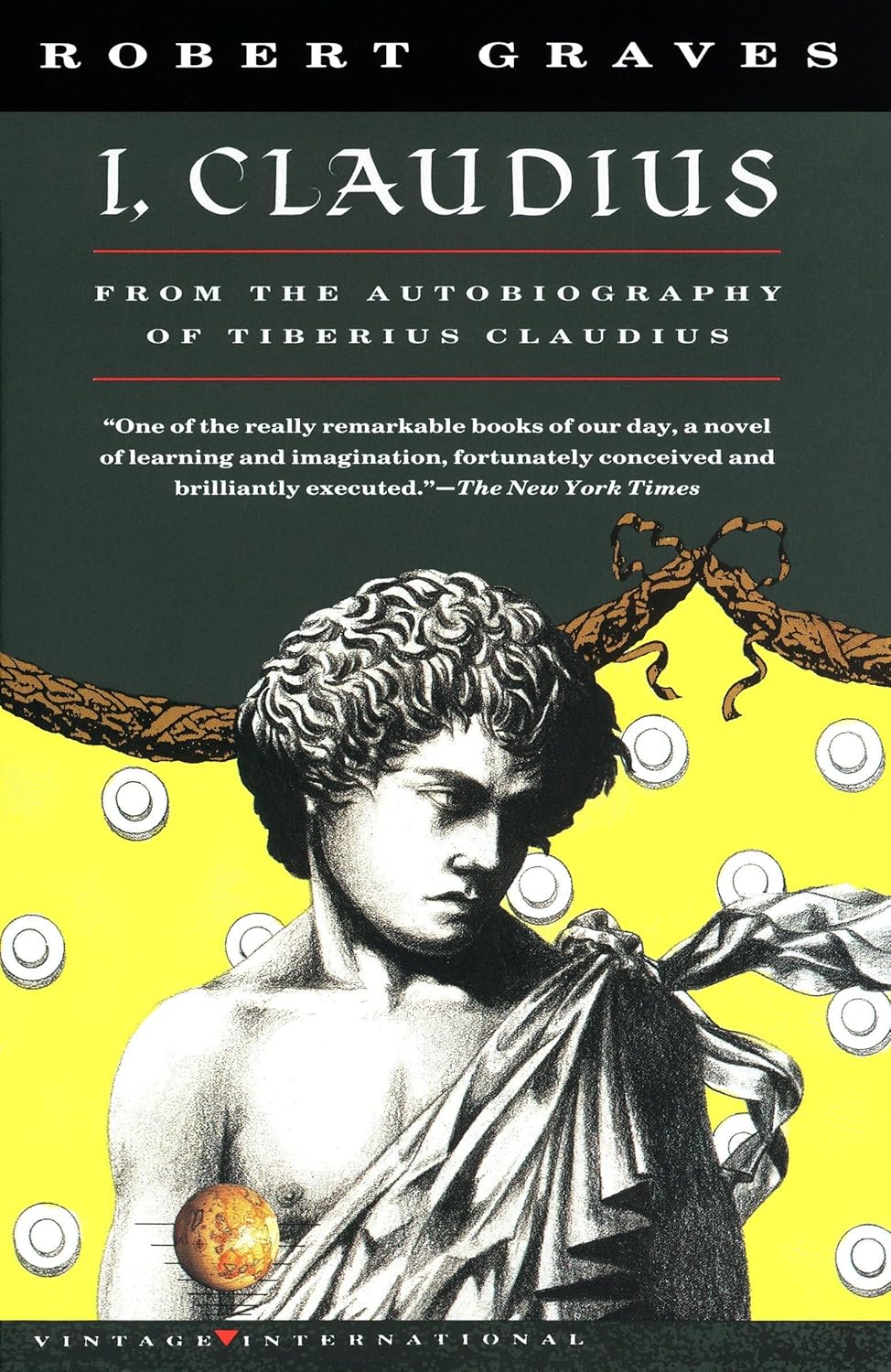
Setting: Early Roman Empire, 10 BC – 54 AD
Why It’s Essential: Graves’s masterwork presents the early Roman Empire through the eyes of supposedly foolish Claudius, who survives the murderous reigns of Augustus, Tiberius, and Caligula by playing the simpleton. Written as Claudius’s secret autobiography, the novel reveals palace intrigue, poisonings, conspiracies, and the corruption of absolute power.
What Makes It Special: Written in 1934, I, Claudius remains the gold standard for Roman historical fiction. Graves, a classical scholar, brings deep knowledge of Roman sources (particularly Tacitus and Suetonius) to create a psychologically complex portrait of the Julio-Claudian dynasty. The novel’s intimate first-person perspective makes ancient politics feel immediate and recognizable.
Perfect For: Readers seeking political intrigue, character-driven narrative, palace conspiracies, and an inside view of the early Empire’s most dramatic period.
2. The First Man in Rome by Colleen McCullough
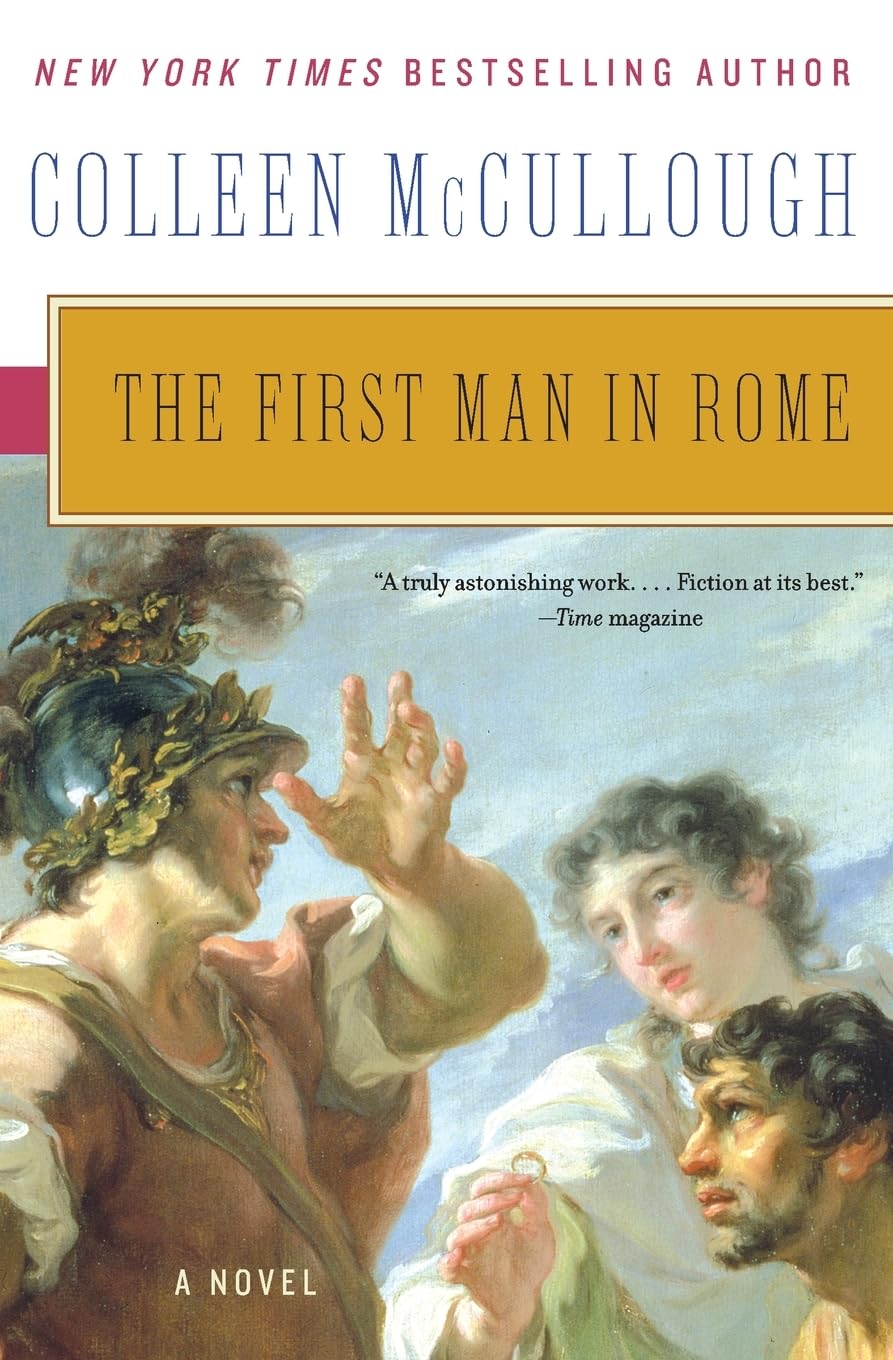
Setting: Roman Republic, 110-100 BC
Why It’s Essential: The first installment in McCullough’s massive seven-volume “Masters of Rome” series, this novel introduces Gaius Marius and Lucius Cornelius Sulla, two ambitious men whose rivalry will ultimately lead to the destruction of the Republic. McCullough depicts the Republic’s complex political system in fascinating detail, showing how personal ambition and systemic weakness led to civil war.
What Makes It Special: McCullough’s series is the most comprehensive fictional treatment of the late Republic ever written. Her research is meticulous; the novels include maps, family trees, glossaries, and detailed historical notes. While demanding (over 1,000 pages), The First Man in Rome rewards patient readers with unmatched depth and political sophistication.
Perfect For: Readers seeking comprehensive historical detail, complex political machinations, multiple perspectives, and a willingness to commit to a long series.
3. Pompeii by Robert Harris
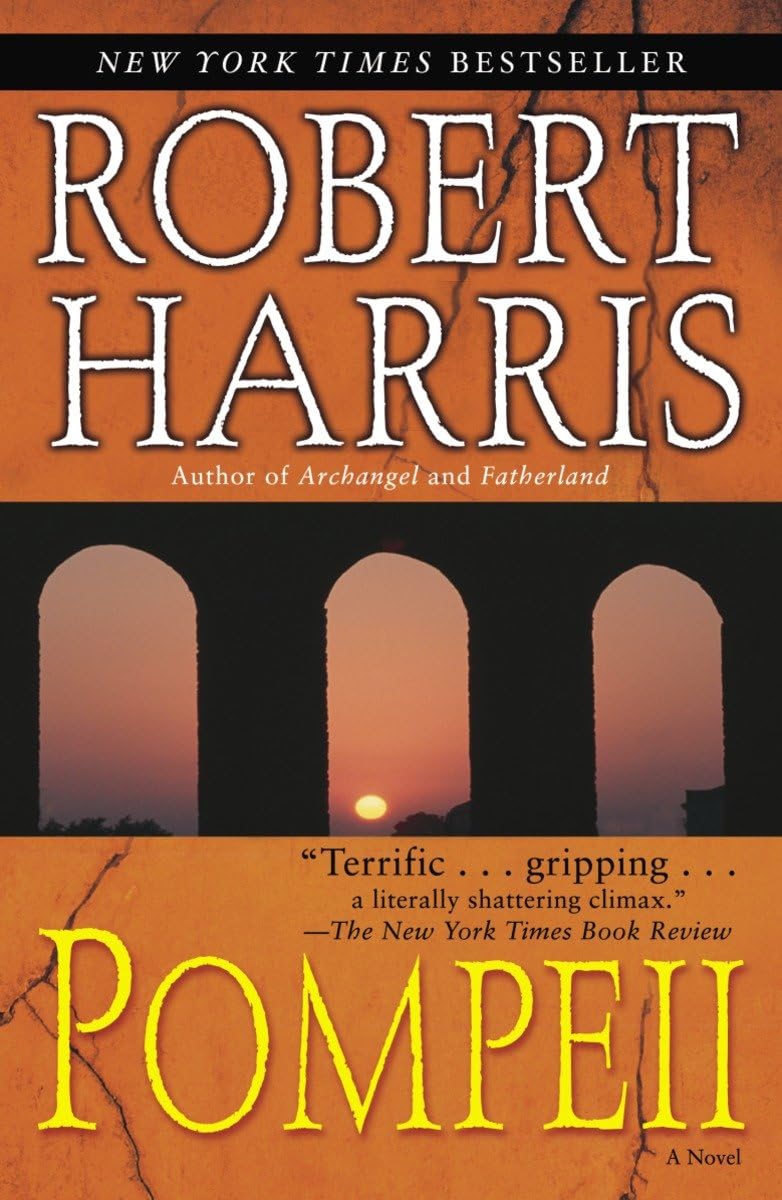
Setting: Bay of Naples, August 79 AD (just before Vesuvius erupts)
Why It’s Essential: Harris creates a ticking-clock thriller around Mount Vesuvius’s eruption. Roman engineer Marcus Attilius arrives to investigate problems with the aqueduct just days before the catastrophic eruption. As he uncovers corruption and danger, geological signs mount toward inevitable disaster.
What Makes It Special: Pompeii combines historical authenticity with page-turning suspense. Harris’s background as a journalist shows in meticulous research about Roman engineering, particularly aqueducts. The novel builds inexorable tension as readers and characters alike know what’s coming but can’t stop it.
Perfect for readers seeking fast-paced historical thrillers, those fascinated by Pompeii’s destruction, engineering history enthusiasts, and anyone who enjoys disaster narratives with a historical grounding.
4. The Eagle of the Ninth by Rosemary Sutcliff
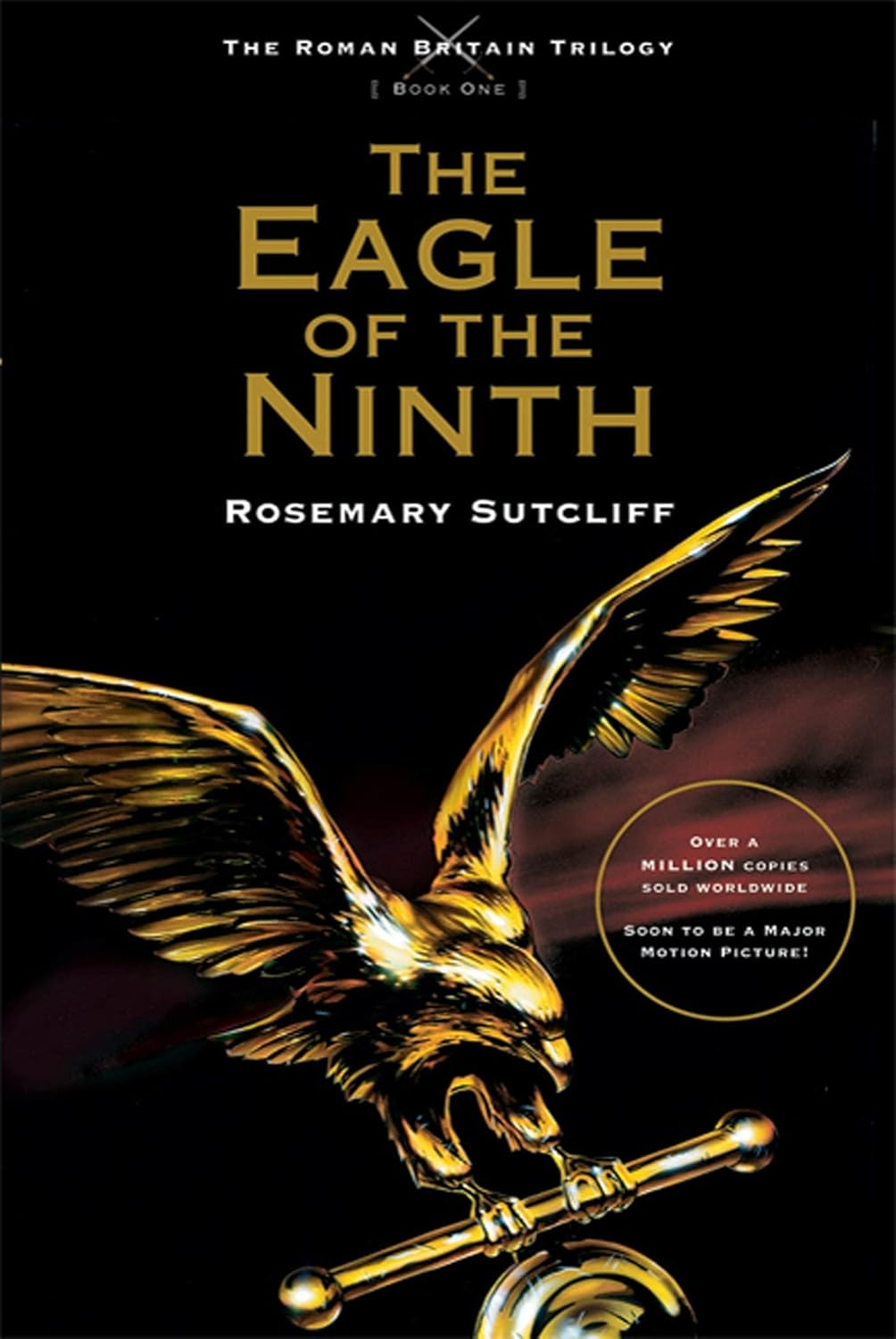
Setting: Roman Britain, circa 127 AD
Why It’s Essential: Young Roman centurion Marcus Aquila travels to the unconquered northern reaches of Britain to recover his father’s lost legion eagle standard and restore his family’s honor. Sutcliff’s young adult classic has captivated generations with its adventure, honor code, and depiction of Roman Britain’s frontier.
What Makes It Special: Though written for younger readers, The Eagle of the Ninth appeals to all ages through its themes of honor, friendship, and cultural encounter. Sutcliff’s depiction of Roman Britain, the wall, frontier forts, and tribal peoples, is atmospheric and well-researched. The novel spawned multiple sequels exploring Roman Britain.
Perfect For: Younger readers, those interested in Roman Britain, military history enthusiasts, readers seeking adventure over political intrigue, and anyone interested in Roman-Celtic interactions.
5. Imperium by Robert Harris
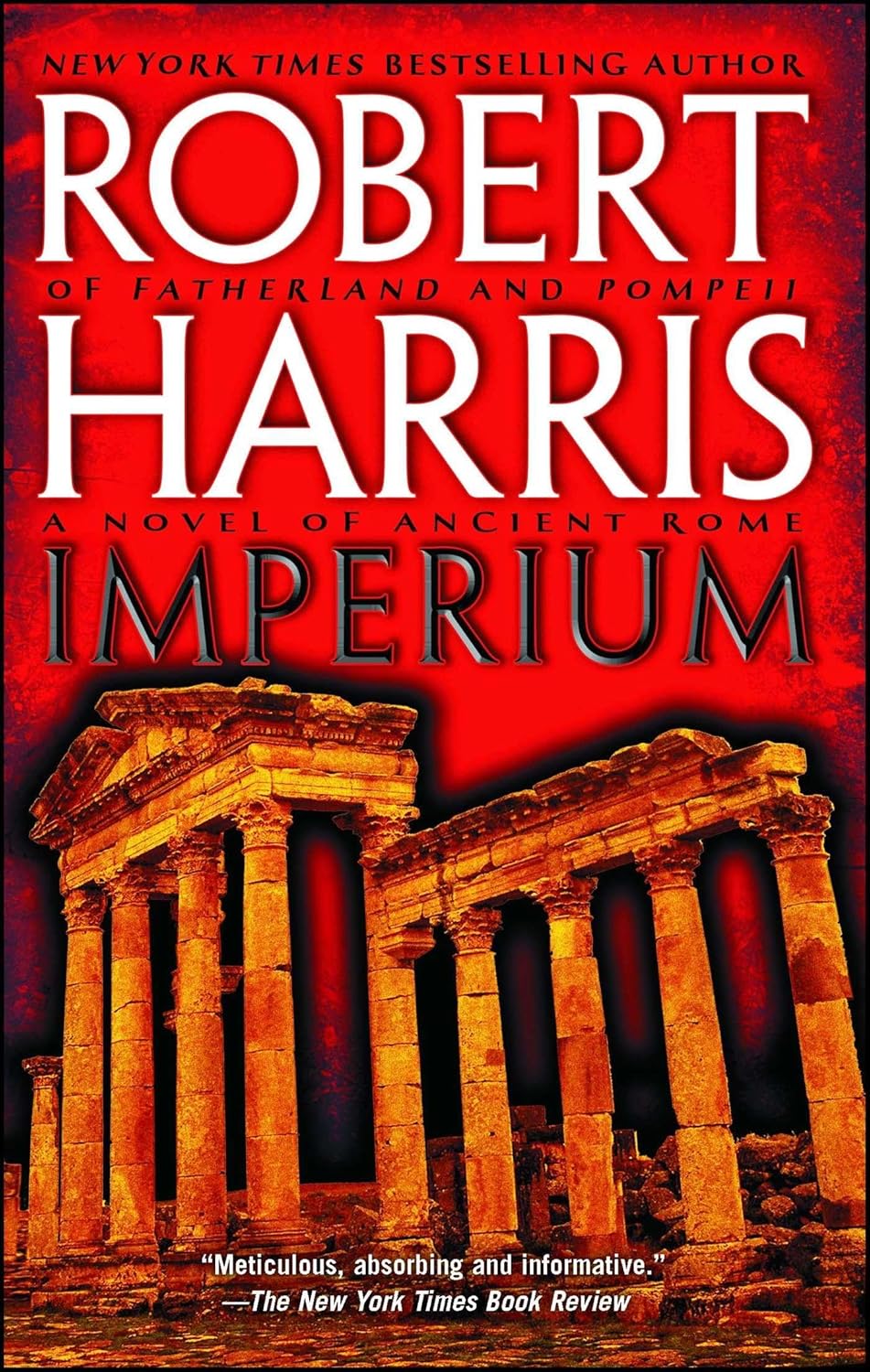
Setting: Roman Republic, 79-64 BC
Why It’s Essential: The first in Harris’s Cicero trilogy, Imperium follows the great orator’s rise from provincial lawyer to consul through the eyes of his slave Tiro (who historically invented shorthand). Harris makes Republican politics gripping, showing how Cicero navigated Rome’s dangerous political landscape through rhetoric and strategic brilliance.
What Makes It Special: Harris brings the same thriller pacing he applied to Pompeii to Republican politics. By using Tiro as narrator, he creates a detective story feel around political maneuvering. The novel illuminates how the Republic’s political system actually worked, including courts, elections, and Senate procedures, while maintaining narrative drive.
Perfect for: Readers interested in Cicero, Roman oratory, Republican politics, those who enjoyed I, Claudius but want to explore the earlier period, and anyone fascinated by how rhetoric has shaped history.
6. The Silver Pigs by Lindsey Davis
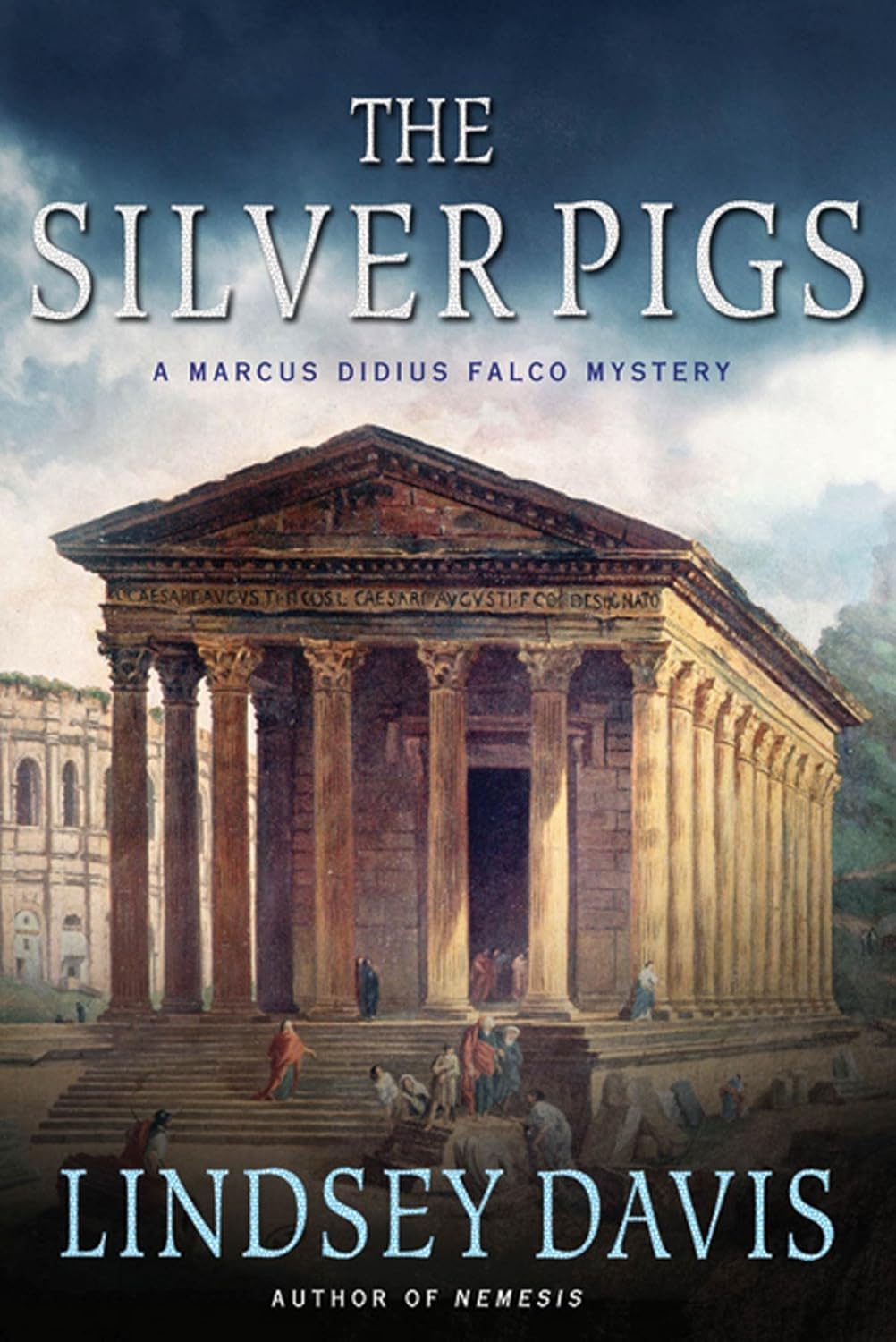
Setting: Rome and Britain, 70 AD (Vespasian’s reign)
Why It’s Essential: Davis created the historical mystery genre with her Marcus Didius Falco series. Private informer Falco investigates crimes in Vespasian’s Rome with wit, humor, and a cynical Roman everyman’s perspective. The Silver Pigs introduces Falco as he uncovers a conspiracy involving silver ingots, sending him from Rome’s mean streets to Britain’s mines.
What Makes It Special: Davis brings the energy of contemporary detective fiction to ancient Rome. Falco is no marble statue; he’s a wisecracking, financially struggling, romantically complicated Roman trying to survive. The novels’ humor, mystery plots, and meticulous research about daily Roman life make ancient history accessible and fun.
Perfect For: Mystery lovers, readers seeking lighter historical fiction with humor, those interested in Roman daily life over grand politics, and anyone who enjoys a long series (20+ books).
7. Augustus by John Williams
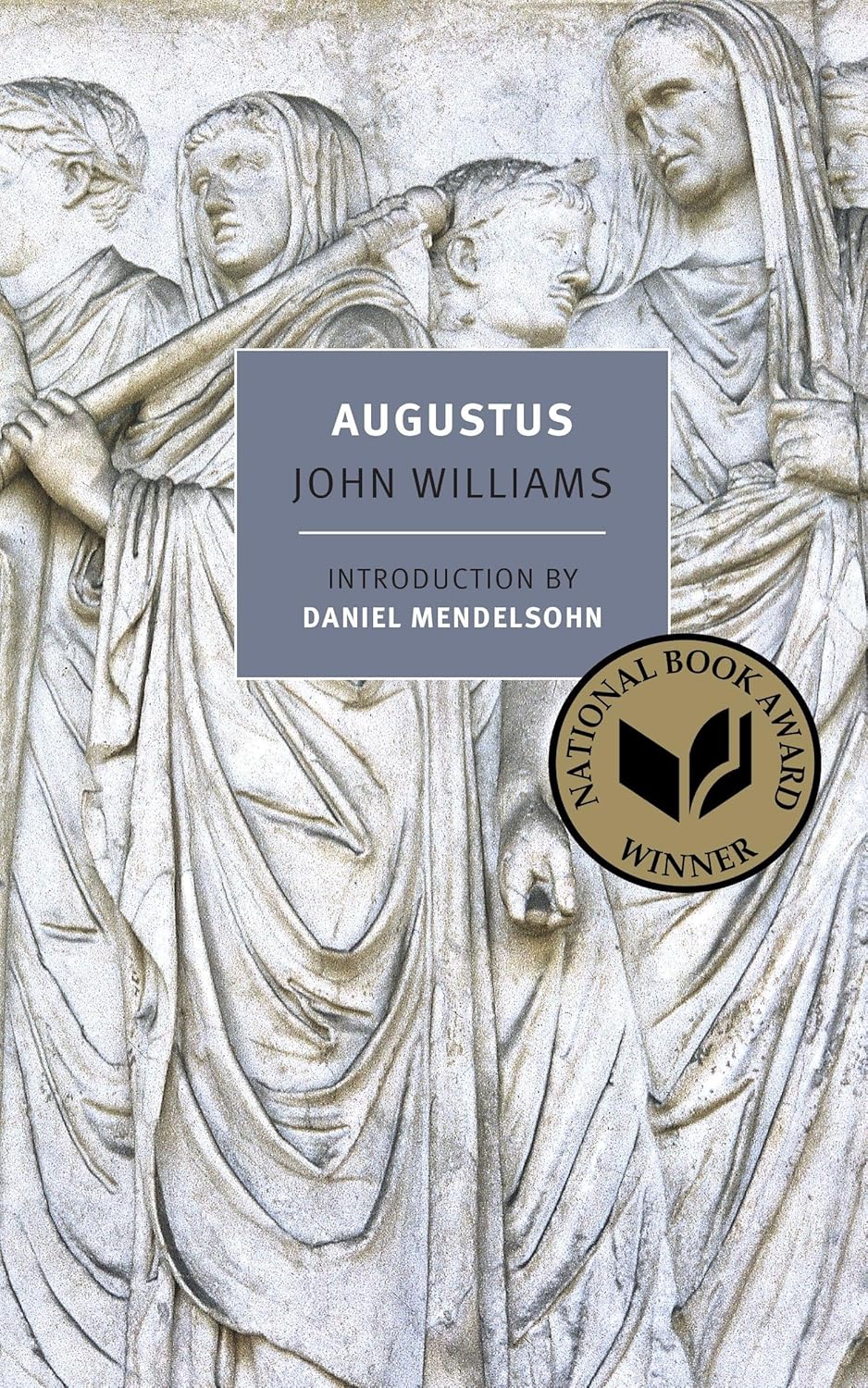
Setting: Late Republic and early Empire, 44 BC – 14 AD
Why It’s Essential: Williams’s literary masterpiece tells the story of Octavian/Augustus through letters, journals, and documents from multiple perspectives. The novel explores how the man who became Rome’s first emperor navigated civil wars, eliminated his rivals, and transformed the Republic into an Empire while presenting himself as a restorer of tradition.
What Makes It Special: Augustus is literary historical fiction at its finest, quiet, contemplative, and psychologically complex. Williams’s experimental structure (without a traditional narrative) creates a mosaic portrait of Augustus and his era. The novel won the National Book Award and has influenced countless later historical novelists.
Perfect For: Literary fiction readers, those interested in Augustus specifically, readers who appreciate experimental narrative structure, and anyone seeking depth over action.
8. The Song of Achilles by Madeline Miller
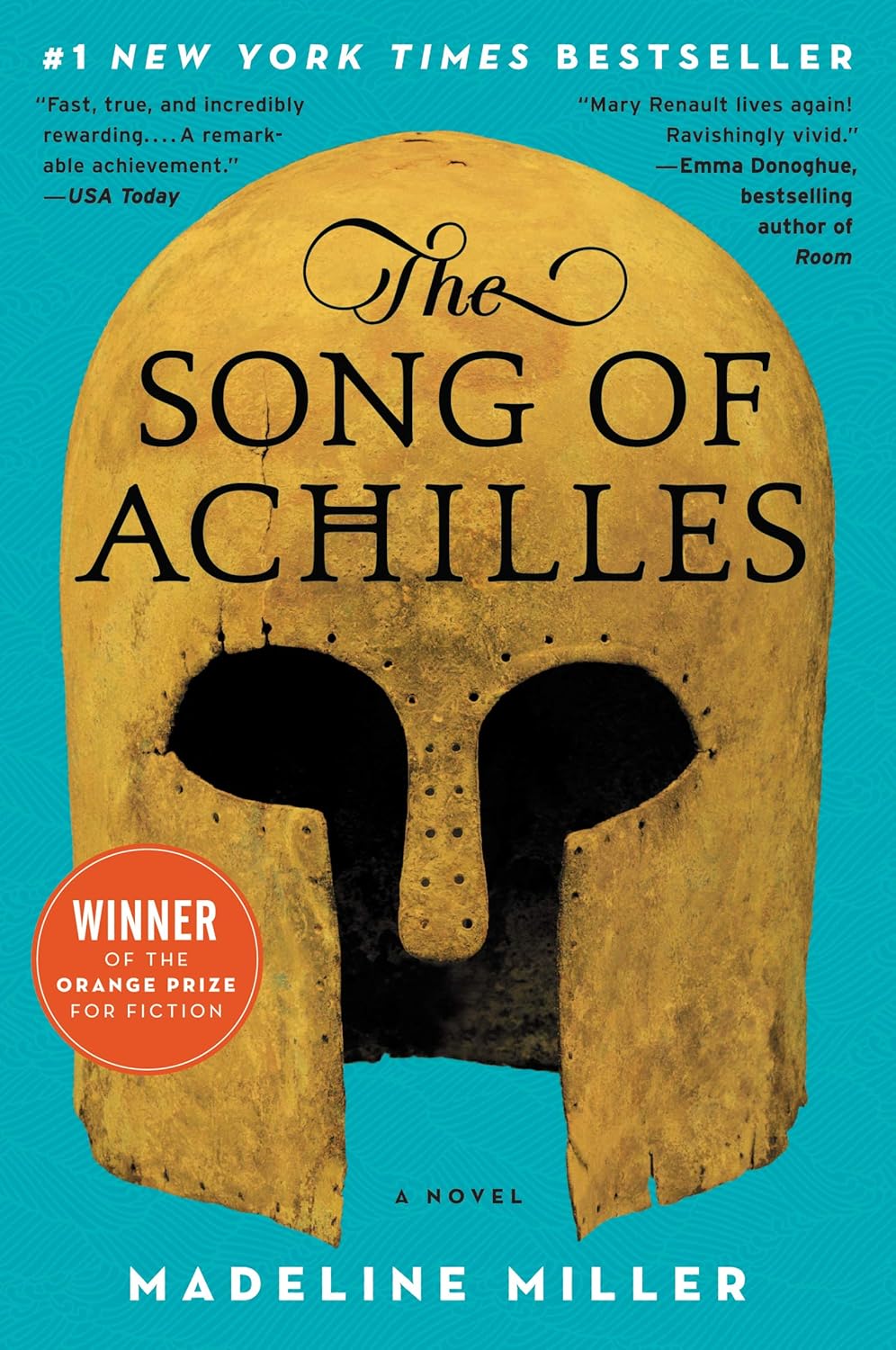
Setting: Greece and Troy, Bronze Age (mythological period)
Why It’s Essential: While technically Greek rather than Roman, Miller’s retelling of the Trojan War (central to Roman founding mythology via Aeneas) deserves inclusion. Narrated by Patroclus, it reimagines Achilles’s story as a tragic love story while maintaining a mythological framework and historical grounding in Bronze Age warfare.
What Makes It Special: Miller brings literary sophistication and emotional depth to ancient mythology. Her background in classics is evident in the accurate details she provides about Bronze Age warfare, social structures, and religious practices. The novel humanizes legendary figures without diminishing their mythic power.
Perfect For: Readers interested in Greek mythology, those seeking emotional depth, LGBTQ+ historical fiction, and anyone who loved Homer but wants a more intimate perspective.
9. Medicus by Ruth Downie

Setting: Roman Britain, circa 118 AD (Hadrian’s reign)
Why It’s Essential: Roman army doctor Gaius Petreius Ruso arrives at the edge of the Empire Britannia, where he gets entangled in investigating a murdered local woman while dealing with incompetent staff and a barbarian slave he inadvertently acquires. Downie combines historical mystery with medical details and cultural clash.
What Makes It Special: Medicus offers a rare perspective on Roman military medicine on the frontier. Downie’s research into Roman medical practices, British tribal culture, and frontier fort life creates an immersive world. Ruso is memorably flawed, bumbling through investigations while genuinely trying to do the right thing.
Perfect for: Mystery lovers, those interested in Roman Britain, readers fascinated by ancient medicine, and anyone seeking humor alongside historical detail.
10. The Marcus Didius Falco Series by Lindsey Davis
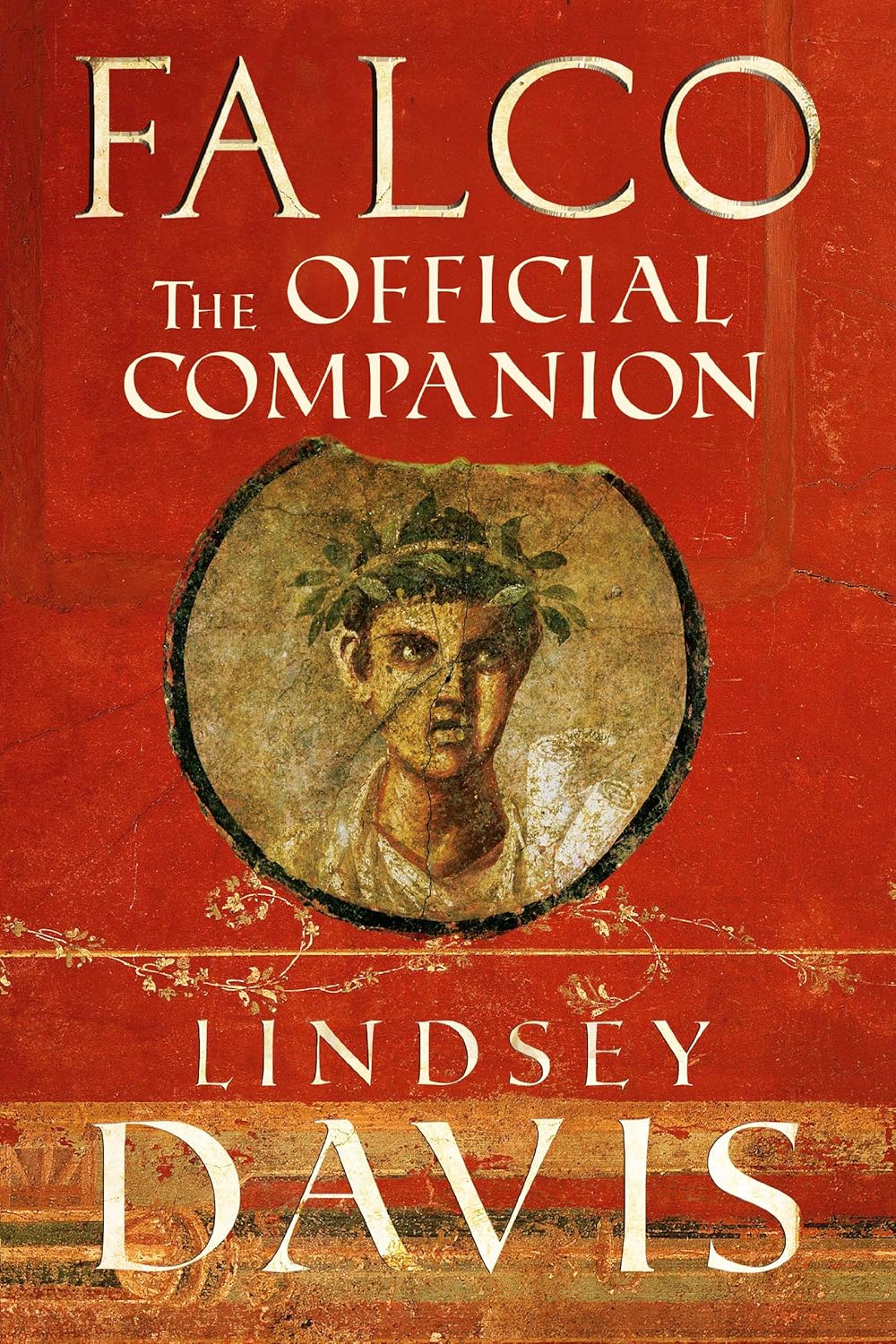
Setting: Flavian Dynasty, Rome, 70-77 AD
Why It’s Essential: Beyond the first book (The Silver Pigs), Davis’s entire 20-book series deserves recognition for sustained quality and comprehensive depiction of Flavian Rome. Falco’s investigations take him throughout the Roman Empire, Germany, Nabataea, Libya, Britain, while his personal life evolves through romance, marriage, and fatherhood.
What Makes It Special: Few series maintain quality across 20 books. Davis does, making each novel a complete mystery while developing ongoing character arcs. The series collectively provides perhaps the most detailed fictional portrait of daily Roman life ever written, covering everything from apartment living to family dynamics.
Perfect For: Series readers, mystery enthusiasts, those wanting comprehensive Roman daily life details, and readers seeking character development across multiple books.
11. The Gates of Rome by Conn Iggulden
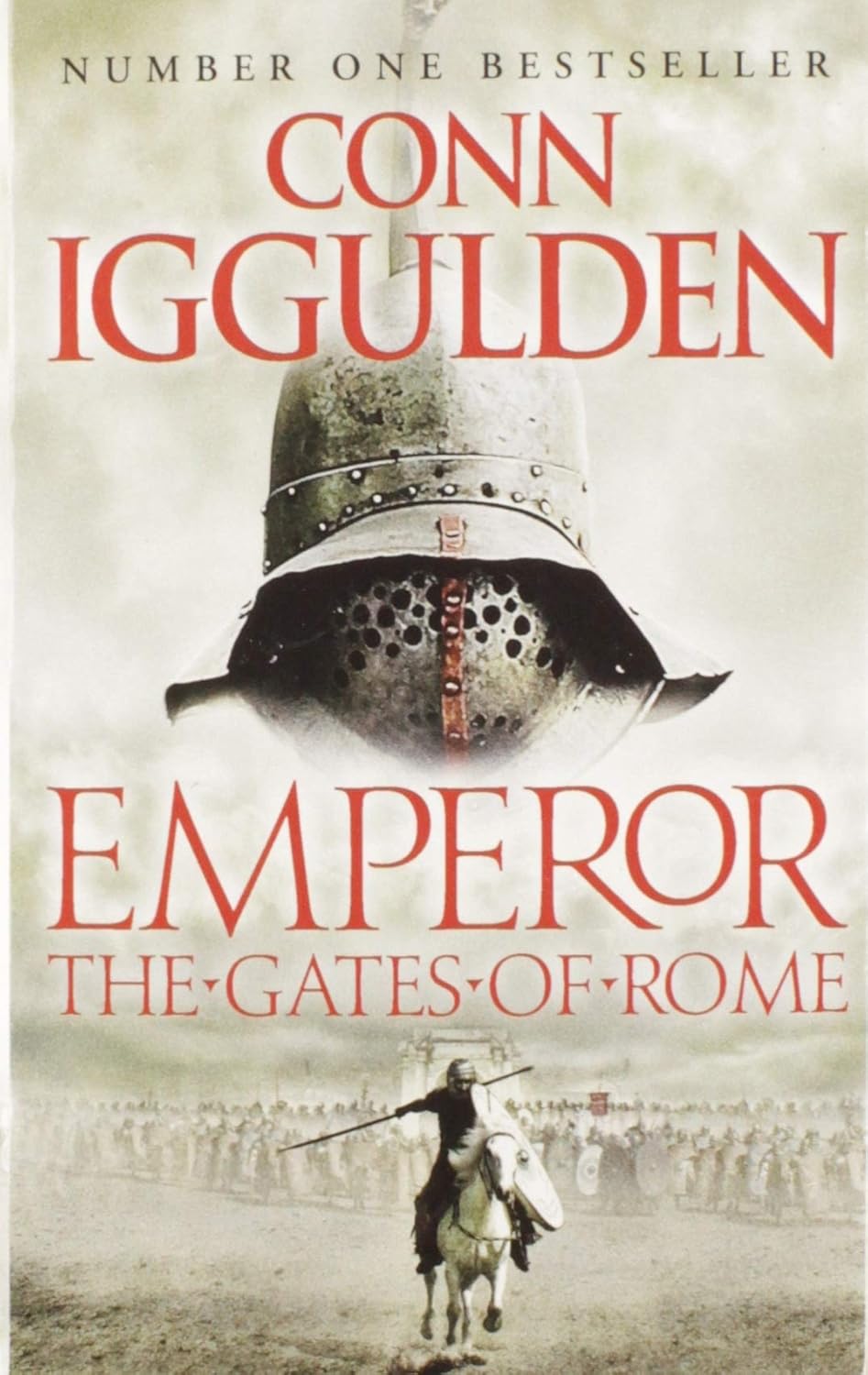
Setting: Late Republic, childhood of Julius Caesar and Marcus Brutus
Why It’s Essential: First in Iggulden’s Emperor series, this novel imagines the childhood and youth of Julius Caesar and Marcus Brutus (here reimagined as childhood friends). While taking liberties with historical facts, Iggulden creates a propulsive adventure story about two boys becoming men in dangerous times.
What Makes It Special: Iggulden writes historical fiction as adventure, fast-paced, action-oriented, and accessible. While historians quibble with his liberties, his novels excel at making Roman history exciting for readers who might find more scholarly approaches intimidating. The series covers Caesar’s entire career through multiple novels.
Perfect For: Readers seeking fast-paced adventure over scholarly accuracy, those interested in Julius Caesar, younger or less experienced historical fiction readers, and anyone wanting page-turner quality over literary depth.
12. The Gladiator by Simon Scarrow
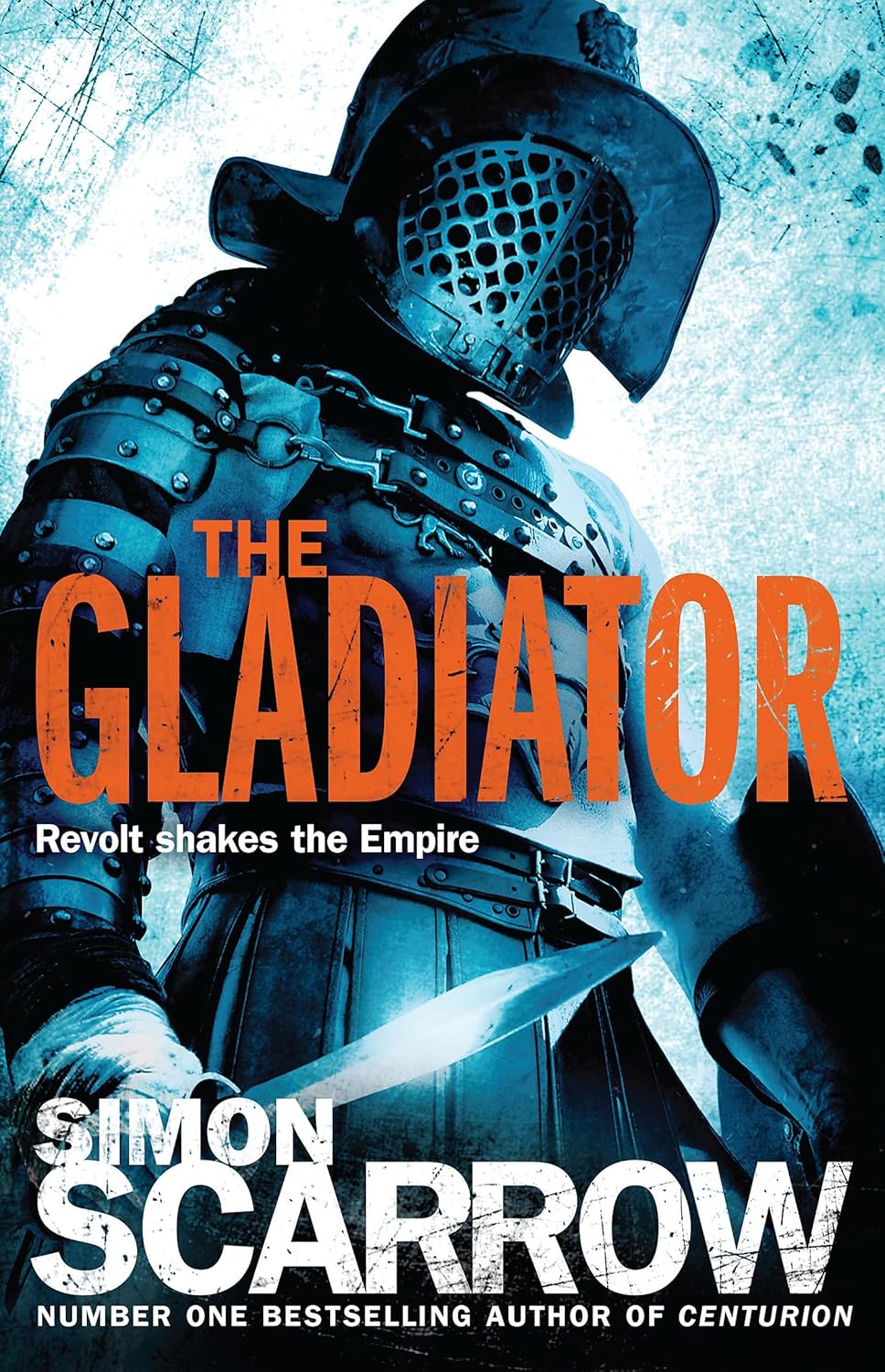
Setting: Roman Britain, circa 55 AD
Why It’s Essential: Part of Scarrow’s Eagle series (following Roman soldiers Macro and Cato), The Gladiator takes the legionnaires to Crete to hunt down a gladiator leading a slave rebellion. Scarrow combines military action with gladiatorial culture, creating an accessible adventure in the tradition of Bernard Cornwell.
What Makes It Special: Scarrow makes Roman military life accessible through clear writing and strong action sequences. His depiction of legion life, training, tactics, and campaigns educates while entertaining. The Eagle series (comprising 15+ books) follows its protagonists across the Empire, offering a wide-ranging exploration of Roman military fiction.
Perfect for: Military history enthusiasts, readers seeking action-oriented Roman fiction, Bernard Cornwell fans looking for a Roman setting, and those interested in gladiatorial culture.
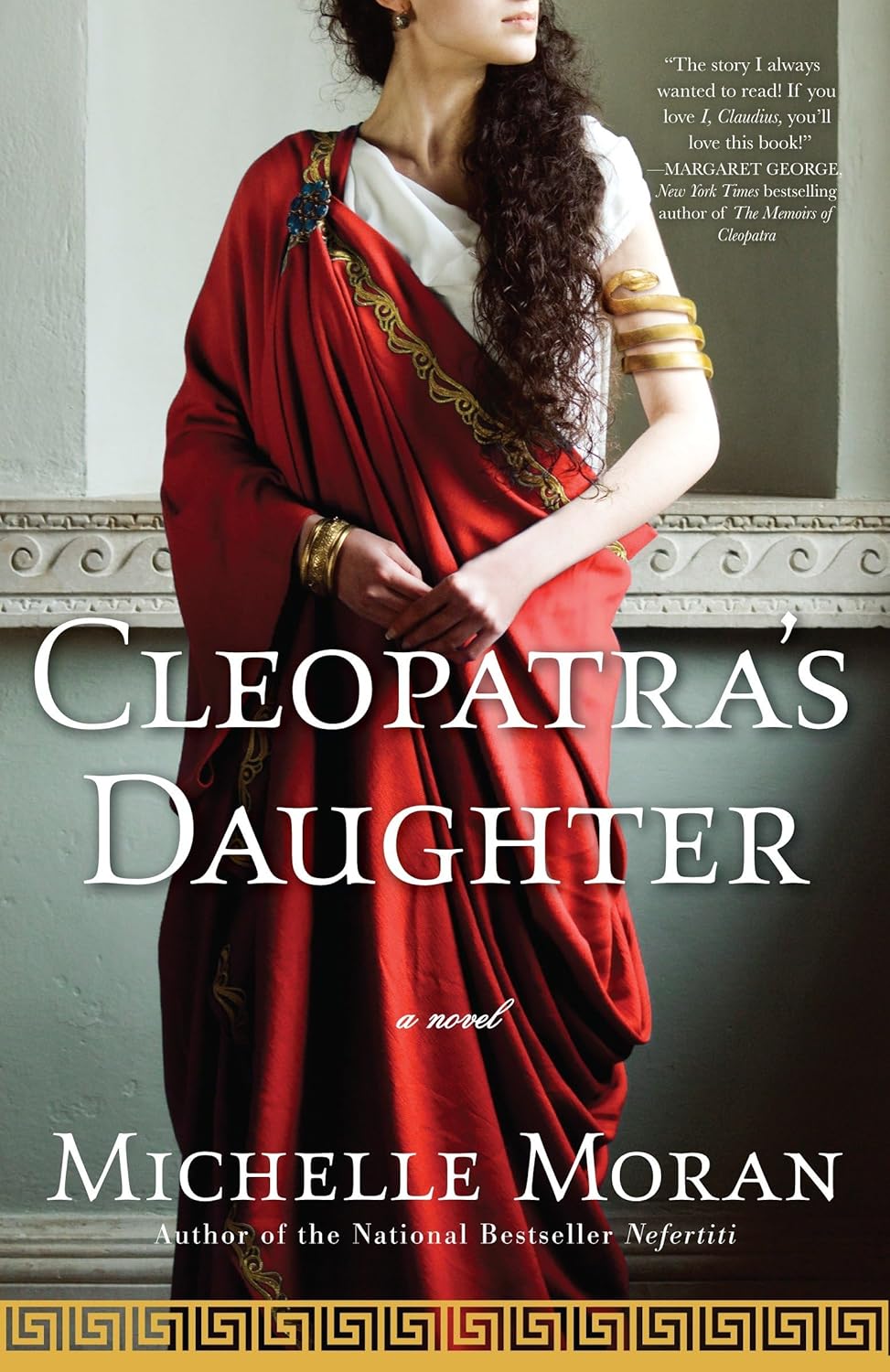
13. Cleopatra’s Daughter by Michelle Moran
Setting: Egypt and Rome, 30-20 BC
Why It’s Essential: After Cleopatra and Mark Antony’s defeat, their children are taken to Rome as captives of Octavian. Moran follows Cleopatra Selene from Egyptian princess to Roman political pawn, showing Augustus’s Rome through the eyes of someone who lost everything to Roman conquest.
What Makes It Special: This novel offers a rare female perspective on the Augustan age, particularly focusing on someone from a conquered kingdom navigating the conquerors’ world. Moran’s research into Hellenistic culture, Roman family life, and the historical Cleopatra Selene (who became Queen of Mauretania) grounds the coming-of-age story.
Perfect For: Readers interested in Cleopatra’s legacy, those seeking female protagonists in Roman fiction, young adult crossover appeal, and anyone fascinated by the cultural collision between Egypt and Rome.
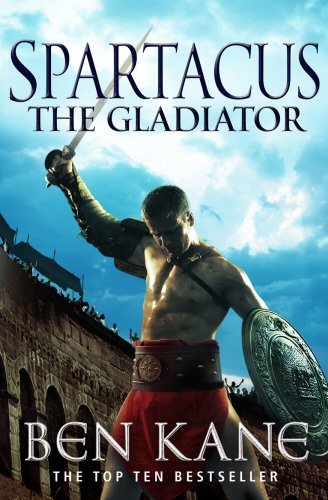
14. Spartacus by Ben Kane
Setting: Italy, 73-71 BC (Third Servile War)
Why It’s Essential: Kane’s duology reimagines Spartacus’s slave rebellion, one of Rome’s most dramatic challenges. Following the Thracian gladiator from slavery to leading 70,000 escaped slaves against Roman legions, Kane creates both an intimate character study and an epic military adventure.
What Makes It Special: Kane brings the knowledge of military historians to the gladiatorial combat and slave rebellion. His depiction of gladiator training, arena combat, and the rebellion’s military campaigns is thoroughly researched and well-researched. Unlike many Spartacus retellings, Kane treats the story as serious historical fiction rather than pure adventure.
Perfect For: Readers interested in Spartacus specifically, those fascinated by gladiatorial culture, military history enthusiasts, and anyone interested in slave rebellions and social upheaval.
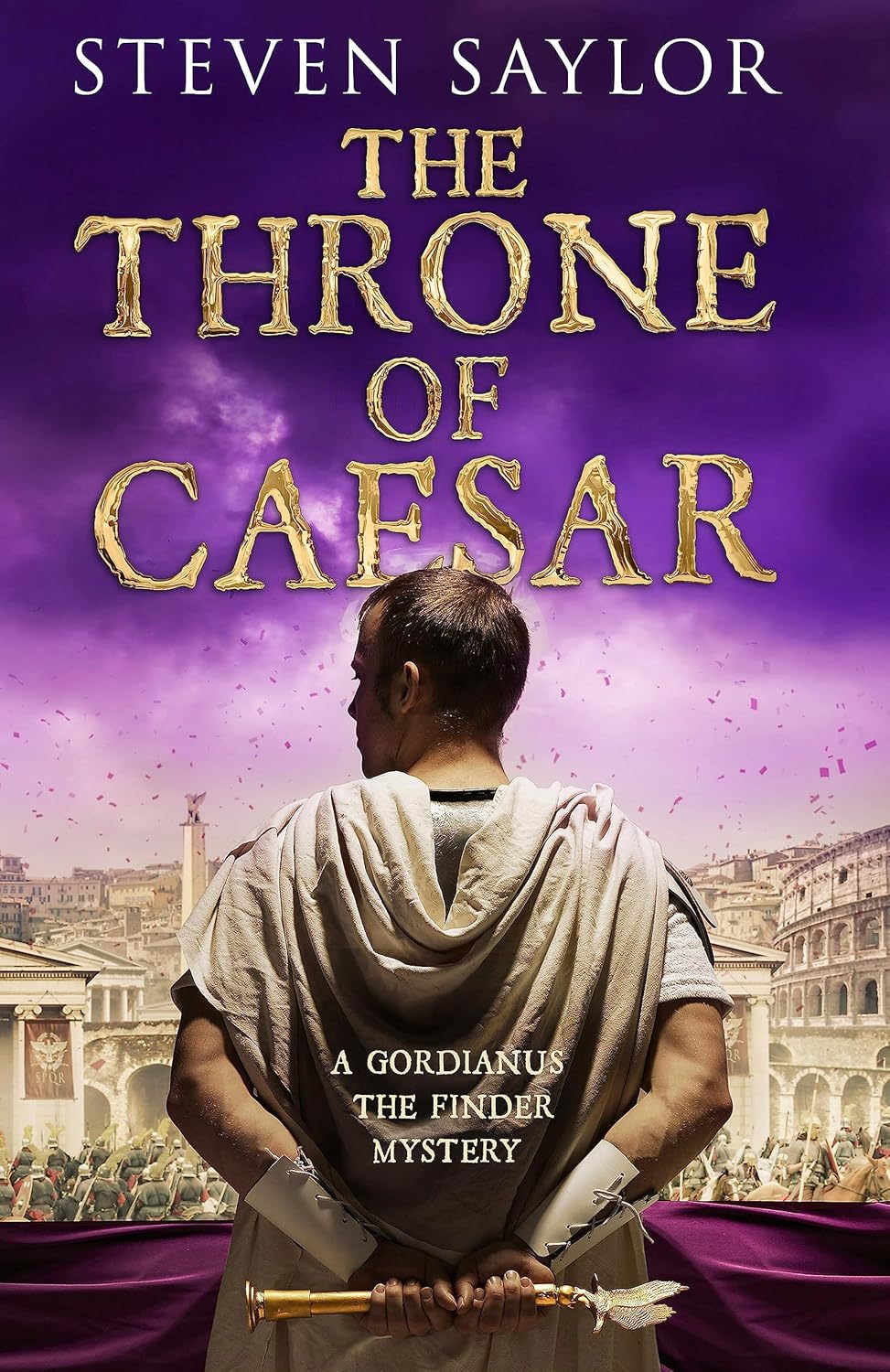
15. The Throne of Caesar by Steven Saylor
Setting: Rome, March 44 BC (Caesar’s assassination)
Why It’s Essential: The final novel in Saylor’s Roma Sub Rosa series sets his detective, Gordianus the Finder, in Rome during Caesar’s last days. Mixing murder mystery with historical drama, Gordianus investigates crimes while Rome hurtles toward the Ides of March and Caesar’s assassination.
What Makes It Special: Saylor’s series (spanning 12+ novels) follows Gordianus from young man to old, providing a continuous fictional thread through the late Republic’s most tumultuous decades. His mysteries use actual historical events as a backdrop while maintaining engaging plots. The series collectively offers a comprehensive portrait of the Republic’s final generation.
Perfect For: Mystery enthusiasts, readers wanting the complete late Republic experience, those interested in Caesar’s assassination, and fans of ongoing series with developing characters.
Roman Sub-Genres to Explore
The Republic’s Fall (1st Century BC)
The Republic’s dramatic collapse offers unmatched political drama:
- Colleen McCullough’s Masters of Rome series (7 books, comprehensive)
- Steven Saylor’s Roma Sub Rosa mysteries (12+ books)
- Robert Harris’s Cicero trilogy
The Early Empire (Augustus to Nero, 1st Century AD)
The Empire’s first century saw both glory and madness:
- Robert Graves’s I, Claudius and Claudius the God
- Allan Massie’s Augustus and subsequent Empire novels
- Margaret George’s The Confessions of Young Nero
The Legions (Military Fiction)
Roman military fiction across the Empire:
- Simon Scarrow’s Eagle series (15+ books)
- Ben Kane’s Forgotten Legion trilogy
- Anthony Riches’s Empire series
Roman Britain
The remote frontier province offers a unique perspective:
- Rosemary Sutcliff’s Roman Britain series
- Ruth Downie’s Medicus series
- Simon Scarrow’s Eagle series (several set in Britain)
Roman Mysteries
Historical mysteries set in ancient Rome:
- Lindsey Davis’s Falco series (20 books)
- Steven Saylor’s Roma Sub Rosa series (12+ books)
- John Maddox Roberts’s SPQR series
Understanding Roman Historical Fiction
The Republic vs. The Empire
Roman fiction broadly divides into two periods: the Republic (509-27 BC) and the Empire (27 BC-476 AD). Republican fiction emphasizes politics, oratory, and systemic tensions. Imperial fiction focuses on emperors, palace intrigue, and individual power.
Mythological vs. Historical Rome
Some novels (like The Song of Achilles) deal with Rome’s mythological prehistory or the Greek myths Romans adopted. Others stick strictly to documented history. Both approaches offer value in mythology for archetypal stories and historical context for political sophistication.
Roman Geography
Rome’s thousand-year history spans three continents. Novels set in Rome itself differ vastly from those in Britain, Egypt, or Germanic forests. Consider which geographical setting interests you.
The Question of Accuracy
No Roman historical novel is entirely accurate; too much is unknown. Good novelists research thoroughly while acknowledging gaps. Beware books that claim perfect accuracy or those that ignore known facts for convenience.
Tips for Reading Roman Historical Fiction
Start Accessibly
If you’re new to Roman fiction, start with accessible novels like Pompeii or The Eagle of the Ninth before tackling the complexity of The First Man in Rome.
Use Maps and Family Trees
Roman names can be confusing to modern readers. Everyone’s named Gaius or Marcus. Many novels include helpful family trees and maps. Use them.
Don’t Fear Latin Terms
Initial unfamiliarity with terms like “consul,” “tribune,” or “legion” passes quickly. Most novels define terms contextually or include glossaries.
Explore Different Periods
“Ancient Rome” spans 1,000 years. The Early Republic (5th century BC) differs enormously from the late Empire (5th century AD). Sample various periods to find favorites.
Mix Fiction and Non-Fiction
Supplement novels with narrative non-fiction (Adrian Goldsworthy, Mary Beard) to deepen understanding and appreciation.
Why Rome Endures in Historical Fiction
Ancient Rome’s enduring popularity stems from multiple factors. Rome’s political sophistication, complex constitutions, sophisticated law, and elaborate political maneuvering provide rich material for character-driven drama. Modern readers recognize political concerns, including populism versus elitism, limits on executive power, and the military’s role in politics.
Rome also offers spectacular settings and events. The Colosseum, gladiatorial games, chariot races, elaborate public baths, sumptuous villas, and Rome were visually dramatic. Military conquests, slave rebellions, political assassinations, and imperial madness provide built-in drama.
Furthermore, Rome had a profound impact on Western civilization. Reading Roman fiction connects us to the roots of language, law, architecture, and political thought. Understanding Rome means understanding ourselves.
Finally, Roman sources were themselves dramatic. Tacitus, Suetonius, Plutarch, and others wrote history as drama, emphasizing character, motivation, and dramatic tension. Historical fiction continues this tradition.
Conclusion
Roman historical fiction offers some of the genre’s most sophisticated and engaging reading experiences. From Colleen McCullough’s comprehensive political analysis to Robert Graves’s psychological complexity, from Lindsey Davis’s witty mysteries to Robert Harris’s gripping thrillers, these fifteen novels showcase the remarkable range of Roman fiction.
Whether you’re drawn to Republic or Empire, politics or warfare, mystery or adventure, Rome’s vast history and cultural richness provide endless material. The Republic’s political sophistication speaks to anyone fascinated by how democracies (or democratic republics) work and fail. The Empire’s concentration of power highlights the dangers and seductions of absolute rule.
Start with I, Claudius for literary excellence and intimate palace intrigue, The First Man in Rome for comprehensive Republican politics, Pompeii for thriller pacing, or The Eagle of the Ninth for accessible adventure. Whichever you choose, you’ll discover why Rome continues to captivate readers millennia after the Western Empire’s fall.
The eternal city awaits. Senate debates echoing, legions marching, gladiators entering the arena, and all the drama of humanity’s most influential ancient civilization.
Frequently Asked Questions
What is the best historical fiction book about Ancient Rome?
I, Claudius by Robert Graves is widely considered the finest Roman historical fiction novel. Its combination of literary quality, psychological depth, meticulous research, and compelling narrative about the early Empire’s most dramatic period has remained unsurpassed since 1934. For a comprehensive history of the Republican era, Colleen McCullough’s The First Man in Rome (the first of seven novels) provides unmatched detail.
Are Roman historical fiction novels accurate?
Accuracy varies by author and novel. Writers like Colleen McCullough and Robert Harris conduct extensive research and strive for accuracy while acknowledging gaps in the historical record. Others like Conn Iggulden prioritize entertainment over scholarly precision. Most good Roman fiction includes the author’s notes explaining where they’ve taken liberties versus where they have followed sources.
Should I read Roman historical fiction in chronological order?
Not necessarily. While reading series in order is recommended (don’t start McCullough’s Masters of Rome with book five), jumping between different Roman periods works fine. Reading chronologically can enhance understanding of how the Republic became the Empire, but it’s not required. Follow your interests. If Caesar fascinates you, start there.
What’s the difference between Roman Republic and Roman Empire fiction?
Republican fiction (509-27 BC) emphasizes politics, oratory, Senate intrigue, and systemic tensions between patricians and plebeians, as well as between optimates and populares. Empire fiction (27 BC-476 AD) focuses on emperors, palace intrigue, concentrated power’s corruptions, and military frontiers. Republican novels tend to be more political; Empire novels, on the other hand, are more personal and psychological.
Is Lindsey Davis’s Falco series suitable for all readers?
The Falco series contains adult content, including violence, sexual situations, and mature themes, though handled with humor rather than graphic detail. Suitable for older teenagers and adults, but not children. The series’s humor, mystery plots, and accessible writing make it an excellent choice for readers new to Roman fiction.
Why do some Roman novels have glossaries and maps?
Roman names, political titles, military terms, and geography can be confusing to modern readers. Many authors include glossaries (explaining terms such as “consul,” “praetor,” and “cohort”), family trees (tracking the Julio-Claudians or other dynasties), and maps showing the Mediterranean world. These aids enhance understanding without interrupting narrative flow.
Can you recommend Roman historical fiction with female protagonists?
Yes: Cleopatra’s Daughter by Michelle Moran, Lindsey Davis’s Flavia Albia series (Falco’s adopted daughter), Margaret George’s Cleopatra novels, and I, Claudius, which features powerful women like Livia (though not as protagonists), as well as historical novels about Cornelia, Fulvia, and other Roman women. While fewer than male-focused novels, options exist.
What’s the most comprehensive Roman historical fiction series?
Colleen McCullough’s Masters of Rome series (7 novels, ~7,000 pages total) provides the most comprehensive fictional treatment of Rome’s late Republic (110-27 BC). Steven Saylor’s Roma Sub Rosa mysteries (12+ books) span a similar period from a different angle. For the Empire, Allan Massie wrote novels about Augustus, Tiberius, and Nero, providing a sequential imperial narrative.


